
Eight Years · ProMaster 2500 · Full-Time
We're Jesse and Karlee. We live in this van.
Eight years full-time in a 2017 ProMaster, and what it taught us about gear.
- 8 years full-time · 100,000 miles across all 48 states
- No paid placements · no brand pays for a spot
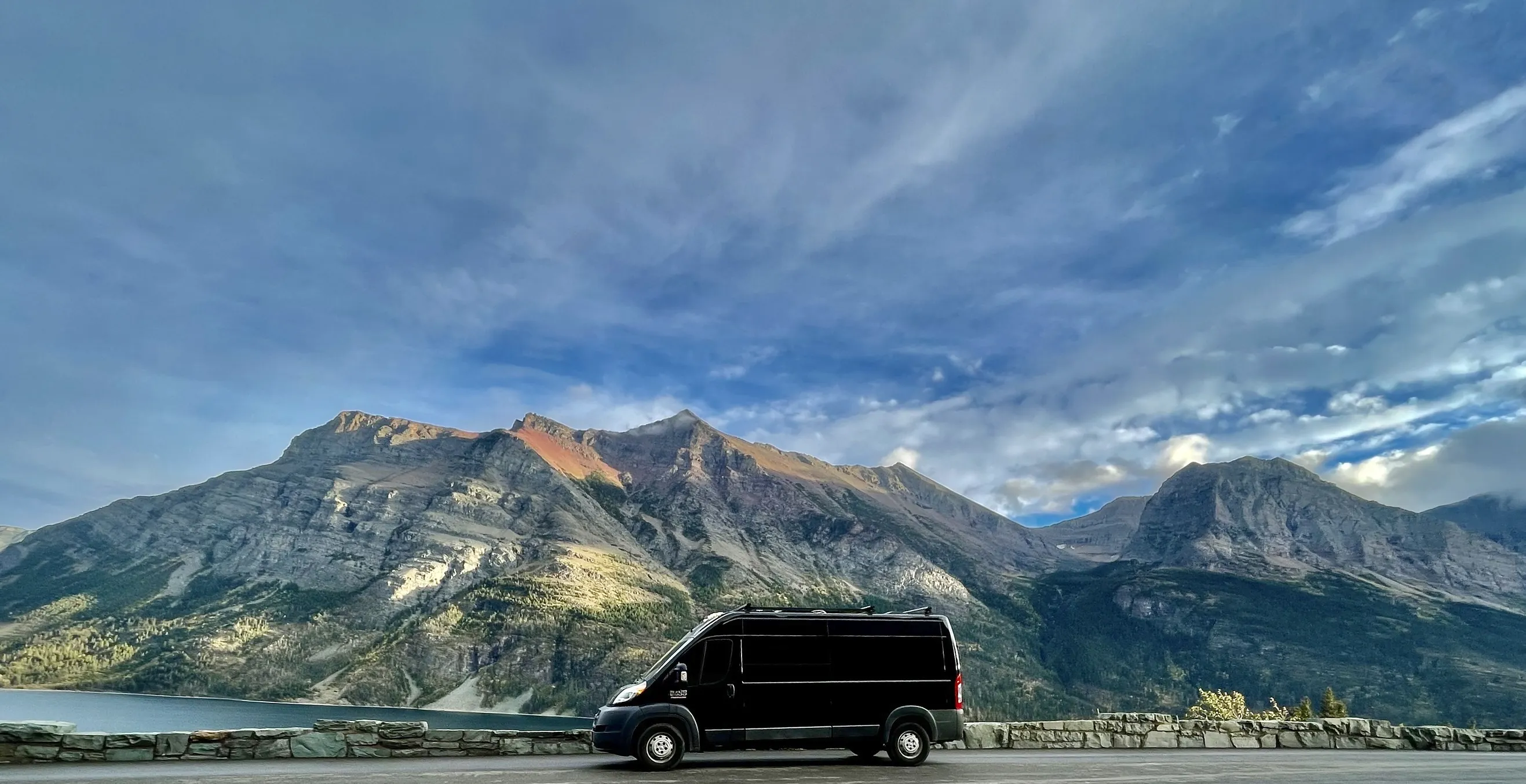
We didn’t quit tech jobs to do this. We worked restaurants, bartending, construction. Saved money, built a life around freedom instead of stuff. Eight years in a van, season to season, region to region. San Diego winters, Colorado summers, Florida when we needed warmth, New York when we needed family. We just got back from seven months in Southeast Asia. Now we’re building this, because after all of it, we have something worth saying.
We were living in Denver when the math stopped working. Rent was climbing ($1,800 for a minimal place) and every lease renewal felt like a tax on staying still. My partner Karlee and I both wanted to travel, we both wanted freedom, and we couldn’t afford a house yet. So we started talking about alternatives.
First it was an RV. Then a truck and trailer. We landed on a van because we could build it out ourselves, it would be cheaper, and it would be stealthy enough to park almost anywhere. We spent six months building it. Our Denver lease ended in July 2018 and we moved into a family member’s house to finish the build, then hit the road that October, chasing warmth south before the Colorado winter closed in.
Honest moment: Karlee was the one leaning in first. I was more reserved about big moves back then and needed some convincing. Our families were mostly skeptical, though both our moms were supportive in that nervous way moms are when their kids do something uncertain. Neither of us was cold-starting. We’d both done a lot of car camping and travel before, but nothing prepares you for full-time the way full-time does.
This site is the gear and power half of what we know. The stories and travel half live at Moments in the Miles.
When I started in 2018, there were maybe three power stations worth buying. The choices were simple. Good products or bad products, not much in between. Today there are dozens of brands, hundreds of models, and most of the review sites covering them have never spent a night in a van.
This site exists because we have.
New here? Start with The Guide or jump straight to What We Recommend.
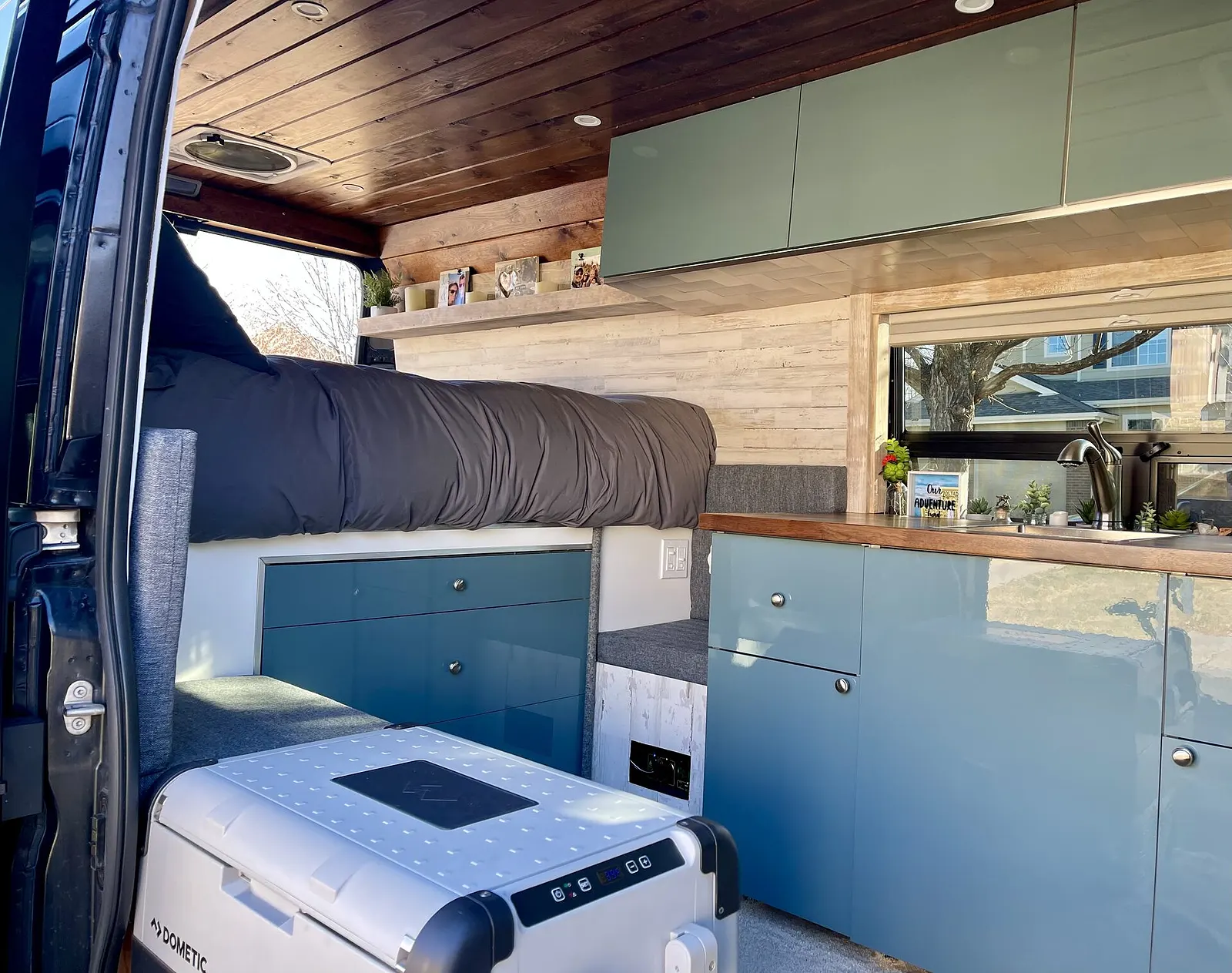 Home office, test lab, and bedroom. All 60 square feet of it.
Why I'm Building This Now
I've wanted to build Create A Van Life, or something like it, for a long time. What held me back was imposter syndrome: that quiet voice that tells you somebody else is more qualified, somebody else has done it longer, somebody else should be the one writing this. Eight years full-time in a van, and I still kept telling myself I didn't have enough to offer. So I worked restaurant shifts and construction jobs, paid the bills, and stopped myself from building things like this one.
The truth I had to come around to is that lived experience counts. Eight years of real weather, real failures, real gear. That's a kind of expertise most review sites don't have. If you've ever talked yourself out of starting something because you weren't sure you were "qualified enough," I get it. This site is me finally not doing that anymore.
This site is what I wish I'd had in 2018, standing in a Denver apartment and trying to figure out if any of this was possible. If that's where you are right now, I hope some of it helps.
The Road So Far
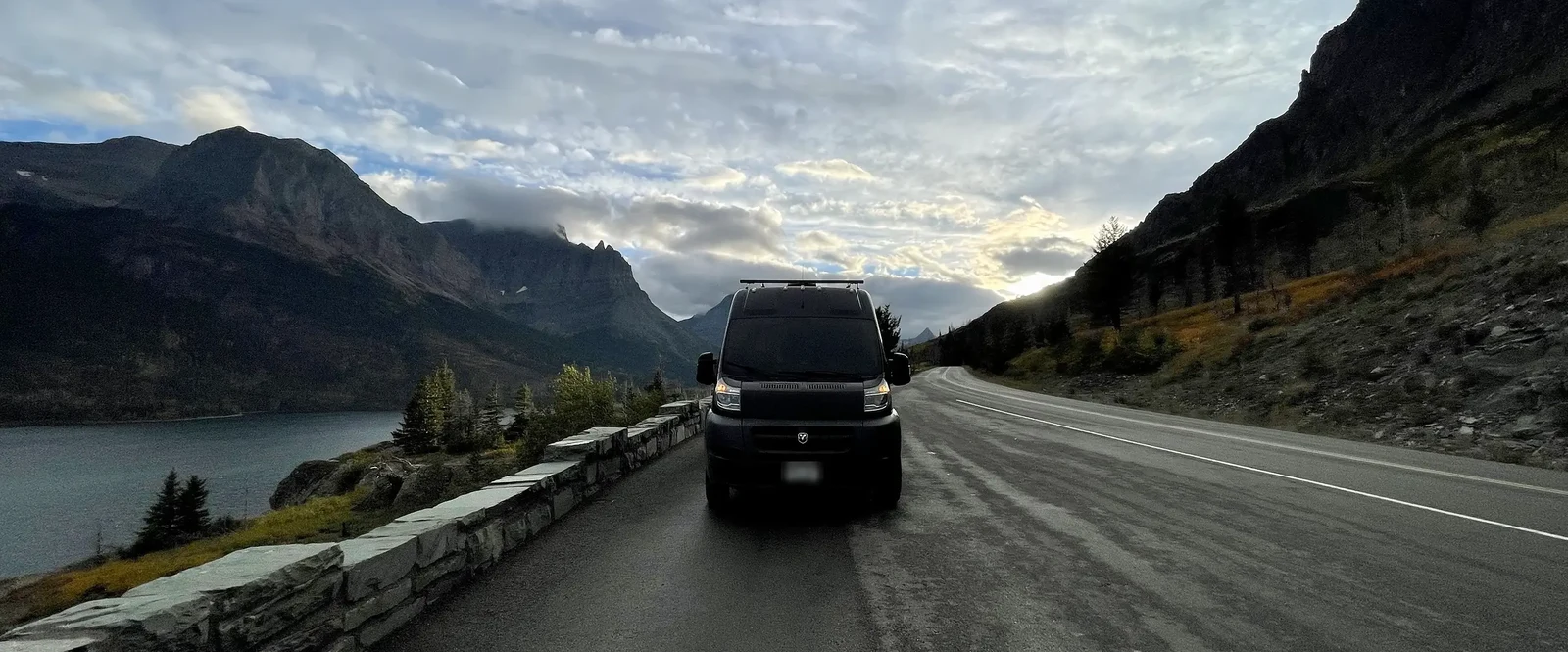 Eight years of weeks like this taught the lens this site is written through.
What "Recovery-First" Means
The week that taught me everything about power was Santa Rosa Beach, Florida, summer 2019.
Seven days of overcast sky. Brutal heat and humidity. The fridge was working overtime, the fans couldn't stop, and almost nothing was coming in from the solar. I was hauling our Goal Zero Yeti 1400 into coffee shops nearly every day that week just to claw back enough power to make it to nightfall. On the charger we had, that thing took more than 20 hours to top off. (For context, the power station I run now recharges in 1-2 hours. The gear has finally caught up to the problem.)
Here's what I learned in that parking lot, even though I didn't have the words for it yet: when you're out of power, comfort goes first. You sweat. You stop running the fans. You sit still. Because the one thing you can't let fail is the fridge. Losing the food would cost more than being miserable for a few days. That's not a framework I read in a book. That's what your body figures out when the numbers on the screen keep dropping.
That's recovery-first thinking. Not "how many watt-hours do I have" but "when this goes wrong, what breaks first, and how fast can I claw it back?" Every buyer guide on this site is ranked through that lens because that Florida week rewired how I think about power.
Most gear guides are written for good conditions: clear skies, outlet access, stable temperatures. That is not most van life.
The question isn't "what's the best setup on a perfect day?" It's "what keeps you stable through the worst week of the month?"
A fast-recovery system that gets you back to full in a two-hour coffee shop window is more useful than a larger, slower system that requires an overnight hookup. Recharge speed, real-world charging windows, and honest load accounting are the metrics that matter.
This site is written for the bad week, not the ideal one.
What the Spec Sheet Won't Tell You
Charge speed > capacity
A 2,000Wh station that takes 12 hours to recharge can strand you on a cloudy week. Check input wattage, not just storage.
Portable beats fixed
More times than I can count I have carried the station into a coffee shop, including most days of one bad Florida week. You cannot do that with a hardwired system.
The roof runs out first
I assumed newer panels would fit more watts in the same space. They don't; eight years bought barely a point of efficiency. With two fans up there, 300W is the whole roof, so the fix was charging faster, not harvesting harder.
Cold stops charging
Our Yeti 1400 ran NMC cells, and they refuse a charge once the battery core nears freezing. Full sun outside, controller doing nothing. Newer LiFePO4 stations handle this far better, and no watt-hour comparison shows it.
Efficiency is not the whole fridge
Chest fridges are more efficient, and I do not regret ours. But you pull everything out to reach the bottom, every day, for years. Weigh daily reach-in as hard as you weigh watt-hours.
Fans wear out. Squeaks are avoidable.
Ours ran about six years of daily duty before we replaced them with the same model. In all that time neither ever developed a mounting squeak, because they went in on butyl tape and Dicor. The motor squeak is different: it shows up when you run a fan with no intake open, and cleaning the motor fixes it.
About Karlee
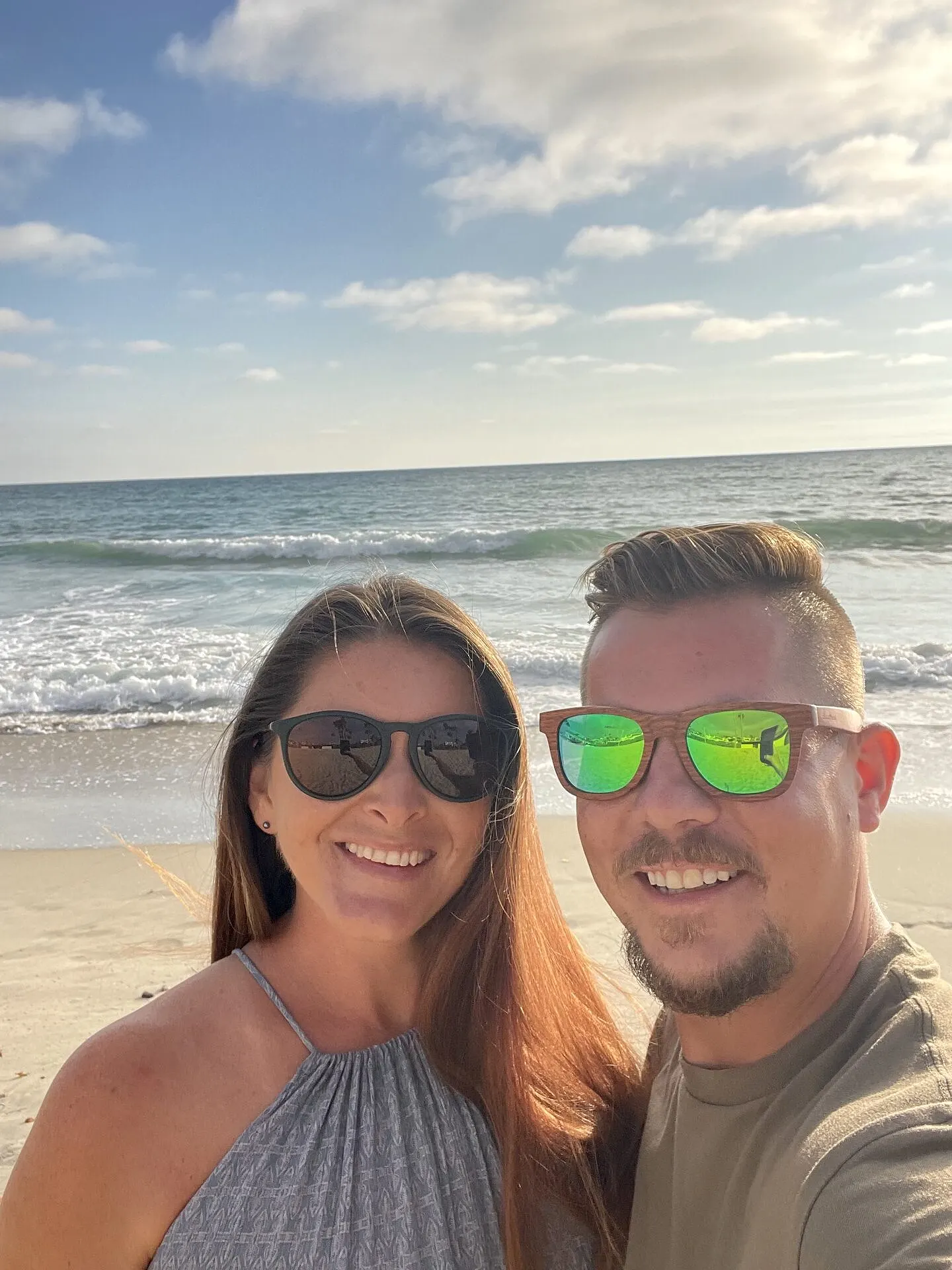 Eight years in. Still happy to be in the same 60 square feet.
Karlee is the balance-keeper. She's the one who keeps the mood up when I go quiet, the one who finds the positive angle when I'm stuck in a problem. We balance each other well: her strengths cover my weaknesses and mine cover hers, which is maybe the only reason two people can share 60 square feet for eight years without losing it.
Speaking of which. Your house, when you live in a van, is your bedroom, your kitchen, AND your bathroom. You get closer to the person you're with than most couples ever do. You see every bad mood. There's nowhere to hide one. We have a running joke that when we're frustrated with each other and need space, neither of us wants to be the one who has to go outside. So one person retreats to the front seat, the other stays in the bed, and that's "space" in a van. Eight years in, we still do it.
Eight Months in Southeast Asia
In October 2024, we left the van at a family member's house in New York and spent seven months in Southeast Asia. I'd always wanted to see Asia, and we wanted to find out whether our life could expand past van life, not replace it but add an abroad chapter to it.
What surprised me was the relief. Having a hotel, having more space, not spending mental energy every single night on where to park and whether it was safe. I didn't realize how much of van life runs as background math until I put it down for a while. The trip showed me what a more balanced life could look like instead of 100% van life all the time.
We still love the van. We're still in it. But the trip confirmed something I think is true and that most van life content won't say out loud: van life is best as part of a life, not the whole thing. Change is necessary for growth. You can do it, love it, and also leave sometimes. Those things aren't in conflict.
The stories, the lessons, and the honest truth about building a life in motion. That's over at Moments in the Miles. Read the story →
How do we pay for this?
Restaurant jobs, mostly. Karlee's background made those easy to pick up anywhere we landed. In Florida, we worked at a place right on the ocean and parked in their lot. Showers, bathrooms, ocean breeze, everything right there. I've picked up construction side work and other gigs along the way too. Nothing glamorous, nothing remote, just real jobs in real towns.
Our monthly cost runs somewhere between $1,000 and $2,000 depending on gas, groceries, and where we are. The biggest swing factor is health insurance. That's the line that pushes the high end, and honestly, finding work that covers it is one of the single biggest cost-reducers in van life. Nobody talks about this enough.
Can you start van life without a remote job? Yes. That's how we did it, and we're eight years in. But I'll be honest, remote work makes this dramatically easier, and if you're planning ahead, slowly building remote-capable skills is worth the effort. We're still figuring that part out ourselves.
Our Standards
How We Label Claims
- Spec: manufacturer-published figure
- Reported: cited from a third-party source
- Measured: tested firsthand on our own unit
- Estimate: reasoned approximation, flagged as such
If a number appears on this site, you'll always know where it came from.
What We Commit To
- No paid placements. We earn affiliate commissions when you buy through our links, but the picks aren't paid for
- No manufactured urgency or fake deadlines
- No wiring diagrams. Electrical work has real safety stakes
- Every claim sourced and labeled