Eight years full-time van life

Stop tab-hopping.
Find your path here.

Van life has a way of making a simple question — "how do I power my fridge?" — turn into 47 browser tabs, three Reddit arguments, and a spreadsheet you never finish. This page cuts that short.

Affiliate links here. Every spec is labeled — Spec, Reported, Measured, Estimate — so you always know which kind of claim you're reading. No fabricated awards. No invented test data.

Where are you right now?

Pick your path

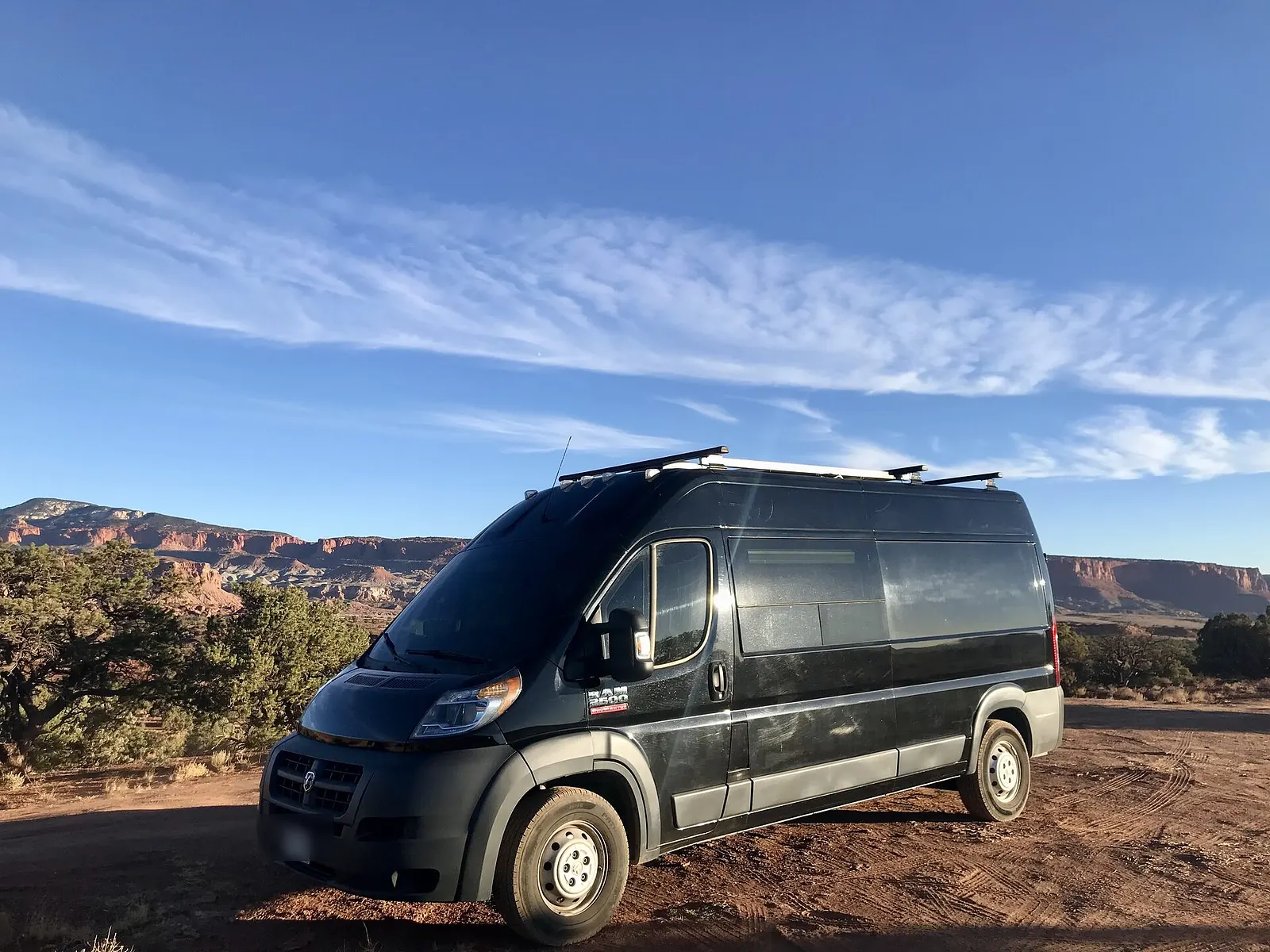
ProMaster van parked at Utah red rock mesa
Plan

I need to size my power system

Not sure how much battery, solar, or charging speed you need? These four resources walk you through the math without selling you anything.

Start with the calculator

How we think about power

Recovery-first, not best-case.

Most van life advice is written for perfect conditions: sunny days, campground hookups, no schedule pressure. That's not most van life.

Real van life has cloudy stretches, quiet-hour campgrounds, heavy work weeks, and parking constraints you didn't plan for. The question that actually matters isn't "what works when things go well?" — it's what keeps me stable through my worst week?

That shifts what you prioritize:

  • Recharge speed often beats raw capacity when your recovery windows are short
  • Alternator charging while you drive is consistently underrated vs. solar
  • One failure on a bad week matters more than impressive specs on a good one
More about how this site works →

Every spec is labeled:

SpecManufacturer's published figure
ReportedFrom a third-party test or review
MeasuredControlled test with a cited source
EstimateReasoned math, not a hard claim

Van life gear marketing blurs these constantly. Here, you always know which one you're looking at.

Why it matters

A "1,800W fast-charge" rating is the peak input, not the sustained average — so real charge times often run 25–40% longer than the headline number suggests. The label tells you whether you're looking at the headline or the lived reality.

How we test and label claims →
8+ years full-time on the road
130k+ miles with a power station on board
4 claim labels on every spec

Everything below is filtered through that. See the picks that survived →

Field notes

One story per path

Each of these started as a problem we didn't see coming.

Plan

Why I Chose Portable Power Over a Fixed Battery System

Eight years full-time in a van with a portable power station. Three times it saved me in ways a hardwired system never could.

Read →

Buy

Seven Years on the Yeti 1400: Why We Switched

Seven years on a Yeti 1400. What finally pushed us to the Bluetti Elite 200 V2 — and what we'd tell anyone making the same decision today.

Read →

Fix

When Our Power Station Died in the Mountains — What We Did

The Goal Zero battery crash hit us deep in the mountains with no replacement option. What survival-mode power management actually looks like.

Read →

Stay in the loop

What I'd buy this month.

One email a month: what broke since last issue, what I'd actually buy right now, and the spec lies worth knowing.

    No spam, ever. See our privacy policy.

    Beyond the gear

    The part that keeps people stuck isn't the gear.

    The Leave Anyway Kit is a 10-section workspace for everything van life forces you to figure out that isn't gear — money, mail, work, the conversation with your people. Built from eight years of full-time.

    • The fear — how to stop letting it run the calendar
    • The money — budgets that survive on the road, not just on paper
    • The job question — remote, seasonal, or a full reset
    • The logistics — insurance, mail, address, vehicle
    • The first 30 days — the part nobody warns you about
    Get the Leave Anyway Kit →

    Common questions

    Quick answers before you pick a path

    Do I need solar to live in a van?
    No. After eight years full-time, I’d say the upgrade most people miss is alternator charging while you drive — it’s faster, weatherproof, and cheaper than equivalent solar. Solar is great for stationary stretches and quiet hours, but it’s rarely the first thing I’d buy. See: Solar vs alternator charging.
    How many watt-hours do I actually need?
    Most people overshoot. A fridge, lights, charging laptops/phones, and a fan in summer typically lands somewhere between 600–1,500 Wh per day depending on climate and how much you cook electric. I built a free calculator that walks you through it without selling you anything: Free Power Sizing Calculator.
    Portable power station or hardwired battery system?
    For most first-time vans, portable. It’s faster to set up, easier to swap when it fails (and it will), and you keep your investment if you change vehicles. Hardwired makes sense once you know your loads and you’re committed to the vehicle. Full reasoning: Why I chose portable power.
    What's the single most important spec to compare?
    Recharge speed beats raw capacity for most van life patterns. If you’re parked off-grid with a 600Wh deficit and only a 90-minute window of sunlight or driving, a station that takes 1.5 hours to recharge is in a different league than one that takes 4. Capacity matters less than people think — recovery speed is the lever.
    Why are you using affiliate links?
    Honest answer: it’s how this site stays free and ad-free. Every spec is labeled Spec, Reported, Measured, or Estimate so you always know which kind of claim you’re reading — and gear that disappoints gets updated on the page, not buried.