
The 30-second version
Will you want more power later?
This is enoughTap for our pick
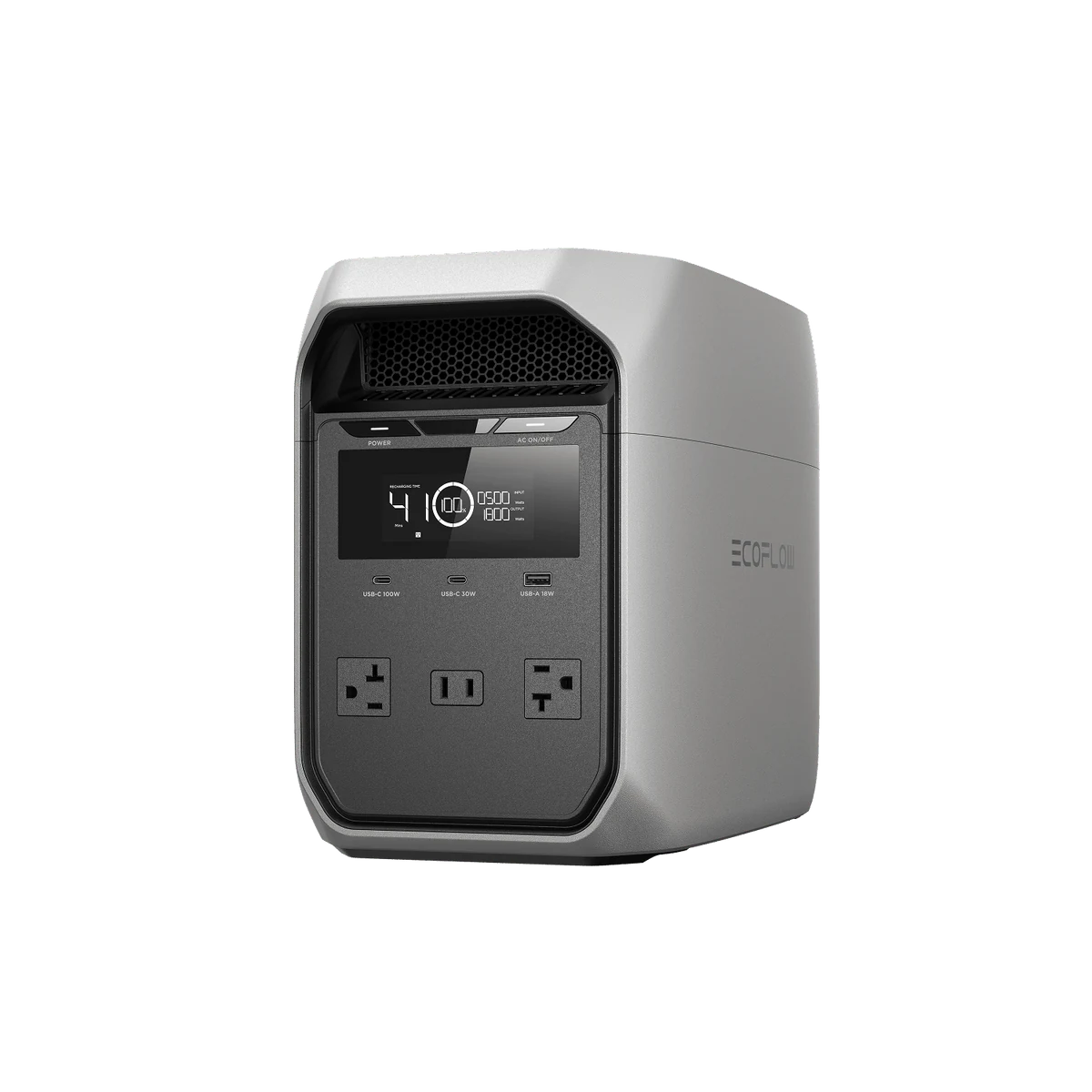
The EcoFlow DELTA 3 Classic. 1,024Wh, and empty to full in about an hour on a wall outlet. A lunch stop is a full recharge.
Get the DELTA 3 ClassicShop at EcoFlowMaybe, or not sureTap for our pick
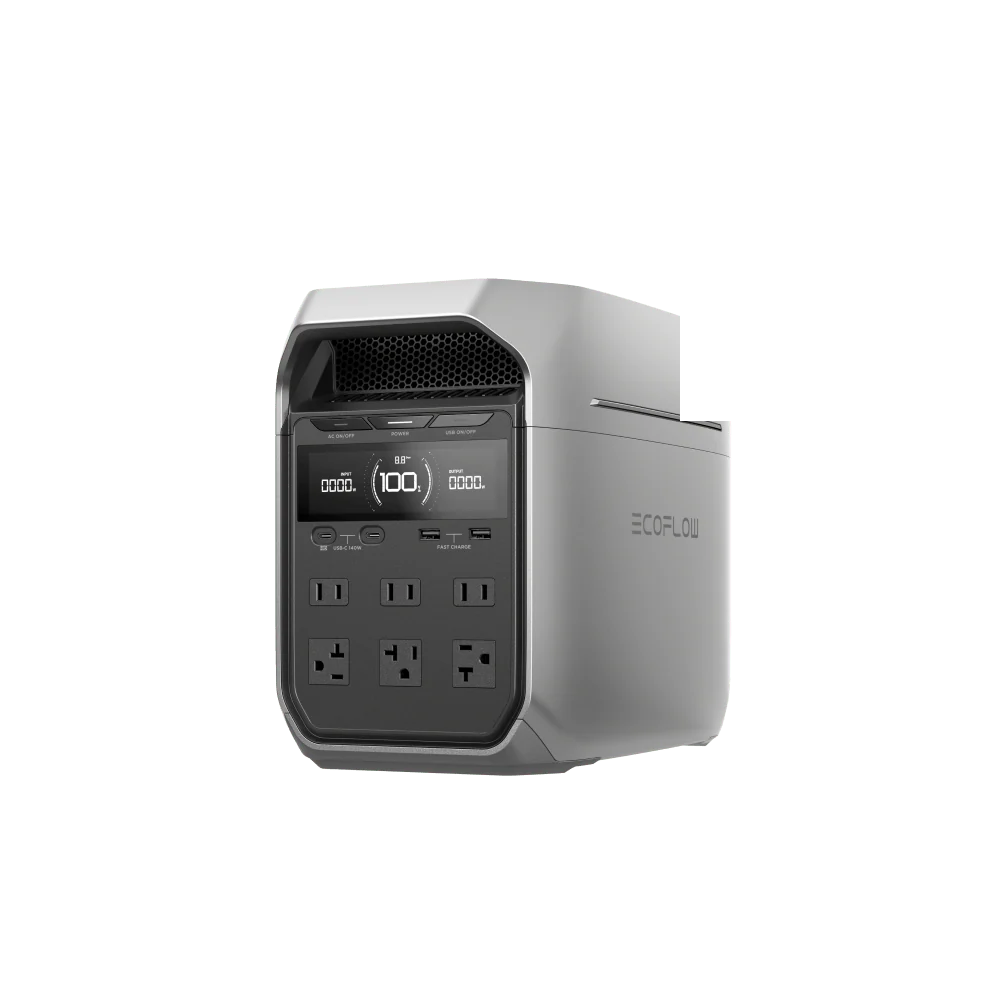
The EcoFlow DELTA 3 Plus. Same 1,024Wh and about the same charge time, but you can add batteries later, up to 5kWh, instead of buying a whole new station. Buying too small is the most common expensive mistake in a van build.
Get the DELTA 3 PlusShop at EcoFlowRead the full guide
Last reviewed: August 2026
Fast charging is how you recover when van life gets real: heat, clouds, humid nights, quiet hours, workdays, and missed solar.
I ran a Goal Zero Yeti 1400 for seven years before upgrading to a Bluetti Elite 200V2 on Black Friday. The Yeti had real capacity, but the 25-hour wall charger meant a coffee-shop stop got me about 8% back. The Bluetti hits 80% in roughly an hour from the wall (Measured). Same daily loads, same routines, completely different stress level.
The under-$1000 tier is where fast charging starts being worth the price step. Below this, you’re often paying for capacity without enough recovery speed to back it up.
Quick Answer
For full-time van life, 700Wh+ is the floor, and the picks here all start at ~1kWh because that is where a real daily buffer and fast charging stop competing for your money. If 700–800Wh is your size, the under-$500 tier covers it for less.
The smartest read after eight years: rank decisions by time-to-recover, not raw storage. A 1kWh fast-charger that refills in a coffee-shop window beats a 1.5kWh that wants four hours, every cloudy week.
What counts as under $1000 here
The working ceiling is $1,099, not a hard $1,000. That’s not fudging, it’s where this class of unit actually prices: a 1kWh station listed at $799 spends most of the year selling somewhere near $500, and a hard $1,000 line would sort by list price rather than by what you’d pay. Above the band, the 2kWh+ tier has the Elite 300 at $1,199 direct, and bundles discount harder.
Power station pricing moves constantly: sales, coupons, bundles, retailer swings. Every pick below is inside that band today. I don’t promise exact prices inside a ranking, and this page updates as pricing shifts.
Quick routing#
- Premium tier: Overall Best: 2kWh+ picks
- Tighter budget: Under-$500 entry tier
- Buying an outgoing model: Superseded units still worth buying
- Confused by the charging jargon: Fast-charging glossary
- Units we’re tracking but haven’t picked: Fast-AC under-$1000 watch list
- Size your system first: Van Power Calculator
- Methodology: How We Test and Source Van Power
The picks
All four sit inside the band today, so there’s no “wait for a sale” tier on this page any more. They’re ordered by how I’d recommend them, not by price.
This replaced the DELTA 2 and it beats it on every number that matters: 60 minutes to full instead of 80, 3,600W surge instead of 2,200W, at a lower price. If you’re shopping this page for the first time, start here.
Skip if: you need it by a set date. EcoFlow has sold it on pre-order before, so check the ship date at checkout.
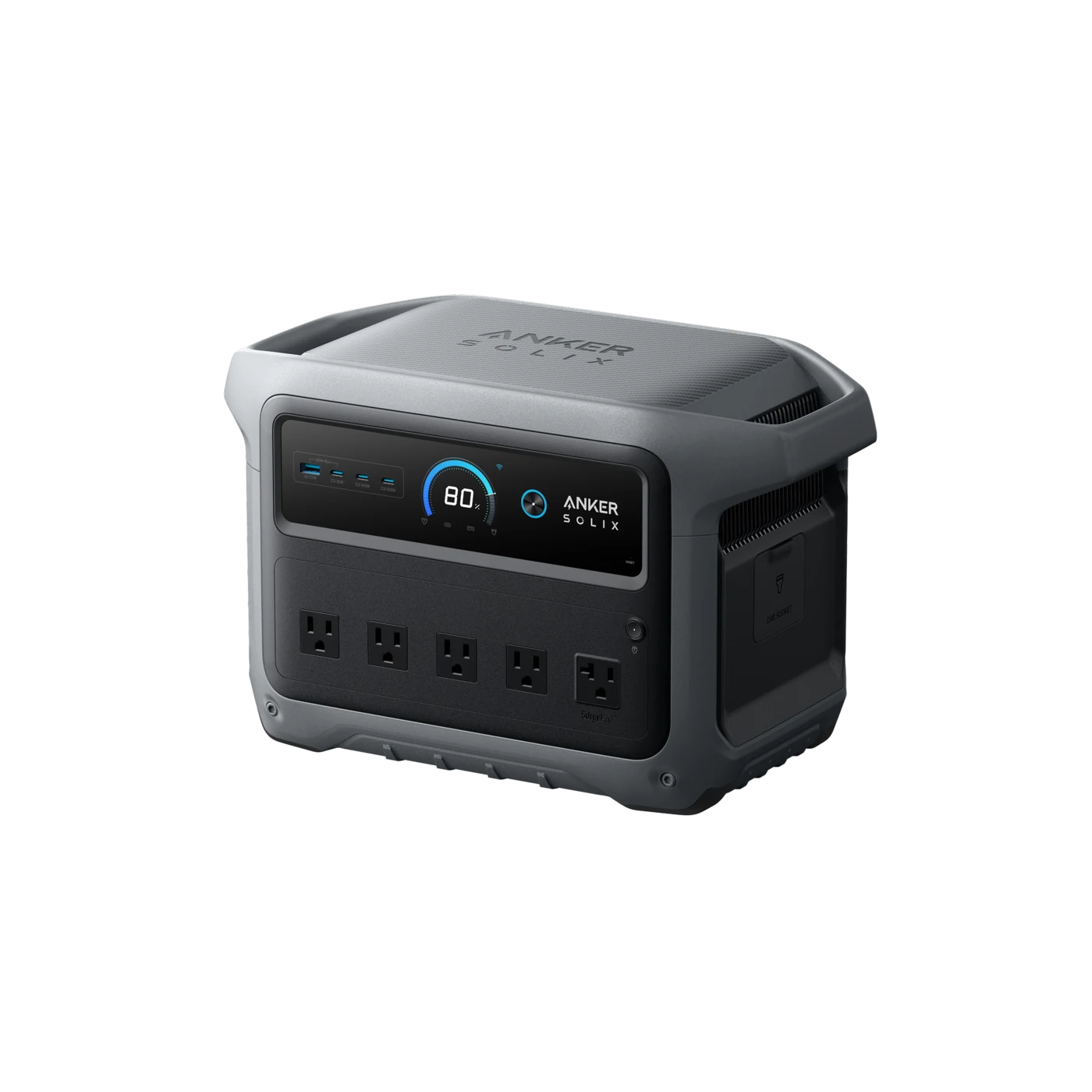
49 minutes to full is the fastest claim on this page, and it also carries the highest continuous output at 2,000W. On the rule this whole site ranks by, that makes it the strongest pick here. The catch is its list price, well above the DELTA 3 Classic’s $499. It spends a lot of the year discounted, and on a good sale it’s the clear winner.
Skip if: it’s sitting at full list the day you shop. The DELTA 3 Classic gives up 11 minutes and saves you real money.
The Classic’s expandable sibling: same 1,024Wh and a slightly quicker 56-minute charge, at $719 against the Classic’s $499. That premium buys the one thing you can’t add later by shopping harder: room to grow to 5kWh if your loads turn out bigger than you planned. Under-buying is the most common expensive mistake in a van build, and this is the cheapest insurance against it on the page.
Skip if: you already know your loads and they’re stable. Then the extra cost is buying an option you’ll never exercise.
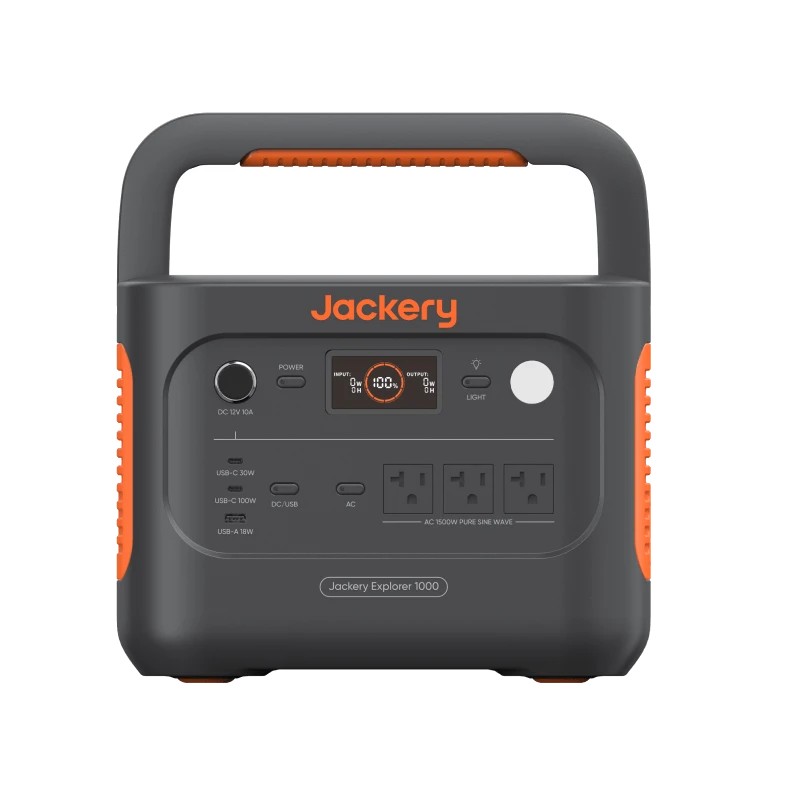
Most people who land on this page already know Jackery, and that’s both the case for it and the case against it. The 1000 v2 is Jackery’s catch-up move on fast charging and the numbers finally sit in the modern range. If you already own Jackery panels, the ecosystem math is real.
Skip if: you’re brand-agnostic and shopping at list. At full list there’s nothing here you can’t get cheaper or faster elsewhere on this page. On a deep sale it’s a different conversation entirely.
How to choose in 30 seconds#
1,024Wh, full in 60 minutes, from $499. If you have no reason to prefer a smaller unit, this is the default answer on this page.
49 minutes to full on the C1000 Gen 2, best bought on sale. The DELTA 3 Plus is $719 and the only one here that expands, to 5kWh.
The premium tier has the Elite 300 at $1,199 direct, less when it's bundled. Buying once usually beats buying twice if your daily loads are growing.
Is this tier right for you?#
Tap the situation that sounds like you.
💼 I work from the van: laptop, screen, a few devices. Good fit
This is the tier built for you. Workdays in the van usually run 300–600Wh of load, comfortably inside the ~1kWh floor on this page. The fast-charge piece matters because you can plug in mid-day at a coffee shop and reset for the afternoon.
If your work also requires uptime when shore power isn't available, pair with a real solar plan. Solar vs alternator charging covers the recovery hierarchy.
🛏️ Solo, propane stove, fridge + fans + phone charging. Good fit
Yes, this is the sweet spot. Any pick on this page handles a solo daily load with real margin if you cook on propane. Plan one shore-power session every 1–2 days, more during cloudy stretches, and you'll rarely run tight.
If you're between this tier and under-$500, the fast-charge upgrade at this level is worth the step up.
👫 Couple sharing the rig, both using devices, both charging stuff. Fits with caveats
Workable. Two laptops + two phones + fridge + fans is a real day's load, and it is the reason this page starts at ~1kWh rather than the 768Wh class below it. The DELTA 3 Classic is the safe default and it no longer costs you a sale event to get there.
If the couples math feels stressful regularly, the 2kWh+ tier is the upgrade that ends the conversation.
🍳 I cook electric daily: induction, air fryer, Instant Pot. Skip this tier
Skip it. Electric cooking burns 200–400Wh per meal, so even the ~1kWh units on this page live in recovery mode. This is a 2kWh+ problem.
Look at the overall best picks. That tier is built for exactly this scenario.
What 8 years of van life taught me about this tier#
Florida summer 2019, the week that taught me what "recovery window" means +
Santa Rosa Beach, FL. Seven days of overcast humidity, fridge running near continuous, fans on every night. We never crossed 30% on the Yeti that week. Every coffee shop outlet stop got us about 8% back, and we needed 60%+ to feel safe.
That's the week I learned what a real recovery window is. A station that can claw back 60% in two hours at the wall would have changed that whole week. Every pick on this page is filtered through that lens.
Cold Colorado winters: chemistry doesn't care about your plans +
Spent two or three full winters in Colorado in the early years. The Yeti 1400 wouldn't accept a charge below freezing. That's a safety feature on the chemistry, not a bug. Solar panels could be in full sun and the controller would just sit there because the battery was below freezing inside.
Solution then: bring the unit into a family member's house in Lakewood and let it warm up for 6–24 hours. Modern LiFePO4 stations handle cold better than the old Yeti did, but check the spec for your climate before buying. If you're winter-camping in CO or the upper Midwest, this matters.
Calibration drift: fix it on day one, not when you're already low +
Both my Yeti 1400 and current Bluetti drifted on the state-of-charge readout. The percentage would read 50% after lunch, drop to 25% an hour later, then zero out unexpectedly.
The fix on both: a full 100→0→100 cycle. Drain it under load, then refill it at a steady wattage with nothing pulling from it. Run it on any new station in the first month, before you need it.
Why recharge speed beats raw watt-hours at this tier +
If you're choosing between a fast charger and a bigger, slower one, recharge speed wins almost every time. The Yeti at 1,425Wh felt smaller than my Bluetti at 2,073Wh because the Yeti couldn't recover.
A 1kWh unit you can refill in an hour at any coffee shop is more useful than a 1.5kWh that wants four hours. The picks above are ranked through this filter: capacity is necessary, but recharge speed is what makes capacity actually usable in van life.
Frequently asked#
I wanted a 768Wh unit. Where did they go? +
They are still around, just not on this page any more. This page starts at ~1kWh because that is where fast charging and a real daily buffer stop competing for your money.
If 768Wh is the size you want, the BLUETTI AC70 is 768Wh at $359 and in normal production, which makes it the better buy than anything at this tier for that capacity. The EcoFlow RIVER 2 Pro is the other 768Wh option, at $369. It is a previous-generation model, so it sits with the outgoing models still worth buying.
Should I wait for a sale on the ~1kWh picks? +
Less than you used to need to. The DELTA 3 Classic sits at $499 without a sale event, which is roughly what the ~1kWh class used to cost on sale, so waiting mostly means waiting to save on the C1000 Gen 2 or the Jackery 1000 v2 specifically. Both cycle predictably during Prime Day, BFCM, and manufacturer sale events. At MSRP, neither makes a strong case against the DELTA 3 Classic.
Is solar enough on its own at this tier? +
For sunny weeks, yes. For cloudy weeks, no. That's the whole point of having shore-power fast-charging available as a backup. Solar is recovery move three; shore power is recovery move one. Solar vs alternator charging covers the hierarchy.
What about the under-$500 tier? +
Solid for weekenders and people validating their real daily Wh before scaling up. For full-time, the 700Wh+ floor on this page is where stability stops being a daily project. See under-$500 picks for the entry tier.
Recovery-first routines still matter#
A faster charger doesn’t fix bad habits. These stations give you margin, but routines keep you out of drift:
- Morning sets the plan, midday catches drift, night protects tomorrow
- One weekly reset stops the same problem repeating
- All four live in the Daily Van Power Mode System, organized by mode rather than by clock
Ready to commit?