
The 30-second version
Will you add batteries later?
No, 3kWh is plentyTap for our pick

The BLUETTI Elite 300. The most power per pound in this class: about 3kWh in 58 lb. For most full-time vans, 3kWh is the sweet spot.
Get the Elite 300Shop at BLUETTIYes, room to growTap for our pick
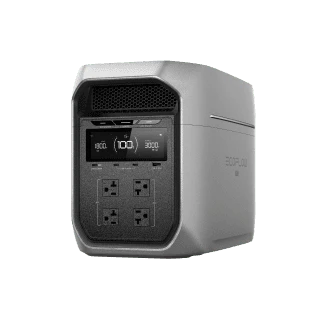
The EcoFlow DELTA 3 Ultra Plus. Starts at about 3kWh and grows to 11kWh with add-on batteries. It is also the quietest station in its class.
Get the DELTA 3 Ultra PlusShop at EcoFlowRead the full guide
Last reviewed: August 2026. Claim labels: Spec / Reported / Measured / Estimate, so you can separate facts from planning math.
If you’ve outgrown the under-$1,000 tier, or you’re building a van from scratch and want to skip the upgrade cycle, this is where the real picks live. These are 2kWh+ stations built for full-time van life: enough capacity to cover work, cooking, climate, and cloudy weeks without living in recovery mode.
I lived in a 2017 ProMaster with my partner Karlee for seven years on a Goal Zero Yeti 1400. It worked, but I spent more time doing power-station math than I’d like to admit: checking the percentage, deciding whether we could cook that night, hauling the unit to coffee shops in bad weather. When I crossed into the modern fast-charge LiFePO4 class with a Bluetti Elite 200V2, the daily mental load dropped immediately. The picks on this page are what I’d buy today if I were starting fresh.
Quick Answer
For most full-time van builds, 3kWh is the sweet spot. It clears electric cooking, two cloudy days, and a hot Florida week without forcing daily recovery moves. Below 3kWh, you’re back to running the math; above it, you’re paying for capacity most vans never use.
The three picks below bracket the tier from three angles: best density, best expandability, best solar input. The under-$1,000 picks will keep you stable if your routines are tight, but they force smaller buffers and more frequent recovery sessions. Start there and upgrade when the friction gets old.
Quick routing#
- Budget-friendly path: Under-$1,000 picks
- Entry tier: Under-$500 picks
- Size your system first: Van Power Calculator
- Methodology: How We Test and Source Van Power
Our overall picks at a glance#
| Product | Best For | Price | Pros | Cons | CTA |
|---|---|---|---|---|---|
| BLUETTI Elite 300 | Best value in the 3kWh class | $$$$ | 3,014Wh in 58 lbs, fast AC recovery, LFP 6,000+ cycles | Not expandable, only 2 AC outlets, ~50dB while charging | Check Amazon PriceShop at BLUETTI |
| EcoFlow DELTA 3 Ultra Plus | Best all-rounder for growing setups | $$$$ | 3,072Wh, expandable to 11kWh, 25dB quiet, 1,600W solar | 74 lbs, confusing product lineup naming | Check Amazon Price |
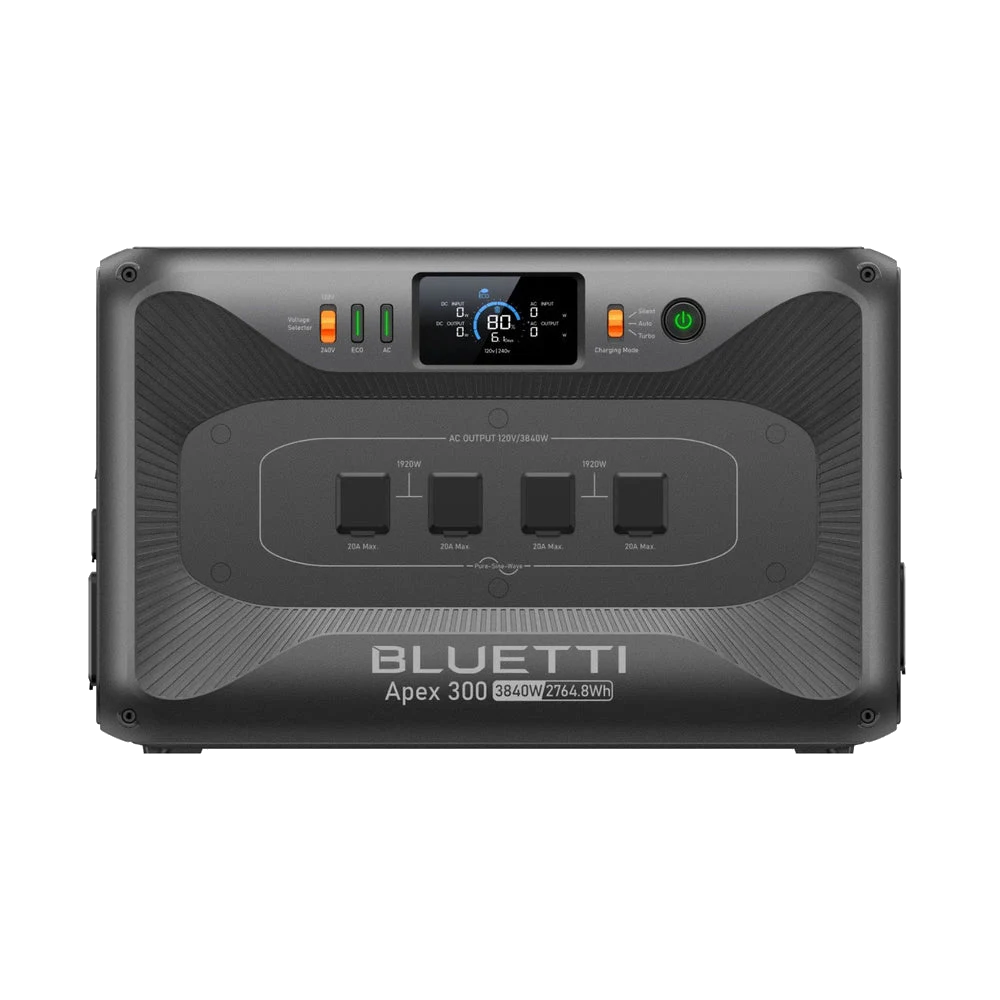 BLUETTI Apex 300 BLUETTI Apex 300 | Best for big systems | $$$$ | 2,765Wh, 2,400W solar input, expandable to ~20kWh, 0ms UPS | 85 lbs, needs separate fast-charge cable | Check Amazon PriceShop at BLUETTI |
BLUETTI Elite 300
Best For: Best value in the 3kWh class
Price: $$$$
Pros: 3,014Wh in 58 lbs, fast AC recovery, LFP 6,000+ cycles
Cons: Not expandable, only 2 AC outlets, ~50dB while charging
EcoFlow DELTA 3 Ultra Plus
Best For: Best all-rounder for growing setups
Price: $$$$
Pros: 3,072Wh, expandable to 11kWh, 25dB quiet, 1,600W solar
Cons: 74 lbs, confusing product lineup naming
BLUETTI Apex 300
Best For: Best for big systems
Price: $$$$
Pros: 2,765Wh, 2,400W solar input, expandable to ~20kWh, 0ms UPS
Cons: 85 lbs, needs separate fast-charge cable
How fast they charge from a normal wall outlet#
Rated AC input is the spec everyone compares, and in a van it is the wrong one. A standard US 15A, 120V outlet delivers 1,800W at absolute best, and electrical code derates a continuous load to 1,440W. A coffee shop, a campground pedestal, or an outlet sharing a breaker with a fridge will give you less than that, never more.
So any station rated above 1,800W is selling you input that an ordinary plug cannot reach. Here is the same three picks, ranked by how long each needs to hit 80% on a plug you can actually find:
The Apex 300 advertises more than twice the AC input of the other two and finishes within nine minutes of them. Its 3,840W is real, but it needs BLUETTI’s 30A or 50A fast-charging cable and a circuit to match, which means an RV pedestal or a dryer outlet. On the 15A plug in front of you, the extra 2,040W does nothing.
That is not a reason to skip the Apex. It is the reason to buy it for its 2,400W of solar input, which is what it is best at, rather than for a charging number you will rarely reach. And it is why none of these three is worth choosing over the others on rated input alone. At this capacity, every one of them is an overnight or a long-lunch charge, and solar or the alternator is the input that sets them apart.
BLUETTI Elite 300 (3,014Wh)
The Elite 300 is the pick I’d hand to someone building their first serious van and saying “I don’t want to think about power.” At 58 lbs for 3kWh, it has the best energy density in this tier. The tradeoff is no expandability: what you buy is what you get. For most van builds, 3kWh is more than enough.
Best for: Full-timers who want set-it-and-forget-it capacity without expansion complexity. Solo and couple builds where 3kWh covers the daily ceiling.
Not for: Builds planning to scale to 6kWh+ over time. If you think you’ll need expansion batteries, look at the DELTA 3 Ultra Plus or Apex 300 instead.
Van fit note: At 58 lbs, one person can move it. The compact footprint fits under most van bed platforms. The TT-30R RV port is a plus if you park at campgrounds with hookups.
BLUETTI Elite 300
Check Elite 300 PriceShop at BLUETTIEcoFlow DELTA 3 Ultra Plus (3,072Wh)
This is the all-rounder. It matches the Elite 300 on base capacity but adds expandability, higher AC output, stronger solar input, and quiet operation. The 25dB claim makes it the quietest station in this class. That matters if you camp near others or work from the van.
Best for: Builds that might grow. Quiet-hours camps where fan noise matters. The specific triggers for wanting expansion later: a family of three or more in one van, full-time work across multiple devices, hot-climate full-timing (a Florida summer back-to-back with an Arizona one), long parked stretches with no drive days, or a heavy electric kitchen where every meal is cooked off-grid. If two or more of those describe you, buy this one and plan the expansion bay now.
Not for: Weight-sensitive builds. At 74 lbs it needs a permanent install spot. If you move your station between the van and a campsite table regularly, the Elite 300 is more practical.
Van fit note: The expansion batteries add significant weight and footprint. Plan your mounting before buying expansion units. The 0-80% in 48 minutes claim (Spec) makes shore power stops efficient.
EcoFlow DELTA 3 Ultra Plus
Check DELTA 3 Ultra Plus PriceShop at EcoFlowBLUETTI Apex 300 (2,765Wh)
The Apex 300 is the solar monster. 2,400W solar input is the highest you’ll find in a self-contained portable station. The catch for a van: the roof is the limit. Ours fits 300W around two fans, and most van roofs top out somewhere in the hundreds of watts, nowhere near 2,400W. You only use that input with portable panels set out on the ground, or on a bus or trailer roof. If that’s your setup, or you plan to expand past 10kWh, this is the pick.
Best for: Dedicated solar builds with 1,000W+ of panel capacity. Van lifers who park for extended periods and need solar to carry the load. Builds planning long-term expansion to 10kWh+.
Not for: Casual solar users. If you run 200-400W of panels, you’ll never touch the 2,400W input cap. The Elite 300 or DELTA 3 Ultra Plus will serve you better for less weight. At 85 lbs, this is a permanent-mount-only station.
Van fit note: The 85 lb weight means this goes in once and stays put. Plan for a dedicated battery bay. The 3,840W AC output can handle electric cooking appliances, which opens up kitchen options other stations can’t touch.
BLUETTI Apex 300
Check Apex 300 PriceShop at BLUETTIWhat about Goal Zero?
Fair question. I ran a Goal Zero Yeti for seven years, so people ask. At this 2kWh+ tier, the three picks above beat it on capacity and price per watt-hour. Goal Zero’s current flagship in this price range, the 6th-gen Yeti 1500, is 1,505Wh, a real step down in capacity from the three above. But it finally charges fast (about 1.1 hours on the wall) and switched to cold-tolerant LiFePO4, fixing what frustrated me about my old unit for years.
If the bombproof name-brand build matters more to you than maxing out watt-hours, it’s a legitimate buy. If you want the most capacity and expandability per dollar, stay with the three above. Full story in my 7-year Yeti review.
Is this tier right for you?#
Tap the situation that sounds like you.
🍳 I cook electric every night: induction, air fryer, Instant Pot. Good fit
This is the tier for you. Electric cooking burns 200–400Wh per meal, and any single-meal session can drain a 1kWh station. With 3kWh, you can cook electric daily and still have buffer for the fridge, fans, and a cloudy day on top.
If you also park for long stretches without driving, the Apex 300's 2,400W solar input is the strongest hedge against running out.
☁️ I park for cloudy weeks and can't drive often. Good fit
Yes, 3kWh+ is what you need. Smaller stations force a daily recovery move; this tier gives you 2–4 days of buffer before you have to do anything. That's the difference between van life feeling stable and feeling like a survival exercise.
Pair the station with as much solar as your roof fits, plus portable panels you can set out on the ground when you're parked. The Apex 300 is built for exactly this if you carry ground panels.
💻 I run a laptop + fridge + fans daily, but cook with propane. Probably overkill
You could be fine at the under-$1k tier. Without electric cooking, daily Wh is usually 600–900Wh in a moderate climate, and a 1kWh+ station with fast recharge can absorb that.
If you're nervous about cloudy weeks, hot summers, or future-proofing, the Elite 300 still makes sense as a long-term call. Otherwise, start at under-$1k and upgrade later.
🆕 I'm new to van life and just testing the lifestyle. Skip this tier
Don't start here. Track your real daily Wh for a few months on a smaller station before committing $1,000+ to a permanent install. Buying small first isn't a waste. It's how you find out what your real load is.
Start at under-$500 or the under-$1k tier. Move up only when you can name the constraint that's pinching you.
What 8 years of van life taught me about this tier#
The week that rewired how I think about power +
Santa Rosa Beach, Florida, summer 2019. Seven days of overcast humidity, brutal heat, fridge running at peak draw, fans on every night. Almost nothing from the panels. I hauled the Yeti 1400 into a coffee shop nearly every day that week and still couldn't keep us above 30%. The 25-hour wall charger meant two hours plugged in got us about 8% back.
That week is the origin of everything I now write about recovery-first power. The lesson: you don't size for an average day, you size for the worst week you'll realistically encounter. If your number doesn't survive a Florida summer cloudy stretch with the fridge at peak draw, your number is too small.
Recharge speed beats raw watt-hours +
Going from a 25-hour Yeti charger to a 1.5-hour Bluetti charger felt like a different category of product, not the same category with better numbers. The Yeti's 1.3kWh capacity was real on paper and useless in practice when bad weather hit. The Bluetti hits 80% in about an hour from a wall outlet (Measured), which means a coffee shop stop is a real recovery window instead of a symbolic one.
When you're shopping the 2kWh+ tier, look at the wall-charge time before the watt-hour number. The picks on this page all have fast wall recovery. That's not a coincidence.
Calibration drift is universal in this class +
Both my Yeti 1400 and my current Bluetti Elite 200V2 had state-of-charge readout drift. The display would read 50% after lunch, then drop to 25% an hour later, then zero out. The fix on both: a full 100→0→100 cycle. Drain it under load, then refill it at a steady wattage with nothing pulling from it.
Plan to run it on any new station in the first month, before you need it. Trust me: discovering this when you're already low on power is a bad time to learn.
Weight changes how you live with the station +
The Yeti 1400 was 45 lbs and I carried it everywhere: into coffee shops in San Diego, into family houses in Lakewood to warm it up in cold Colorado winters. The Elite 300 at 58 lbs is borderline portable; the Apex 300 at 85 lbs is install-once-and-leave-it.
Decide before you buy whether your station is going to move with you. If you live in cold-winter places without a Webasto or diesel heater, portability matters more than you'd expect. Lithium chemistry will not accept a charge below freezing, and the easiest fix is bringing the unit inside somewhere warm.
Couples math is real +
Karlee and I both use the system every day. The friction of "are we going to be okay tonight" lands on the relationship, not just on the gear. The reason I lean hard on the 2kWh+ tier now is the same reason I lean toward two roof fans and T-vent windows on both sides: the small daily-friction reductions compound across years.
The cheaper tier works. The 2kWh+ tier works and you stop having the conversation. For couples especially, that's the upgrade math that matters.
Stations we didn’t pick#
EcoFlow DELTA Pro 3 (4,096Wh, ~$2,399) +
The most capable single unit on the market, but at 114 lbs it needs two people to lift. Better suited for large RVs and skoolies than standard vans. If you have the space and weight budget, it's a serious contender. For most ProMaster-class builds, the Elite 300 or DELTA 3 Ultra Plus get you the same daily comfort at half the weight.
Jackery Explorer 2000 Plus (2,042Wh) +
Solid brand and a well-built unit, and Jackery discounts aggressively enough that the sticker price is rarely what you pay; check the current sale before comparing. The problem is the math never catches up: the Elite 300 gives you nearly 50% more capacity for similar or less money. The expandability is useful, but Jackery's expansion batteries are pricey enough that the system math gets uncomfortable fast.
Anker SOLIX F2000 / 767 (2,048Wh) +
Solid build quality and Anker's customer service is consistently good. The 1,000W solar cap and 1,440W AC input are showing their age against 2025–2026 competitors though. The wheels are a real plus. If portability matters and you're okay sacrificing some recharge speed, it's still a reasonable pick.
BLUETTI AC200L (2,048Wh), being phased out +
Was one of the most popular van life picks for years. Bluetti has started phasing it out, and it's already discontinued in some regions as the Elite line takes over. If you find one heavily discounted with a warranty, it's still a solid buy. For new purchases, the Elite 300 offers 50% more capacity at similar weight and a better cycle rating, so it wins in almost every scenario.
Frequently asked#
How long do LFP batteries last in van life? +
The Elite 300 and Apex 300 are rated 6,000+ cycles to 80% capacity. That's roughly 16+ years if you cycle once a day. Even at heavy daily use, you'll likely upgrade for new technology long before the battery wears out. LFP cycle life isn't the limiting factor in this class.
Is 2kWh+ overkill for a solo van? +
Depends on cooking. Solo + propane cooking + laptop + fridge can run comfortably on 1kWh+. Solo + electric cooking + AC for hot nights pushes you into 3kWh territory regardless. Size for your worst week, not your average day.
Does it matter if I move every few days vs park for weeks? +
Massively. If you drive every 2–3 days, alternator charging gives you a real daily recovery option and you can lean smaller. If you park for weeks at a time, solar is your only recovery, and capacity + solar input are the only things that matter. The Apex 300 exists for that scenario.
Should I wait for the next generation? +
The 2025–2026 generation (Elite 300, DELTA 3 Ultra Plus, Apex 300) is a real step change from the 2022–2023 era: faster wall charging, higher solar input, longer LFP cycle ratings, lighter for the same capacity. Waiting another year for marginal gains isn't worth the friction of running undersized today. Buy when your budget allows and your usage demands it.
Recovery-first routines still matter#
A bigger battery doesn’t fix bad habits. These stations give you more margin, but you still need routines:
- Morning sets the plan, midday catches drift, night protects tomorrow
- One weekly reset stops the same problem repeating
- All four live in the Daily Van Power Mode System, organized by mode rather than by clock
Ready to commit?