
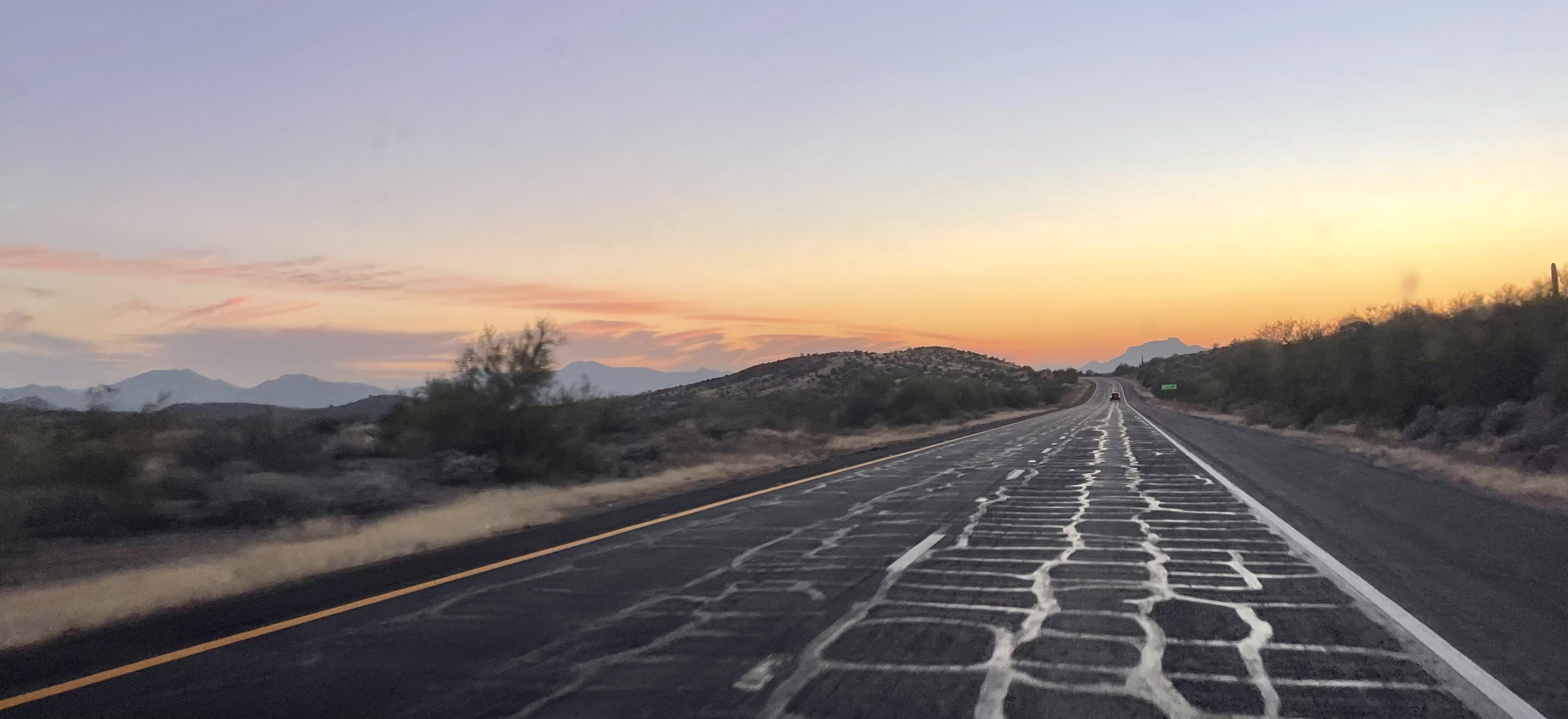
A black 2017 ProMaster soaks up heat like it’s the whole point of the vehicle. The exterior cooks in direct sun, the cargo area turns into an oven, and everything inside it (fridge, power station, food, us) pays the tax. We ran a Goal Zero Yeti 1400 and a Dometic CFX65DZ in that van across the country for years, through desert summers and Gulf-coast humidity, and the heat lesson wasn’t the one I expected going in.
The temperature isn’t what beats your power system. What beats it is heat and no sun showing up on the same day. Arizona in July is brutal, but the sun that’s cooking your van is also pinning your solar array. The humid Gulf coast is where I actually ran out of power, because down there the heat and the cloud cover travel together.
The Black Van Tax#
Black vehicle exteriors absorb far more solar radiation than white or silver. A white ProMaster in the same July sun runs a meaningfully cooler interior, and that matters for everything living inside: the power station, the fridge, the food, you. Interior temperatures in an unventilated black van in direct midday sun can push past 120°F, which is well documented for any dark vehicle left in the sun. Run the MaxxAir fans and a real ventilation plan and the occupied daytime range settles into the 90s, sometimes higher. That’s the environment your gear operates in either way.
We chose black for stealth and it did its job. The heat is the bill that comes with it, and I’ve paid it in two very different climates.
Arizona: Dry Heat Is a Load Problem You Can Pay For#
We passed through Arizona in summer more than once and spent a winter there too, so I’ve seen the van both cooking and comfortable in the same state. In summer heat the fridge runs noticeably more. No surprise: a compressor holding 38°F against a hot cargo bay cycles harder and longer, so the daily draw climbs.
Here’s the part that surprised me. Even with the fridge working overtime, keeping up was never the fight in the desert, because the same sun that’s roasting the van is dumping power onto the roof all day. Dry air, high sun, long clear stretches. The array kept pace with the extra fridge load without much drama. And desert nights let go of the heat. Once the sun drops, dry air sheds warmth fast, the interior cools, and the fridge finally gets a break. Morning solar in Arizona is some of the best charging I’ve ever seen.
So in dry heat, the extra load is real, but you’re handed the tool to pay for it. Budget the fridge high, park in shade when you can, and the sun does the rest.
The Gulf Coast: Humid Heat You Can’t Pay For#
Then there’s the Florida panhandle, and that’s where a black van ran me dry. Humid heat is a different animal. The number on the thermometer can be lower than Arizona, but the misery is higher, and worse, the recovery is gone.
The problem is that on the Gulf coast the heat and the clouds arrive together. It gets hot and sticky and the sky goes flat gray, sometimes for days. The fridge is grinding away at its high-heat draw, the fans can’t stop, and the one thing that would refill the battery, the sun, is behind an overcast wall. High load, low harvest, same day. That’s the combination that empties a power station.
Worth being precise about, because it gets said sloppily a lot: humidity itself doesn’t dim your panels. A sunny humid day gives you the same harvest as a sunny dry one, you’re just paying more for the fridge. What actually costs you the sun is cloud cover. The two happen to travel together on the Gulf coast, and that correlation is the whole problem, but they’re two separate things and it matters when you’re planning. If your humid summer is mostly sunny, you’re in better shape than this section makes it sound.
The worst of it was a seven-day overcast stretch in summer. Brutal heat, brutal humidity, fridge cycling far more than it ever did in mild weather, fans going nonstop, and next to nothing coming off solar. I ended up hauling the Yeti 1400 into coffee shops nearly every day that week just to claw back some charge, and with that station’s slow input I was getting maybe ten to twelve percent per session. The humid nights don’t rescue you either. The air holds its heat after dark, so the interior never really resets and the fridge keeps working through the night.
The Fridge Numbers#
The fridge is where heat hits your power budget hardest, and I have real numbers on this one because we ran the same Dometic CFX65DZ across every climate.
| Conditions | Measured draw |
|---|---|
| Hot, humid summer (high ambient) | 20–25W avg |
| Mild climate (spring, fall, moderate temps) | 10–12W avg |
The compressor doesn’t sip a steady 25W. It cycles on near 60 to 80W and off at zero, and in high heat it’s on far more than off, so the hourly average lands at 20 to 25Wh. In mild conditions it loafs, maybe fifteen or twenty minutes an hour, and the average drops to 10 to 12Wh.
Over a full day in serious heat, the fridge alone can eat 480 to 600Wh before you’ve touched a laptop, a fan, or a light. On a 1,000 to 1,400Wh station, that’s a big slice of your capacity gone just to keep food cold. If you plan your fridge load off the spec sheet, you’ll pencil in something like 10 to 15W and feel conservative. In a dark van in real summer heat you’re undercounting by half.
What to Plan For#
The lesson from both climates points the same way: plan for the day when the load is high and the sun is missing, not for the hottest afternoon. Peak temperature is survivable. High load with no harvest is what strands you.
- Budget the fridge at 25W for hot-climate use, not 10 to 12W. Add it to your other loads before you size anything.
- Value recovery speed over raw capacity. That coffee-shop week punished the Yeti’s slow input more than its watt-hours. When the sun disappears, how fast you can refill from any outlet is the whole game.
- Shade is free capacity. A shaded spot with airflow runs a cooler van, a lazier fridge, and a healthier battery. It’s the cheapest upgrade there is.
- Respect the humid combo. Dry heat you can plan around with panels and patience. Humid, overcast heat needs either fast charging, more battery, or the willingness to go find a wall.
If you’re building for hot weather, the black van makes every one of these harder, and a white or silver shell buys back real watt-hours in fridge draw alone. But whatever color you’re running, size your system for the low-sun days. The desert taught me the load. The Gulf coast taught me the load with nowhere to get it back.