
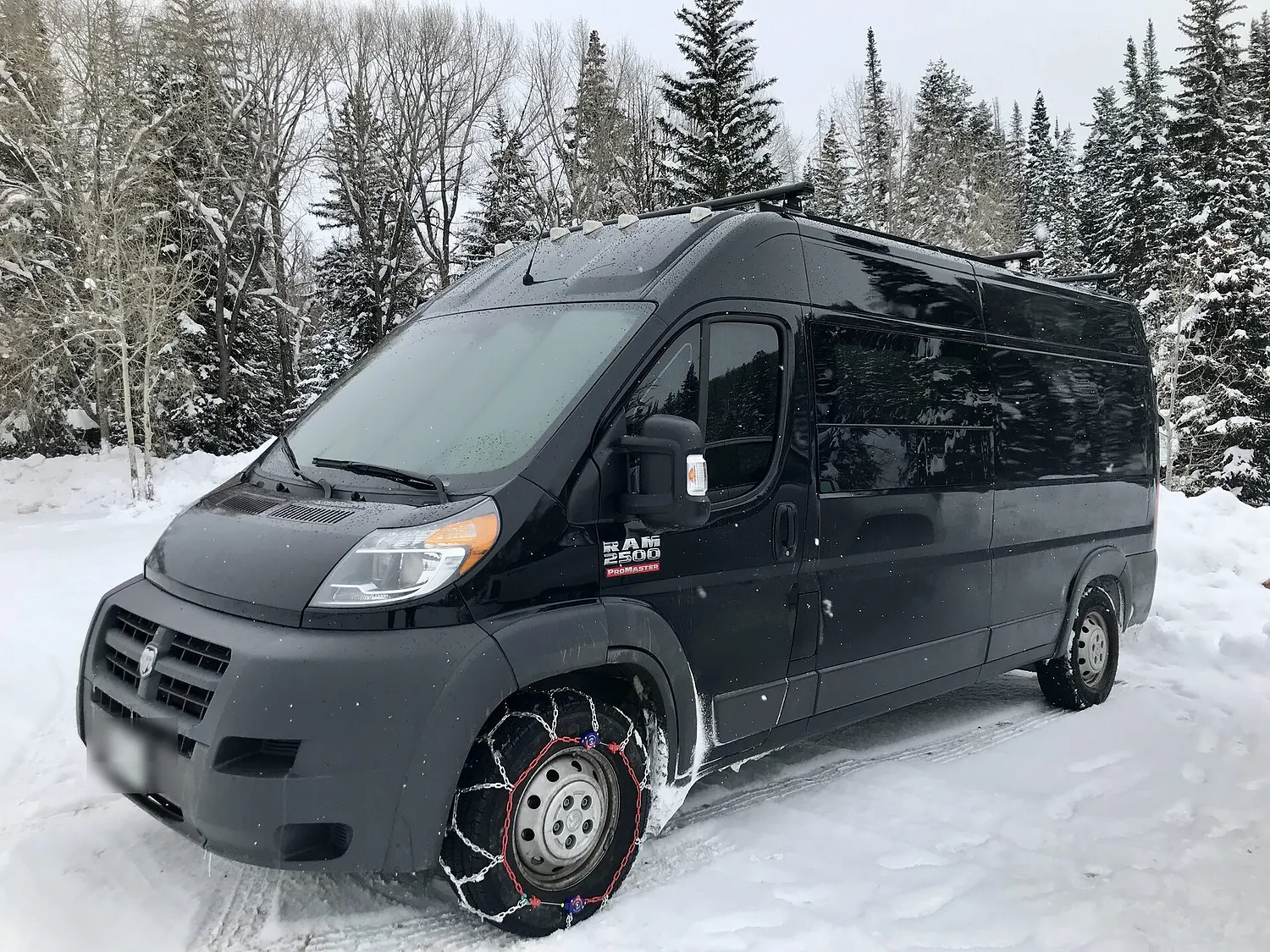
The first time it happened, I thought the Yeti 1400 was broken.
We were in Colorado, deep winter, and the power station wouldn’t charge. I plugged it into a wall outlet and got nothing. Tried the solar panels, nothing. The screen was on, the display showed a low battery, but it refused to accept power from any source.
What Happens Below Freezing#
Lithium batteries (including the LFP cells in most modern power stations) have a built-in protection system that prevents charging when the internal temperature drops below a certain threshold. For most units, that’s around 32°F (0°C). The battery management system locks out all charging input until the cells warm up.
This isn’t a flaw. It’s a safety feature. Charging lithium cells below freezing can cause permanent damage: lithium plating on the anode that reduces capacity and can create safety risks. The BMS is doing its job.
But when you’re living in a van and your power station has been sitting in 20-degree weather for three days straight, “doing its job” means you have a very expensive brick that won’t accept power.
The Warm-Up Problem#
Here’s the part that surprised us: warming it up isn’t fast.
If the battery has been cold-soaked, it takes 6 to 24 hours at room temperature before the internal cells warm enough for the BMS to allow charging again. Measured Not 20 minutes. Not an hour. Where you land in that range depends on how cold it got and how long it stayed there. A hard multi-day freeze is the 24-hour end of it.
That means you need to get the power station somewhere warm. For us in Colorado, that meant carrying a 45-pound Yeti 1400 into a family member’s or friend’s house in Lakewood. You set it inside, wait overnight, and try again in the morning. Sometimes it would accept a charge by evening. Sometimes it took until the next afternoon.
While you’re waiting, you have no power. No fridge, no devices, no fans. In winter. When the days are short and solar input is already minimal.
Solar Makes It Worse#
Winter in Colorado already cuts your solar production significantly. The sun sits low in the sky, the days are short, and if you’re in the mountains, terrain shadows can knock out direct sunlight by mid-afternoon.
Our 300 watts of Renogy panels, which could keep up on a decent summer day, produced a fraction of their rated output in winter. Some days we’d get maybe 60-80 watts of actual production. On cloudy days, essentially nothing useful.
So the one time of year when you need the most help keeping the battery charged is also the time when solar contributes the least, and the cold can lock you out of charging entirely.
That combination, low solar plus cold lockout, is what makes winter hard in its own specific way. Winter is a supply problem: the load stays ordinary, but everything that refills the battery is compromised at once. Summer in Florida is the opposite, a demand problem, where the fridge runs flat out on exactly the overcast days the panels can’t deliver. Different failures, same underlying enemy: high load meeting low sun. Neither season is “the hard one.” They just break you from opposite directions.
What We Do Differently Now#
We switched from the Goal Zero Yeti 1400 to a BLUETTI Elite 200 V2 on Black Friday 2025. The chemistry changed from NMC to LFP, but the cold rule didn’t go away: below freezing, the BMS still blocks charging. Spec
What changed for us wasn’t the box or where we keep it. Same van, same spot, same insulation as before. It was adding a charging path that doesn’t care about the sky.
We run the BLUETTI Charger 2, which pulls from the van’s alternator while driving and takes solar at the same time. The older Charger 1 made you pick one input or the other. That sounds like a small difference until it’s February.
The Charger 2 is the winter upgrade. When solar is weak and you can’t count on finding an outlet, the alternator becomes the primary source, and a drive to the grocery store or the laundromat turns into a charging session. With the old Yeti and solar alone, that same drive contributed nothing.
One habit worth keeping: store the station inside the living space, not in an uninsulated garage or gear bay. It won’t stop a hard freeze, but the interior of an occupied van holds heat far better than a sealed storage compartment, and staying above the cutoff is the whole game.
What This Means If You’re Buying#
If you’re shopping for a power station and you spend any time in cold climates, here’s what matters:
Cold charging protection is the rule, not the exception. Both chemistries do it: the Yeti (NMC) did, and our BLUETTI (LFP) does. Spec Assume any station you’re looking at will refuse charge below freezing unless its spec sheet says otherwise.
The exception worth shopping for is battery heating. Some newer stations include a heating function that warms the cells enough to accept charge in the cold, which changes the math completely for winter travel. It isn’t universal and it isn’t always on by default, so read the spec sheet for that feature specifically rather than assuming the brand or the chemistry covers you.
Recovery speed is what separates setups. A station with fast AC charging recovers far quicker, once it’s warm enough to accept power, than one with a 25-hour charge time. Our Elite 200 V2 refills in roughly 1.5 hours from a wall outlet Measured against the Yeti 1400’s stock charger at around 25 hours. Spec Both sit in our real-world power data next to the cold-weather cutoffs. The Yeti’s slow charger meant that even after a full day of thawing, getting back to full took another full day on the wall.
An alternator charger is the single biggest winter upgrade you can make. Solar is unreliable in winter. Wall outlets require finding one. But if you’re driving at all, even short trips, an alternator charger converts drive time into charging time. The BLUETTI Charger 2 is rated for up to 800W from the alternator and up to 600W from solar at the same time, capped at 1,200W combined; the older Charger 1 tops out at 560W and makes you choose one input or the other. Spec On our van a firmware update has since pulled the real combined ceiling down to about 800W, which barely matters in winter: the alternator was carrying it anyway. Details here.
Insulation matters more than you’d think. Where you keep the power station in your van and how well that space retains heat determines whether you’re dealing with a minor cold delay or a full 24-hour lockout. Treat battery placement like fridge placement: think about temperature, not just convenience.
Related Reading#
- 7-Day Off-Grid Simulator
- Why Your Power Station Battery Percentage Lies to You (And How to Fix It)
- Why I Chose Portable Power Over a Fixed Battery System
- Real-World Van Power Data: Measured, Not Marketed
- Best Power Stations for Van Life: 2kWh+ Overall Picks
Based on 7 years with the Goal Zero Yeti 1400 (2018–Nov 2025) in Colorado winters, and the BLUETTI Elite 200 V2 since Nov 2025. Charger specs from manufacturer listings. Claim labels: Spec where noted, otherwise Reported from direct experience.