
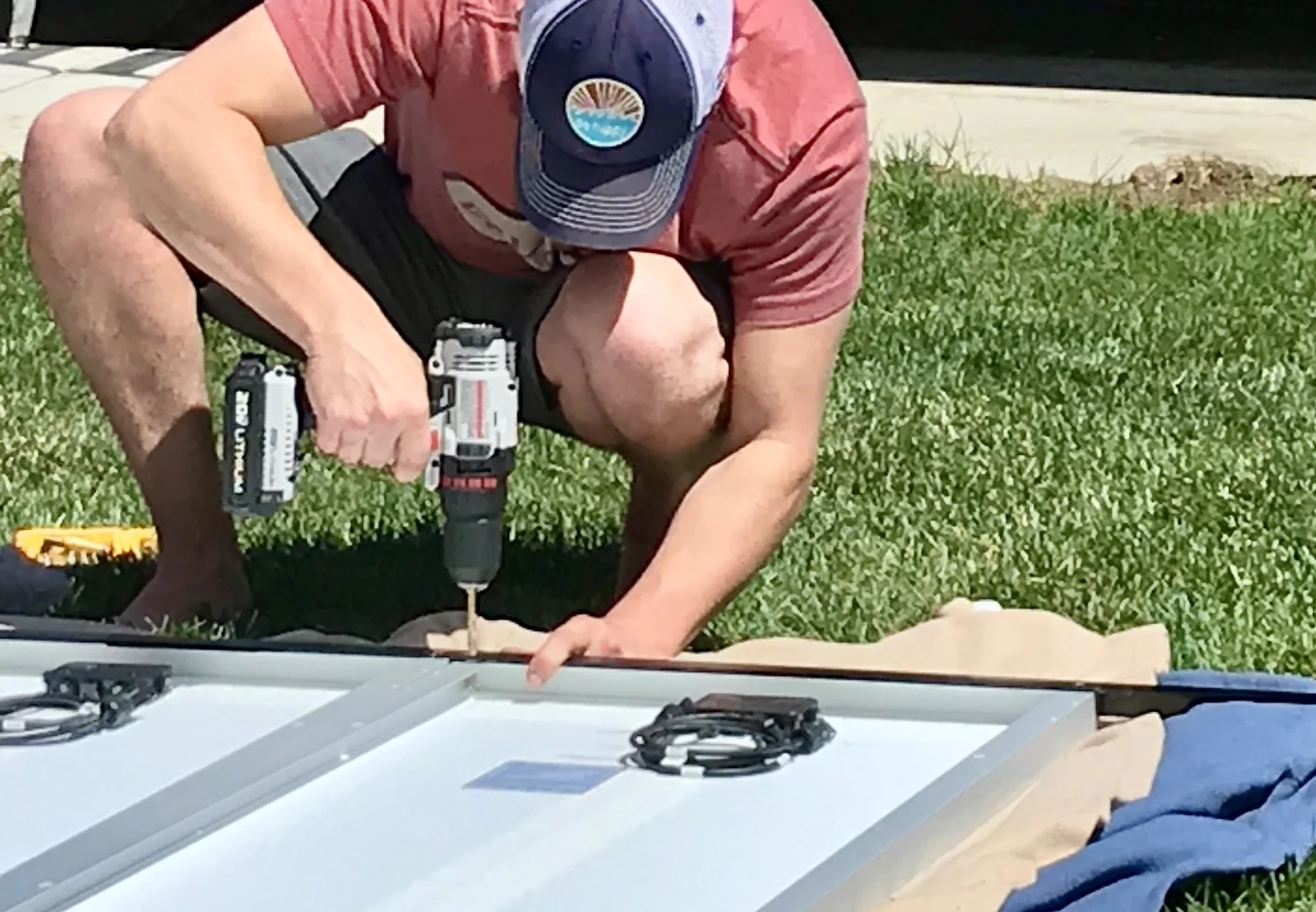
Six years in construction before I ever built a van out, on and off, most of it laying flooring and tile. Those tools ran every day, and cheap ones died, so I bought DeWalt.
Then we built our van, and I bought Ryobi.
That is not a contradiction. It is the whole point of this article, and it is the part every tool list on the internet gets backwards. You do not buy tools for the job. You buy them for how often the tool runs. A van conversion is a few months of intermittent work followed by years of occasionally fixing something. That is a completely different duty cycle from a jobsite, and it should buy a completely different drill.
The Rule: Buy for the Duty Cycle#
Search “van conversion tool list” and you get the same fifteen items on every site: drill, circular saw, jigsaw, angle grinder, oscillating tool, orbital sander, router, miter saw, heat gun, torque wrench, rivet gun, crimper, multimeter. The lists never tell you the one thing that decides any of it, which is how hard you are going to work the tool.
A flooring drill gets picked up thirty times a day, five days a week, for years. It gets dropped. It sits in a truck bed. Under that load the price gap between a budget brand and a professional one pays for itself, because the cheap one is going to fail and the failure costs you a working day. That was my situation, and DeWalt is what I ran. They lasted, they got used hard, and they kept going longer before going bad. If you use tools constantly, buy DeWalt and stop reading this section.
A van build is not that. You will use a drill heavily for a few months, then twice a year forever. Under that load you are paying a professional premium for durability you will never consume.
What I Bought#
A RYOBI ONE+ 18V four-tool combo kit: four tools on one 18V platform, a 1.5 Ah battery, a 4.0 Ah battery, a charger, and a 22-piece titanium drill bit set in the box. Quality against price is simply the best in that band for someone who is not using tools all the time, which is exactly what I am.
The combo kit matters more than the brand does. Buying four tools that share one 18V battery platform in a single box costs far less than buying four tools separately, and it settles the battery question before it becomes a problem. Two batteries is the number that matters there: a 1.5 Ah for light work and a 4.0 Ah for anything sustained means one is charging while the other is in the tool, which is the difference between working and waiting. Batteries are the real lock-in in cordless tools: every brand has its own, and they do not interchange. Pick a platform on your first purchase and you can add to it for a decade. Buy four tools from four brands on sale and you own four chargers and no spare batteries.
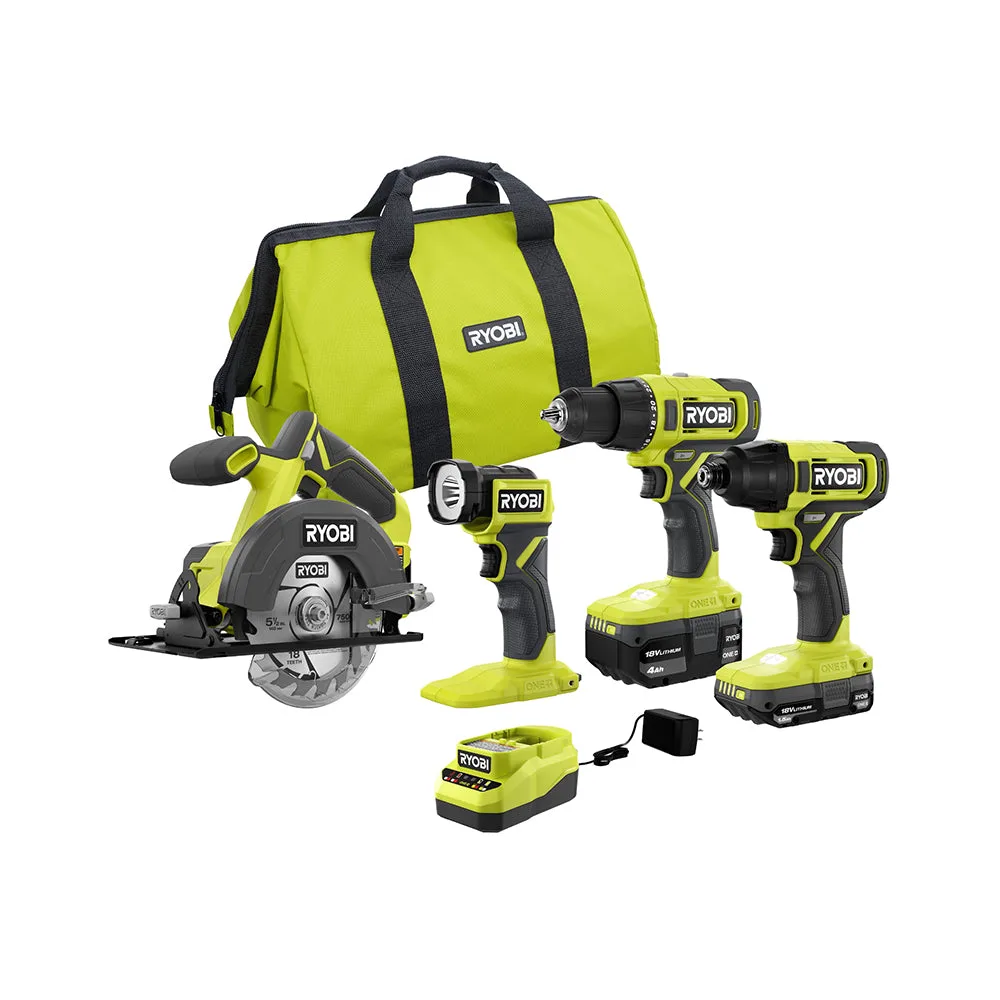 RYOBI ONE+ 18V Cordless 4-Tool Combo Kit (PCL1400K2)
See the kit I boughtSee it at Home Depot
RYOBI ONE+ 18V Cordless 4-Tool Combo Kit (PCL1400K2)
See the kit I boughtSee it at Home DepotI buy tools from both Home Depot and Amazon depending on what it is. Ryobi is a Home Depot house brand, so that one is a Home Depot purchase by definition.
If you are going to run tools constantly, the same kit logic applies, just one tier up: a DeWalt 20V MAX combo kit instead.
The Box Decides What You Own#
Here is the filter I use, and I have never seen it on another tool list.
Everything I own lives in one Husky 15 gal Connect jobsite cart in the back of the van. It is 26.1 in wide, 16.1 in deep, 15.8 in tall, on all-terrain wheels, with a telescoping handle, metal latches, a removable tool tray, and a 2 year warranty. That box is not a storage decision. It is the tool-buying rule.
If it fits in the box and I use it more than once, I own it. If it does not fit in the box, I borrow it.
Those three dimensions are the whole policy. A tool that is longer than 26.1 in does not get bought, however good the argument for it is, because a van has no garage. A tool you own but cannot carry is a tool stored at somebody else’s house, which is functionally a borrowed tool with extra steps and a purchase price. The box is a hard physical limit on the fantasy that you are going to own a full shop.
Mine is not sold anymore, and I am not going to pretend a link to something else is the box in my van. The closest current Husky is the 37 in heavy-duty rolling toolbox. It is bigger than mine, and it does not come with the stacking top, which is a separate Connect organizer you add. Pick whatever size your van will actually give up the floor space for. The number that matters is the one you measure yourself, then refuse to buy past.
The closest box to mineSee it at Home DepotRun the standard tool list through that filter and it sorts itself:
- Fits, used repeatedly, buy: drill/driver, jigsaw, rivnut tool, crimper, strippers, multimeter.
- Fits but used once, borrow: heat gun, oscillating tool, orbital sander.
- Does not fit, borrow or pay someone: table saw, miter saw, circular saw for full sheets.
I used family table saws for the cuts that needed one, along with anything else too big to live in the van. That is not a compromise I resent. It is the correct answer for a tool that costs real money, eats a garage corner, and gets used for one afternoon of a build.
I already owned the basic hand tools before any of this started, which is worth saying plainly because most tool lists quietly assume it and then present a total that pretends you started from zero.
I should also say that Karlee and I built the van ourselves, all of it. We never paid anyone to do any part of it. Every tool on this page is one I picked up and used, not one I watched somebody else use on a job I hired out.
The One Van-Specific Tool#
Everything above is generic. This is not.
A rivnut tool sets a threaded insert into sheet metal. You squeeze it, and where there was a hole in a thin steel wall there is now a machine-thread anchor you can bolt into and unbolt from, over and over, without touching the metal again. Screwing directly into van sheet metal gives you one attempt. A rivnut gives you a permanent, serviceable mounting point.
I used mine to replace the crank mechanism on a T-Vent window. That is exactly the kind of job a van throws at you years after the build is finished: a part wears out, it has to come off, and the thing it was mounted to has to survive being taken apart. Rivnuts are what make that a twenty-minute job instead of a drilling exercise.
They are cheap. On a list where I am telling you to buy the budget version of nearly everything, this is the tool I would tell you to just own.
Check rivnut tool priceThe Electrical Tools Are the Exception#
Two tools do not follow the borrow rule, for a reason that has nothing to do with convenience.
A ratcheting crimper makes a mechanically sound, gas-tight connection between wire and terminal. The ratchet is the point: it will not release until the crimp is fully compressed, so every connection comes out the same. A non-ratcheting hardware-store crimper gives you a different result every squeeze, and a bad crimp passes a continuity test on install and works loose six months later. Bad connections mean heat and voltage drop in a box you sleep in.
A multimeter is how you find out. Without one you are connecting things and hoping. Electrical problems do not appear on a schedule, either. They appear at ten at night when the charge controller is not reading the panels, and a multimeter at somebody else’s house is no multimeter at all.
Both are cheap, both fit in the box, both get used for the entire life of the van rather than the length of the build. Buy them.
Check crimper priceA basic adjustable stripper covers the rest of the wiring. It does not need to be nice, it needs to exist. Same for an auto-ranging multimeter: anything that reads voltage, continuity, and resistance correctly does the job.
What to Skip Until Something Forces You#
Angle grinder. It is in every build video because fabricators use them for metal work. If you are cutting steel or welding brackets, you need one. If your build is insulation, plywood, and wood furniture, you will not touch it.
Router. Edge profiles and dado cuts. Plenty of builds use zero router work. Wait until you have a specific cut you cannot make another way.
Rivet gun. Pop rivets are permanent. Rivnuts cover most van metal-mounting and come apart later, which is why the rivnut tool is on the buy list and this is not.
Table saw. Does not fit in the box, and will not fit in your van either. Borrow, or have the lumber yard cut your sheet goods.
The pattern in all four: buy the tool when a specific job appears that needs it, not in advance because a list said so. Buying specialty tools before you know your build is the most reliable way to spend money on a shop you will never use.
The Total#
I am not going to give you a receipt total for our build, because I bought tools across years from two retailers and I do not have one. What I can give you is the shape of the decision.
| Tool | Buy or borrow | Why |
|---|---|---|
| Drill/driver combo kit | Buy | Used in every phase; combo kit settles the battery platform |
| Jigsaw | Buy | Curves, wheel wells, fan cutouts; a circular saw cannot do it |
| Rivnut tool | Buy | The one van-specific tool; makes the build serviceable later |
| Ratcheting crimper | Buy | Safety-critical, consistent crimps, cheap |
| Wire strippers + multimeter | Buy | Cheap, permanent, needed long after the build |
| Circular saw | Borrow | One or two sheet-good sessions |
| Miter saw / table saw | Borrow | Does not fit in the van, used for one afternoon |
| Heat gun, sander, oscillating tool | Borrow | Minutes of total use across a whole build |
| Angle grinder, router, rivet gun | Skip | Only if a specific job appears |
Five things to own, one battery platform, one box they live in. That is the list.
Frequently Asked Questions
- Should I buy Ryobi or DeWalt for a van conversion?
- It depends on how often you use tools, not on what you are building. I spent six years in construction, mostly flooring and tile, and ran DeWalt then, because the tools went every day and cheaper ones died. For our van build I bought a Ryobi ONE+ combo kit, because a conversion is a few months of intermittent use followed by years of occasional repairs. Buy for the duty cycle, not the job.
- What is the one tool that is specific to a van build?
- A rivnut tool. It sets threaded inserts into sheet metal so you can bolt things to the van wall and unbolt them later, instead of drilling a fresh hole every time. I used mine about two years ago to replace the crank mechanism on the T-Vent window we open most. They are cheap, and nothing else on a general tool list does that job.
- How do I decide whether to buy a tool or borrow it?
- Use the box. Everything I own lives in one rolling jobsite cart in the back of the van, 26.1 by 16.1 by 15.8 inches. If a tool fits in the box and gets used more than once, I own it. If it does not fit in the box, I borrow it. That rule picked my table saw decision for me.
- Do I need a table saw or a miter saw for a van conversion?
- Probably not, and neither fits in a van. I used family table saws for the cuts that needed one. A lumber yard or hardware store will also cut sheet goods for you, which is worth pricing before you rent anything.