
The 30-second version
Do you own any power tools yet?
Starting from zeroTap for our pick
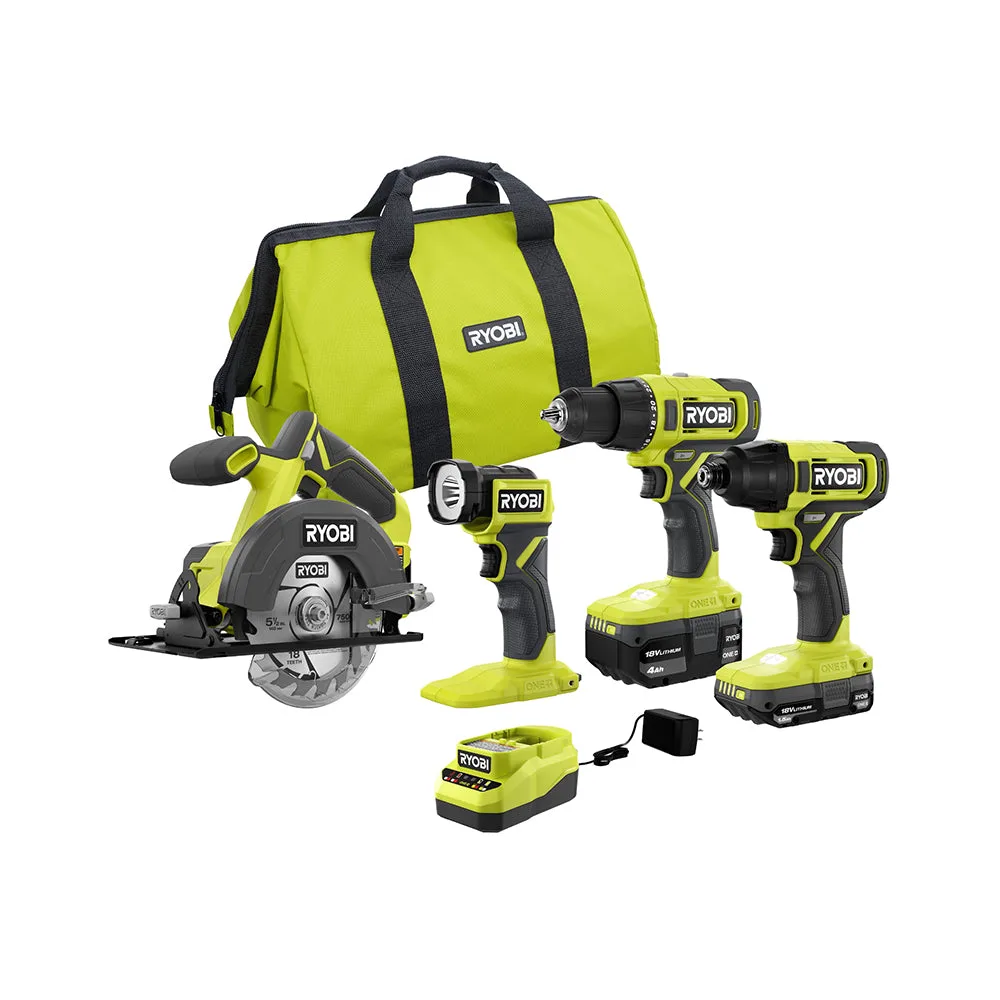
A Ryobi ONE+ combo kit. One battery platform and a far lower price per tool. It's the kit I bought for the van. Add a rivnut tool, a ratcheting crimper and a multimeter, and that's a complete first-build kit.
See the kit I boughtSee it at Home DepotI have a drillTap for what to add
Add a rivnut tool and a ratcheting crimper. The rivnut tool mounts into sheet metal in a way you can undo later. The crimper makes wiring that doesn't fail in year two.
Get the rivnut tool Get the crimperRead the full guide
Last reviewed: August 2026
Before I ever built a van out, I spent six years in construction, on and off, most of it laying flooring and tile. On a jobsite the tools run every day, cheap ones die, and a dead drill costs you a working day, so I bought DeWalt and they lasted.
Then Karlee and I converted our ProMaster ourselves, every bit of it, and I bought Ryobi on purpose.
That is the most useful thing I can tell you about buying tools, and it is the thing no tool list says: you buy for the duty cycle, not for the job. A van conversion is a few months of heavy intermittent use followed by years of fixing one thing at a time. Paying a professional premium for durability you will never consume is just a more expensive way to own the same drill.
Quick Answer
| Product | Best For | Price | Pros | Cons | CTA |
|---|---|---|---|---|---|
| RYOBI ONE+ 18V Cordless 4-Tool Combo Kit (PCL1400K2) | Intermittent use, first build | $$ | Four tools, one 18V platform, two batteries in the box | Home Depot house brand, so one retailer | Check Amazon PriceSee it at Home Depot |
| DEWALT 20V MAX Drill/Driver Combo Kit | Daily or near-daily use | $$$ | Survives being worked hard for years | You pay for durability a single build won't consume | Check DEWALT Price |
| Rivnut Installation Tool | Serviceable mounting in sheet metal | $ | The one van-specific tool here | Practice on scrap before you trust it | Check Tool Price |
| Electrical Crimper Set | Safe wiring | $$ | Ratchet forces a fully seated crimp every time | Cheap non-ratcheting kits vary wildly | View Crimper Picks |
RYOBI ONE+ 18V Cordless 4-Tool Combo Kit (PCL1400K2)
Best For: Intermittent use, first build
Price: $$
Pros: Four tools, one 18V platform, two batteries in the box
Cons: Home Depot house brand, so one retailer
DEWALT 20V MAX Drill/Driver Combo Kit
Best For: Daily or near-daily use
Price: $$$
Pros: Survives being worked hard for years
Cons: You pay for durability a single build won't consume
Rivnut Installation Tool
Best For: Serviceable mounting in sheet metal
Price: $
Pros: The one van-specific tool here
Cons: Practice on scrap before you trust it
Electrical Crimper Set
Best For: Safe wiring
Price: $$
Pros: Ratchet forces a fully seated crimp every time
Cons: Cheap non-ratcheting kits vary wildly
Is this tool list right for you?#
Tap the situation that sounds like you.
🔨 First van build, starting from zero tools. Buy a combo kit
Start with a combo kit rather than four separate tools. You get one battery platform, and the per-tool price is far lower. Add a rivnut tool, a ratcheting crimper, and a multimeter. That is a complete first-build kit. Do not buy specialty tools before you know what your build actually needs.
🔧 Already have basic tools: what's worth adding for a van? Rivnut + crimper
I already owned the basic hand tools before our build started, so this was my situation too. If you have a drill and a jigsaw, the two things to add are the rivnut tool, for mounting into sheet metal in a way you can undo later, and a ratcheting crimper, for wiring that does not fail in year two.
🚛 One-shot conversion, maximum borrow. Borrow the big stuff
Buy the drill/driver and jigsaw, since you will use both during the build and for years after. Borrow the table saw, the miter saw, and the circular saw for full sheets. I used family table saws for the cuts that needed one. The crimper and multimeter are cheap enough to own outright and you will want them for any future wiring.
⚙️ Building progressively, adding stuff over years. Battery platform matters
Pick a battery platform on your first purchase and stay on it. Batteries are the real lock-in in cordless tools: every brand has its own and they do not interchange. Buy four tools from four brands on sale and you own four chargers and no spare batteries. This is the single argument for a combo kit over picking tools individually.
The rule that picked every tool on this page#
Why I bought the budget brand after running the expensive one +
Across six years of flooring and tile work, my tools got picked up dozens of times a day, dropped, and left in a truck. DeWalt is what I chose then, and it is what I would choose again for that. They get used a lot more before going bad, and on a jobsite that difference is the whole argument.
A van build is a different machine entirely. You will work a drill hard for a few months and then reach for it twice a year for the rest of the van's life. For that duty cycle the quality-against-price winner is the budget brand, which is why I bought a RYOBI ONE+ combo kit and have kept using it.
The useful version of "what drill should I buy" is a question back: how often are you going to pick it up? Every day for years, buy DeWalt. A few months then occasionally, buy the cheaper one and put the difference into your build.
The box is the buy-or-borrow test +
Every tool I own lives in one Husky 15 gal Connect jobsite cart in the back of the van: 26.1 in wide, 16.1 in deep, 15.8 in tall, on all-terrain wheels with a telescoping handle and a removable tray.
That box is not a storage decision, it is the buying rule. If it fits in the box and gets used more than once, I own it. If it does not fit, I borrow it. A van has no garage, so a tool you own but cannot carry is stored at somebody else's house, which is a borrowed tool that you paid for.
My exact cart is discontinued. The nearest thing Husky sells now is the 37 in rolling toolbox, which is larger and does not include the stacking top; that is a separate Connect organizer. Size it to your van, not to mine.
Run any tool list through that filter and it sorts itself in about ten seconds.
The rivnut tool earns its cost +
A rivnut tool sets a threaded insert into sheet metal. Where there was a hole in a thin steel wall there is now a machine-thread anchor you can bolt into and unbolt from repeatedly, without touching the metal again. Screwing straight into van sheet metal gives you one attempt. A rivnut gives you a mounting point that survives being taken apart.
I used mine to replace the crank mechanism on a T-Vent window. That is the job a van actually hands you: not the build, but a part that wears out years later and has to come off cleanly.
They are cheap. On a page where I am telling you to buy the budget version of nearly everything, this is the one I would tell you to simply own. Practice a few sets in scrap metal before you trust one in the van; the feel takes a couple of tries.
A bad crimper causes failures you can't find +
The most underrated item on any van tool list is a ratcheting crimper. A poor crimp looks fine on install: it tests fine, continuity passes, everything looks good. Then road vibration works the connection loose and you get intermittent failures you cannot locate. Phantom power problems. Things that work sometimes.
The ratchet is the entire point: it will not release until the crimp is fully compressed, so every connection comes out identical. A non-ratcheting hardware store crimper gives you a different result every squeeze. Avoid cheap combo crimp-and-strip sets; the dies on budget kits are often the wrong size or shape for proper terminal compression.
Top picks by category#
A combo kit on one battery platform, a jigsaw, a 25 ft tape measure, a speed square, clamps, and safety gear. That covers most of a standard conversion.
RYOBI ONE+ 18V Cordless 4-Tool Combo Kit (PCL1400K2)
See the kit I boughtSee it at Home DepotA ratcheting crimper with the right dies, heat-shrink tubing, an adjustable stripper, and a multimeter to test before you close anything up. This is where a saved dollar costs you a week later.
Check crimper priceA rivnut tool and an assortment of inserts. Do not overtighten into sheet metal; the rivnut tool exists for exactly that reason.
Check rivnut tool priceWhat to borrow or rent#
Table saw and miter saw +
Neither fits in the box, and neither fits in the van. I used family table saws for the cuts that needed one. If you do not have that option, a lumber yard or hardware store will cut sheet goods for you, which is worth pricing before you rent anything.
Circular saw +
One or two big sheet-good sessions in a typical build. Not worth buying unless you are already on the same battery platform and the price delta is small.
Heat gun, orbital sander, oscillating multi-tool +
All three fit in a box, and all three get used for minutes across an entire build. Borrow them when a specific job appears.
Pop rivet gun, router, angle grinder +
Pop rivets are permanent, and rivnuts cover most van metal-mounting while still coming apart later. Routers and angle grinders belong to builds doing decorative woodwork or custom metal fabrication. Buy only once a specific repeating job appears.
Frequently asked#
Ryobi or DeWalt for a van build? +
Ryobi, unless you already use tools constantly for something else. I ran DeWalt laying flooring and tile because the duty cycle justified it, and bought Ryobi for the van because it does not. Buying the professional tier for one conversion is money that would do more inside the build.
Should I buy or rent a rivnut tool? +
Buy it. They are cheap, they fit in the box, and you will use one long after the build is done. A rental assumes you know in advance when a part is going to fail. You do not.
What tool gets most underestimated in a first build? +
The crimper. New builders spend on panels and hardware and then wire the whole van with a cheap combo crimp kit. The wiring is what fails in year two, and it fails in a way that is hard to trace.
Do I need a generator or compressor for the build? +
No. A standard conversion can be done with cordless tools and a hand pump. If you are spraying foam or driving air-powered fasteners, rent for that session.
Buy for the duty cycle