
The 30-second version
Can your power station run 1,000–1,200W?
YesTap for our pick
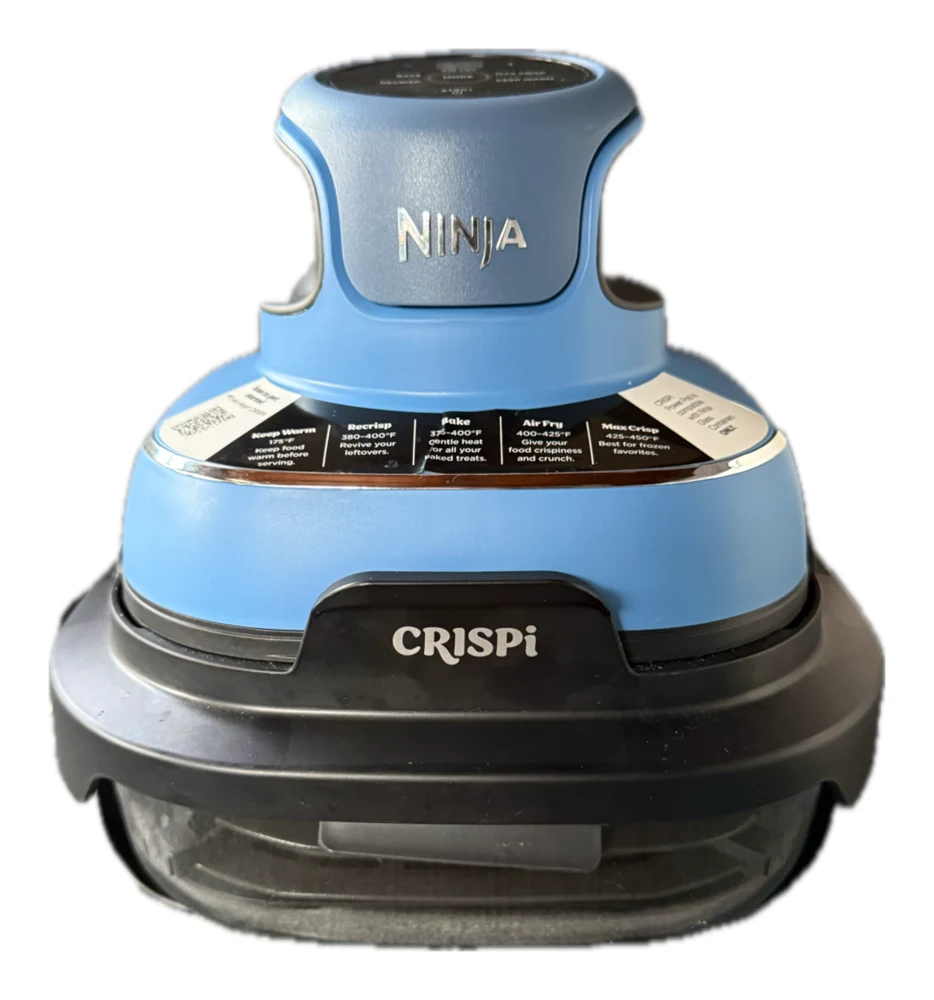
An induction burner, plus the Ninja Crispi air fryer. Induction is how we cook most of the time; the Crispi does a lot of the food faster than a pan, with less heat in the van.
Get an induction burner Get the Ninja CrispiNot yetTap for our pick
A two-burner camp stove until your power catches up. It needs no power and works anywhere. We had one for a short time and didn't keep it, because we cook on induction; for us a small Jetboil covers the odd time we're not cooking electric. If your station can't run an induction burner yet, a camp stove is the stopgap.
Get a two-burner stoveRead the full guide
Last reviewed: August 2026
We cook together, and Karlee is the main cook. She has been cooking full-time out of this van for eight years. We’ve cooked in San Diego parking lots in December, Colorado campsites at 10,000 feet, and Florida heat in August. Between us we know what gear survives daily use, what makes cooking fast enough that you actually do it, and what makes it annoying enough that you end up spending money on takeout instead.
This page is what we’d buy if we were starting from scratch today.
Quick Answer
| Product | Best For | Price | Pros | Cons | CTA |
|---|---|---|---|---|---|
| Portable Induction Cooktop | Daily cooking | $ | No flame, no fuel, how we cook most days | Needs a power station that can run it | Check Induction Cooktop Price |
| Ninja Crispi Portable Air Fryer | Power-capable builds (1000W+) | $$ | More variety, less heat in the van, easy cleanup | Requires real power, not for small battery setups | Check Crispi Price |
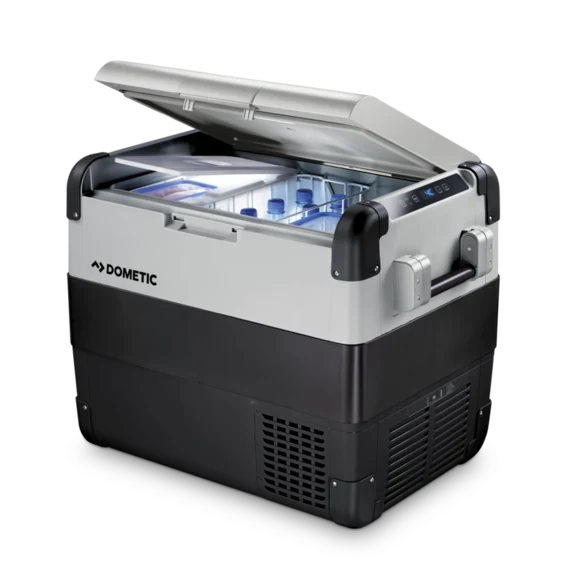 Dometic CFX 65DZ Dual-Zone Fridge/Freezer Dometic CFX 65DZ Dual-Zone Fridge/Freezer | Full-time refrigeration | $$$ | Precise temp control, 24/7 reliable, dual zone | Chest-style daily reach-in fatigue | Check CFX 65DZ Price |
Portable Induction Cooktop
Best For: Daily cooking
Price: $
Pros: No flame, no fuel, how we cook most days
Cons: Needs a power station that can run it
Ninja Crispi Portable Air Fryer
Best For: Power-capable builds (1000W+)
Price: $$
Pros: More variety, less heat in the van, easy cleanup
Cons: Requires real power, not for small battery setups
Dometic CFX 65DZ Dual-Zone Fridge/Freezer
Best For: Full-time refrigeration
Price: $$$
Pros: Precise temp control, 24/7 reliable, dual zone
Cons: Chest-style daily reach-in fatigue
Is this kitchen plan right for you?#
Tap the situation that sounds like you.
🍳 Full-timer who actually cooks daily. Induction + fridge + air fryer
This is exactly the page for you. An induction burner handles daily meals; the fridge changes what you can buy and store; the air fryer expands variety without heating up the van. Just make sure your power system can sustain 1,000–1,200W before you commit to the air fryer.
If your power isn't there yet, see 2kWh+ picks. The air fryer math only works at that tier.
🥪 I mostly eat cold prep, sandwiches, and ready-to-go food. Skip the stove?
You can, but a stove is what makes van life sustainable for real meal prep. Without one, you're paying for restaurants or eating low-quality convenience food long-term. Even occasional cookers do better with a single burner than they expect.
👶 First build, tight budget. Buy minimum, add later
One burner (induction if your power can run it, a camp stove if not) + a 12V fridge + a few pans. That's a complete first-build kitchen. Skip the spice rack, skip the plumbed sink, skip the under-cabinet water filter. You'll know what you need after 90 days.
⚡ I want to cook electric: induction, kettle, daily air fryer. Power matters
Electric cooking is a power-system problem, not a kitchen problem. A weak battery setup will throttle or cut out under sustained cooking loads. You need a station that can hold 1,200W+ continuous.
If electric cooking is your routine, look at 2kWh+ picks first. The kitchen tooling is the easy part.
What 8 years in a van kitchen taught me#
The fridge decision we'd make differently +
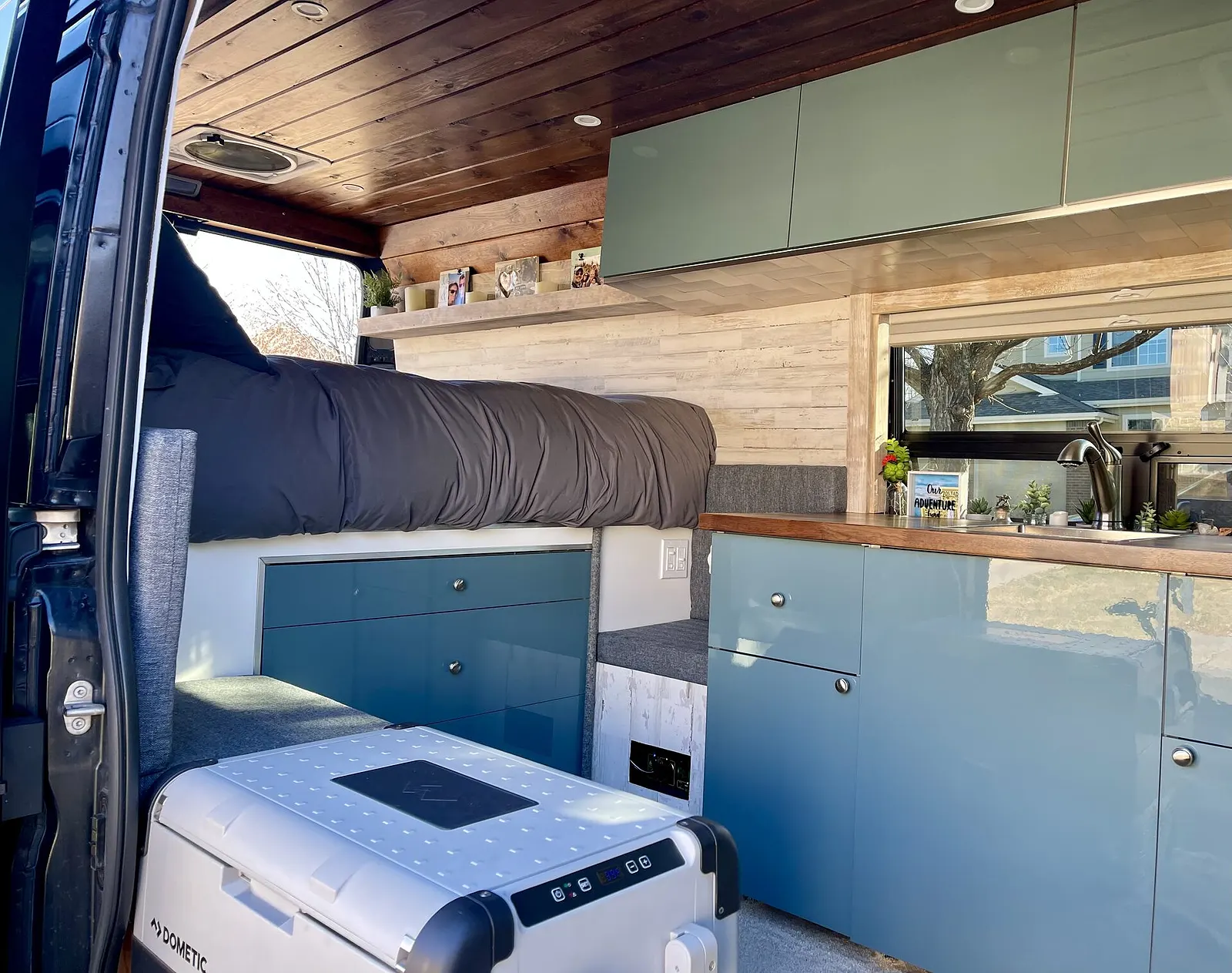
We have a Dometic CFX65DZ. It's a good fridge: runs 24 hours a day for years, handles Florida summers without complaint, and in eight years the only repair it has needed is a thermostat swap.
I went with the chest because the layout made sense and the price worked. Karlee leaned toward an upright early on, and over the years it became clear why: anything that isn't on the top layer means unloading the box to reach it. She was right.
Eight years of reaching down into a chest fridge to find something buried under other things adds up. The problem isn't finding the big items. It's the daily dig to find a single condiment, or reaching all the way to the bottom corner at the end of a long driving day. You adapt. But if you asked me today, I'd buy an upright.
If you're doing a first build and have the space for an upright, take it seriously. The ergonomics of a fridge you open many times a day matter more than they seem when you're planning a build.
How upgrading power changed the way we cook +
For most of seven years, the Goal Zero Yeti 1400 ran our induction burner and our Instant Pot. That was fine until late in its life, when it couldn't handle heavy loads anymore, and that is a big part of why we upgraded to a Bluetti Elite 200V2.
The Bluetti handles 1,200W continuous output without complaining. We added a Crispi air fryer. Sounds like a minor upgrade. It changed our daily food routine completely.
Air frying in a van means no stovetop heat in a hot van, easy cleanup, and more variety than a single burner gives you. We use it almost every day in warm climates, where a burner heats up the van uncomfortably. Not a tool for small battery setups. A weak station will throttle or cut out under the load, but if you have real power capacity, it earns its space.
The lesson: your kitchen options are set by your power system. Our 1,425Wh Yeti ran an induction burner and an Instant Pot for years; what ended that was age, not the idea. A capable, healthy station opens up electric cooking.
Simpler is faster, and faster means you actually cook +
The most expensive kitchen mistake in van life is overbuilding for a cooking level you won't maintain. Complicated setups (multiple burner systems, full spice racks, dedicated prep surfaces) look great at build time and become a maintenance burden on the road. Cleaning a complex kitchen in a parking lot, with limited water, when you're tired from driving, isn't what you want.
Our daily reality: the induction burner, the Instant Pot, the Crispi, and a few pots and pans. That covers almost everything we cook.
Keep one flame option, but you may not need a stove +
We had a two-burner camp stove for a short time, barely used it, and didn't keep it in the van. Induction does the daily cooking. What we do keep is a Jetboil, which we use sometimes.
If you cook electric, a small flame option is a backup, not a kitchen. If your power station can't run an induction burner yet, a camp stove is the right stopgap until it can.
Water: simpler than you think +
We have a stainless sink with a water pump, and under it two 6-gallon jugs, one fresh and one gray. No built-in tanks. It means we are always either filling something or emptying something, and that's fine.
Jugs you can carry to a spigot and a dump point are simpler than tanks plumbed into the build: less weight, fewer leak points, and nothing to winterize. Where everything lives in our van →
Top picks explained#
Our main cooking tool. A single portable induction burner ran off our Goal Zero Yeti 1400 for years and runs off the BLUETTI now. No flame, no fuel to restock, no heat off a burner flame in a hot van. It needs a power station that can sustain its draw.
Check Induction Cooktop PriceThe other electric cooker our Yeti ran for years, and still part of the kitchen. One pot, one plug, no watching a stove.
Check Instant Pot PriceWe bought it a couple of months after the BLUETTI, once we had the power to run it. No open flame, handles most foods faster than a stovetop, less heat inside the van. Requires a power station that sustains 1,000–1,200W, not for under-500Wh setups.
Ninja Crispi Portable Air Fryer
Check Crispi Price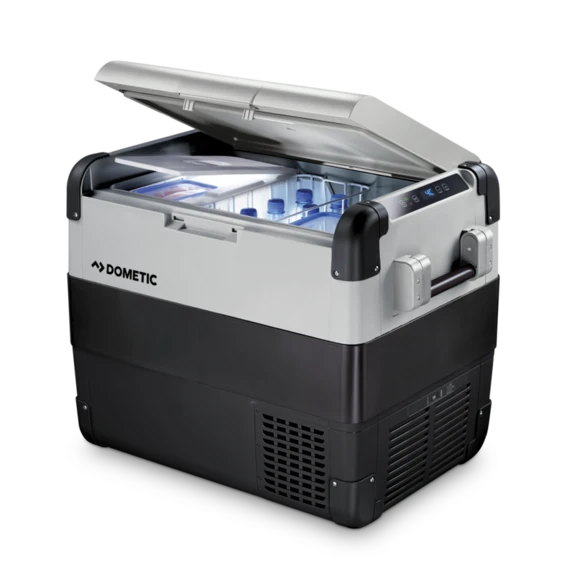
Our fridge for years: precise temp control, dual zone, quiet enough for overnight. If buying today, I'd look seriously at upright models for ergonomics. For chest-style refrigeration, the Dometic holds up.
Check Fridge PriceWhat to skip#
A multi-burner induction cooktop before you know your power +
One induction burner is a manageable load: our 1,425Wh Yeti ran one for years. Two burners at once roughly doubles the draw, and that is where smaller stations trip the inverter or drain fast. Start with a single burner and add only if you find yourself waiting on it.
Dedicated spice racks and display storage +
Things fall off racks. Anything not secured by doors or lids becomes a mess on rough roads. Keep spices in a lidded container or zip bag.
Under-sink water filtration +
You're not drinking well water in a van. Filtered water from town plus a quality water bottle handles hydration for most van lifers without a filtration system to install and maintain.
Frequently asked#
Is a van fridge worth the cost? +
Yes, if you're full-time or doing trips longer than a few days. The cost difference between eating from a van fridge versus eating takeout and convenience food adds up fast. The fridge pays for itself in food savings.
Chest fridge or upright? +
If you have the option, upright. Ergonomics on a fridge you open many times a day matter more than you think at build time. We ran chest for 8 years and I'd switch.
Can I cook in a van without a stove? +
Technically yes: cold prep, no-cook meals, eating out. A burner of some kind, induction or flame, is what makes van life sustainable for real meal prep. Skip it and you're paying for restaurants or eating low-quality convenience food long-term.
What power do I need for an air fryer? +
A 1,000–1,200W air fryer needs a power station that can sustain that output comfortably. The Bluetti Elite 200V2 handles it without issue. Budget stations under 500Wh often throttle or cut out under sustained cooking loads.
Start simple, add later