
The 30-second version
Can you drill into your roof?
YesTap for our pick
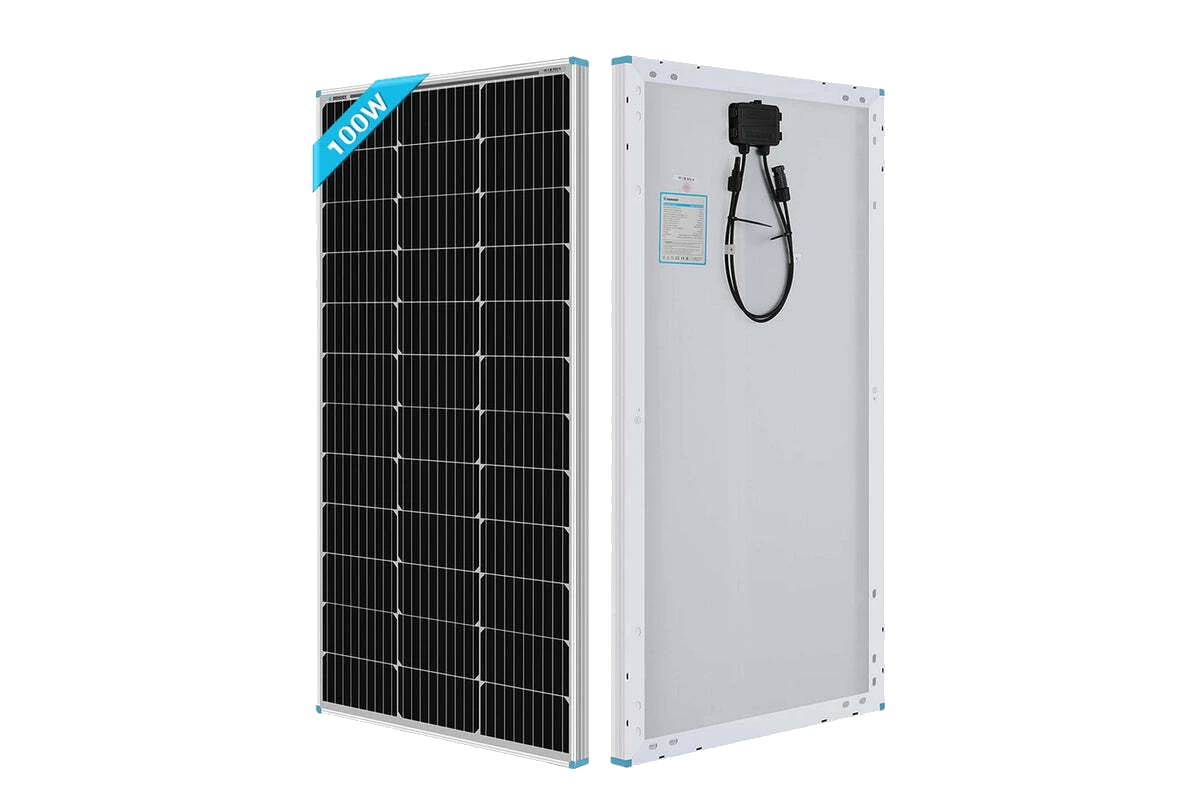
Renogy 100W slim panels. Three on our roof since 2018. Place your fans first, then fill whatever roof is left: on a ProMaster with two fans, that's three panels.
Get the Renogy slim panelNo, or not sureTap for our pick
Portable suitcase panels. Pair them with a power station and you're charging with zero install risk. They cost more per watt over the long run.
Get portable panelsRead the full guide
Last reviewed: August 2026
I’ve been running solar on a ProMaster for eight years. Our current setup is 3x Renogy 100W slim panels paired with a Bluetti Charger 2 that handles both solar and alternator input. We’ve run this system through San Diego winters, Colorado summers, Florida heat, and New York shoulder seasons.
The single thing I’d change isn’t the array, it’s what I expected from it. On our ProMaster, two Maxxair fans mean three slim panels, and 300W is the whole roof. A fourth panel exists only if a fan comes off, and in a humid August that’s a trade I won’t make. So the 300W that’s adequate on clear days in good sun, and tight through Colorado winters and overcast weeks, is also the most this van will ever harvest.
Worth saying plainly, because most solar guides imply otherwise: a van roof caps out well below what the sizing math asks for, and modern panels aren’t dense enough to rescue you. Eight years of cell technology bought barely a point of module efficiency. Once geometry caps your array, the answer stops being panels and becomes recharge speed.
Everything below is what I’d do knowing what I know now.
Quick Answer
Most budget builders should plan for every watt the roof holds once the fan openings are placed, which on a van usually lands at 300–400W rather than the 600W the calculators suggest. Pair it with a battery system you can expand later, and put the leftover budget into recharge speed instead of panels you have nowhere to mount.
Best all-around value for new builders: Renogy 100W Slim panels, as many as your roof holds after the fans go in, with a quality MPPT controller and a battery system you can scale.
| Product | Best For | Price | Pros | Cons | CTA |
|---|---|---|---|---|---|
| Renogy 100W Slim Panel | Stealth + modular roof layouts | $$ | Slim profile and easy expansion | Slightly higher cost per watt | Check Amazon Price |
| HQST 200W Solar Kit | Lowest entry price | $$ | Strong starter value | Bundle component quality varies | Check Amazon Price |
| Portable Suitcase Solar Kit | Weekend users | $$ | No roof drilling required | Lower long-term value per watt | See Portable Options |
Renogy 100W Slim Panel
Best For: Stealth + modular roof layouts
Price: $$
Pros: Slim profile and easy expansion
Cons: Slightly higher cost per watt
HQST 200W Solar Kit
Best For: Lowest entry price
Price: $$
Pros: Strong starter value
Cons: Bundle component quality varies
Portable Suitcase Solar Kit
Best For: Weekend users
Price: $$
Pros: No roof drilling required
Cons: Lower long-term value per watt
Renogy 100W Slim Panel
Check Renogy Slim Panel Price on AmazonIs this solar plan right for you?#
Tap the situation that sounds like you.
🏔️ Full-time, traveling through varied climates. Fill the roof
300W is a strong supplement in summer and thin in winter. That is a fact about the season, not the state: a low winter sun costs you more than a mild climate gives back. Place your fans first, then fill every remaining inch of roof, and know the answer up front: on a ProMaster running two roof fans, that's three panels. Plan on solar being a strong supplement rather than the thing that carries you, and put the rest of the budget into how fast you can refill.
Pair with a power station that has strong fast-charge so shore power can backfill cloudy weeks. Solar vs alternator covers the recovery hierarchy.
🏖️ Mild climate, sunny region, light loads. 200–400W is plenty
San Diego, Arizona, southern California year-round? 200–400W with a battery sized for a day of normal use will do the job. Don't oversize on panels you'll never need.
🚐 Renter or no-roof-drilling build. Portable solar + power station
Portable suitcase panels paired with a power station get you working without permanent install. Cost per watt is higher long-term, but install risk is zero. Start here if you're not sure about full commitment to the build.
☁️ I park in heavy shade or cloudy regions often. Solar can't carry it
If solar harvest is unreliable, you need recovery via shore power and alternator more than you need bigger panels. Look at fast-charging power stations first: your daily reset comes from the wall or the alternator, not the roof.
What 8 years of van solar taught me#
The roof capped us at 300W, and I didn't know that going in +
We've been on 300W for eight years, three Renogy 100W slim panels. It works through a San Diego winter, on the mild load more than on strong sun. It works on a long summer day almost anywhere. It runs tight when a heavy load lands in a low-sun week.
For years I called that a budget mistake. Then I measured the roof: with both Maxxair fans mounted, three panels is the layout. A fourth only exists if a fan comes out, and a fan is what keeps a humid night bearable and the fridge from fighting a hot interior. Panels are cheap; roof area is not. Lay out your fan openings first, fill the rest, and wire for one more panel than you mount in case the layout ever changes.
San Diego winter: easy mode +
Clear skies most days, but what makes this easy mode is the mild air, not the sun. A winter sun sits low even here, and a flat panel is poor at low sun, so the harvest is actually among the weakest we see all year. The comfort comes from the other side of the ledger: a fridge in mild weather draws about half what the same fridge draws in a Florida summer. Our 300W system handles it without strain. If I only ever parked in San Diego, I wouldn't need more panels. This is the climate that fools you into thinking 300W is fine.
Colorado summer: surprisingly variable +
Denver and the eastern plains are good sun territory. Get into mountain campgrounds at altitude and you have shorter days, tree cover, and afternoon storms that cut your harvest window. The 300W system runs tight in extended mountain camping without driving enough to top off via alternator.
Florida heat: solar harvest is fine, the load isn't +
Hardest load condition, not the worst solar condition. Good sun in Florida summer, but the fridge averages 20–25W across the day because of the heat, against 10–12W in mild climates Measured. That is the day average, not the compressor draw: it pulls about 45W while actually running and spends more of the day running when it is hot. Your harvest goes up slightly, your draw goes up more. 300W stays adequate but leaves less margin.
New York shoulder season: solar drops off hard +
Northeast winter solar is weak. Short days, frequent overcast, low sun angle. If I were parked in the Northeast for extended winter stretches, I'd be much more reliant on alternator charging and shore power. The panels become supplemental here, not primary.
Weak, but not the condition that beats you. A Northeast winter takes your harvest and your load away together: the fridge barely runs and the fans are off. The climate that actually breaks a 300W array is a Gulf-coast summer, where multi-day overcast arrives in the season the fridge is working hardest.
The lesson: size your solar for your hardest conditions, not your easiest. San Diego makes you think 300W is fine. Colorado mountains and a run of overcast Florida days tell you otherwise.
Top picks#
The middle ground for full-time or long-trip use. Slim profile helps on stealth roofs, and you can build in phases. Measure around your fan openings first, start with every panel that fits, and keep the wiring and controller sized for one more than you install in case your layout allows it later.
Renogy 100W Slim Panel
Check Amazon Price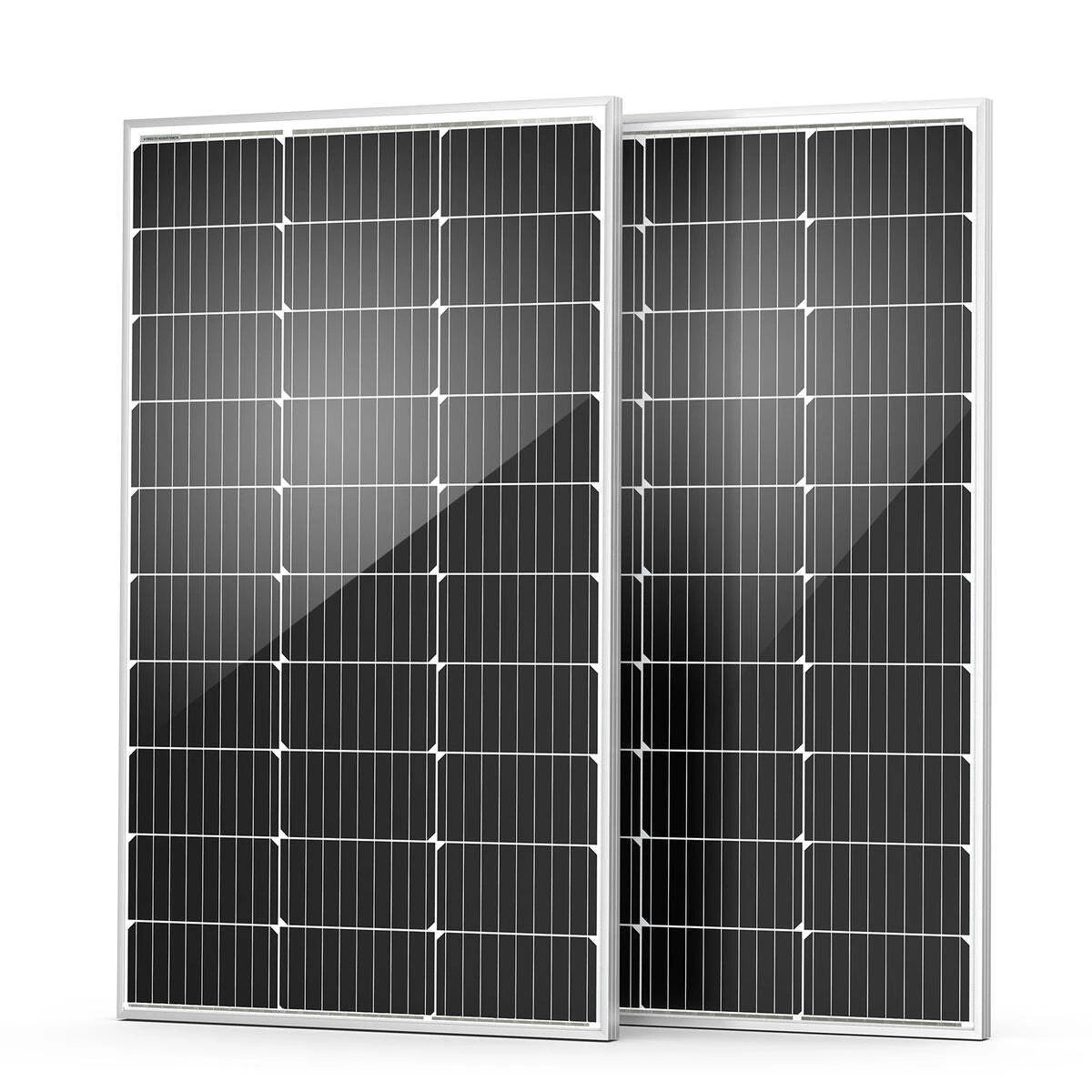
Lower-risk entry. Tradeoff is inconsistent controller bundles. If you choose this route, budget for a controller upgrade. Good for learning the install process before committing to a larger system.
Check Amazon PriceFor renters or people delaying roof installs. Long-term cost per watt is higher, but install risk is minimal. Pair with an under-$500 power station for a complete weekend-capable setup.
Common solar mistakes#
Buying panel wattage before measuring real roof space +
Roof layout controls what's realistic. Plan around your fan placements, vents, racks, and clearance edges first. Then size the panels to fit, not the other way around.
Ignoring wire losses and fuse placement +
Reliability matters more than saving $20 on copper. Cheap wire and shoddy fuse placement is where solar setups quietly fail: voltage drop, intermittent connections, and fire risk on high-current runs.
Undersizing because you tested in good sun +
Size for your worst conditions, not your easiest. Panels are the cheap part of the build, so fit every one your roof holds after the fans are placed. Then plan for the likely outcome: on most vans that ceiling still won't cover a hot overcast week, and the rest has to come from recharge speed.
Building for hypothetical future loads +
Don't oversize for an air conditioner you might add or an induction setup you might want. Build for the loads you have today plus a 30–50% buffer. Add capacity when real usage demands it, not when you're imagining it.
Frequently asked#
How much solar do I need for van life? +
Size for your hardest conditions, not your easiest, then accept that your roof will answer the question for you. Full-time across varied climates wants every watt the roof holds, and once you've placed your fan openings that's usually 300 to 400W on a van, not the 600W the calculators suggest. Mild-climate or part-time use is often fine at 200–300W. When the sizing math asks for more than your roof fits, the fix is recharge speed, not panels.
Is portable solar enough full-time? +
It can work for light loads, but roof-mounted solar is usually better for convenience and consistency. Setting up panels every parking session gets old fast.
Should I start with lithium batteries? +
If budget allows, lithium often wins long-term. But a phased system is better than waiting forever for a perfect system. Start with what fits the budget today, plan to upgrade.
Solar vs fast charging: which matters more? +
Both. Solar is cheap recovery in good sun; fast charging is your reliable reset when sun fails. The right system has both. See solar vs fast charging for the direct comparison.
Start with the right size