
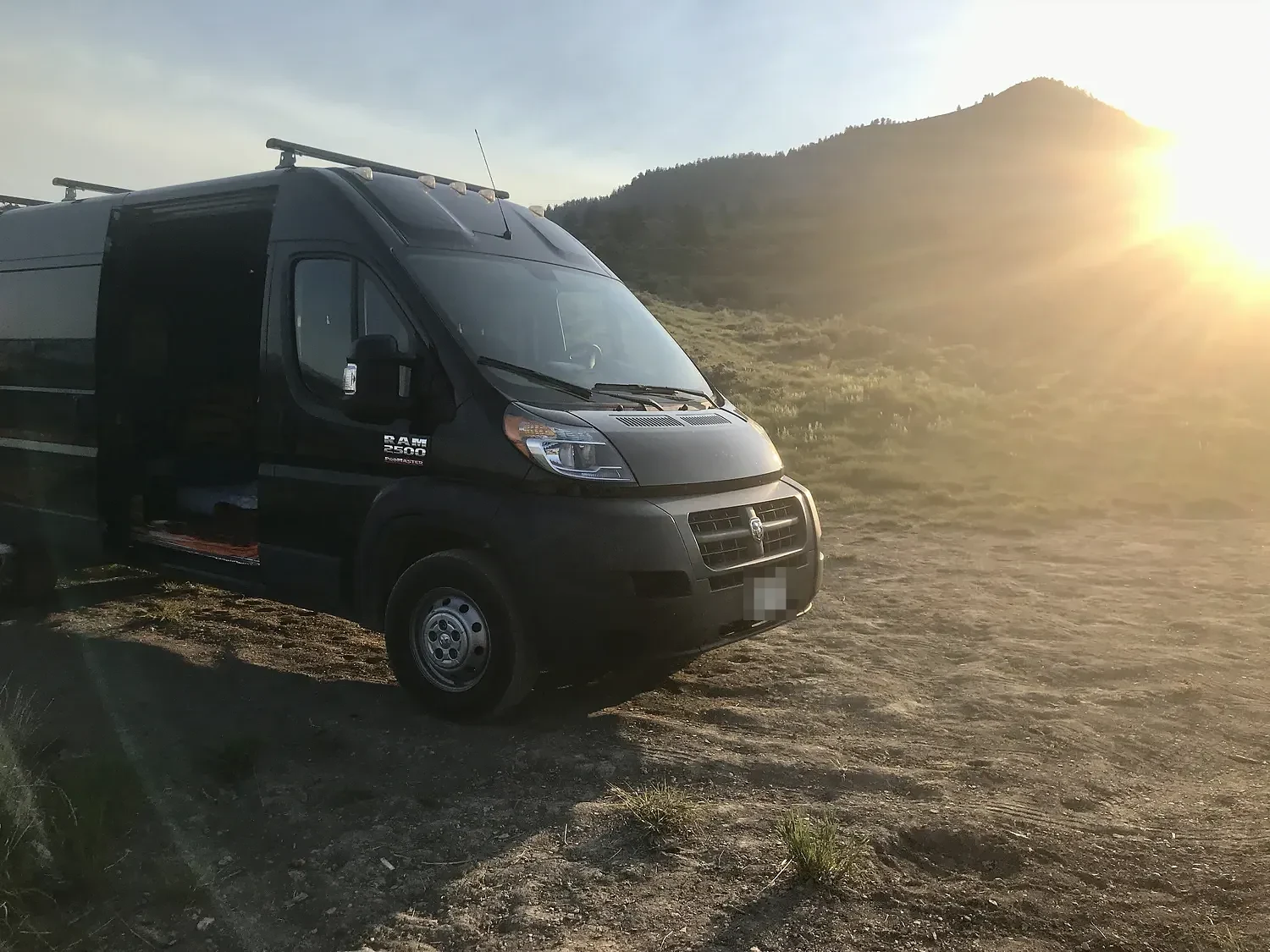
When you work, navigate, find camping spots, and handle emergencies from the road, cell signal is infrastructure, not a convenience.
We understood this in principle. We still put off buying a signal booster for a year or two into van life, because it felt expensive for what seemed like a marginal improvement.
We were wrong. This is the story of how we found that out.
Why We Resisted#
A quality cell signal booster (the weBoost Drive Reach RV is what we ended up with) costs real money. Our instinct was the same instinct most van lifers have: a phone plan with decent coverage is enough, and a booster is just for edge cases.
The edge cases are the problem.
In van life, you’re not always in a city with strong tower coverage. You’re sometimes in the dead zone between towns, in a canyon, in a campground that happens to be in a signal shadow, or in a rural area where the nearest tower is ten miles away. In those situations, one bar is barely usable for anything that matters.
A signal booster doesn’t create signal. It amplifies what’s there. Where your carrier has weak signal, a booster can take a one-bar connection and make it functional. That’s the gap it fills.
What Changed After Installing It#
The most immediate change was computer work. Ordinary things like uploading files and looking things up need a connection that holds, and in a weak-signal spot the booster is the difference between doing them from where we’re parked and driving into town to find signal.
The second change is navigation confidence. Rural navigation often happens in areas where signal is weak. Getting turn-by-turn directions cached before you lose signal, being able to pull up a quick map check at a fork in the dirt road, these are small moments that happen constantly in van life. With stronger signal more consistently, those moments are less stressful.
The third change is the one that’s hardest to quantify: peace of mind. Eight years in, we’ve had moments where we needed to reach someone, get information, or handle something time-sensitive in a location with poor signal. The booster doesn’t guarantee connectivity everywhere. But it means the baseline is higher, and the moments of complete signal loss are fewer.
We Both Came Around#
My partner Karlee was as skeptical as I was about the price, and we came around to it together. Once it was in, we both noticed the difference the first time we were somewhere with weak signal and needed it to work.
Practical Notes#
A signal booster works best with an external antenna: the interior cradle or panel antenna picks up the boosted signal inside the van, but what feeds it is the exterior antenna getting clean signal from towers. Mounting position matters: the antenna should have clear sky view in as many directions as possible, without the van body blocking signal from behind.
Ours is attached to the side of our roof rack on a mount that pivots. Parked, it stands up; driving, it folds down parallel with the rack. We set it up that way to keep the van under 9 feet.
Power draw is modest, well within what any van power system can handle without planning around it.
The weBoost Drive Reach RV is the specific unit we run. weBoost has since replaced it with the Drive Reach RV II, which keeps the same amplifier and adds a new inside antenna and an adjustable outdoor mount. It covers the major US carriers.
Our Recommendation#
If you work remotely from a van, if you navigate frequently in areas with mixed or poor coverage, or if you’ve ever been stuck in a low-signal spot when you needed connectivity, get a signal booster before you think you need one.
The “I’ll add it later” instinct costs you in ways that are hard to measure until you no longer have the problem.
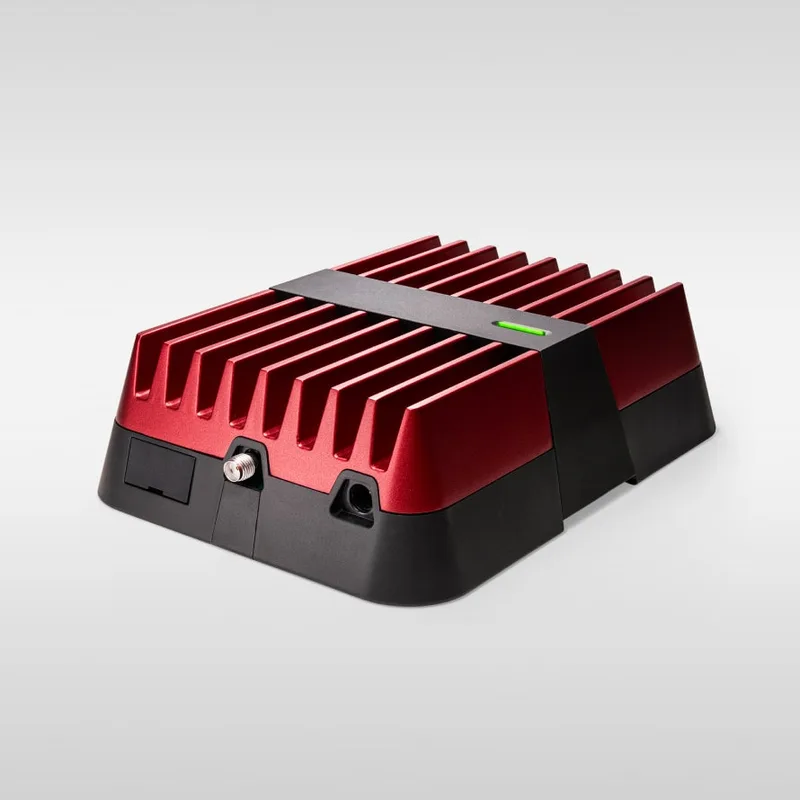
The cell booster we resisted for years and now won't travel without. Takes a marginal one-bar signal and makes it usable in the fringe spots where van life happens.
weBoost Drive Reach RV
Check weBoost Drive Reach RV on Amazon →