
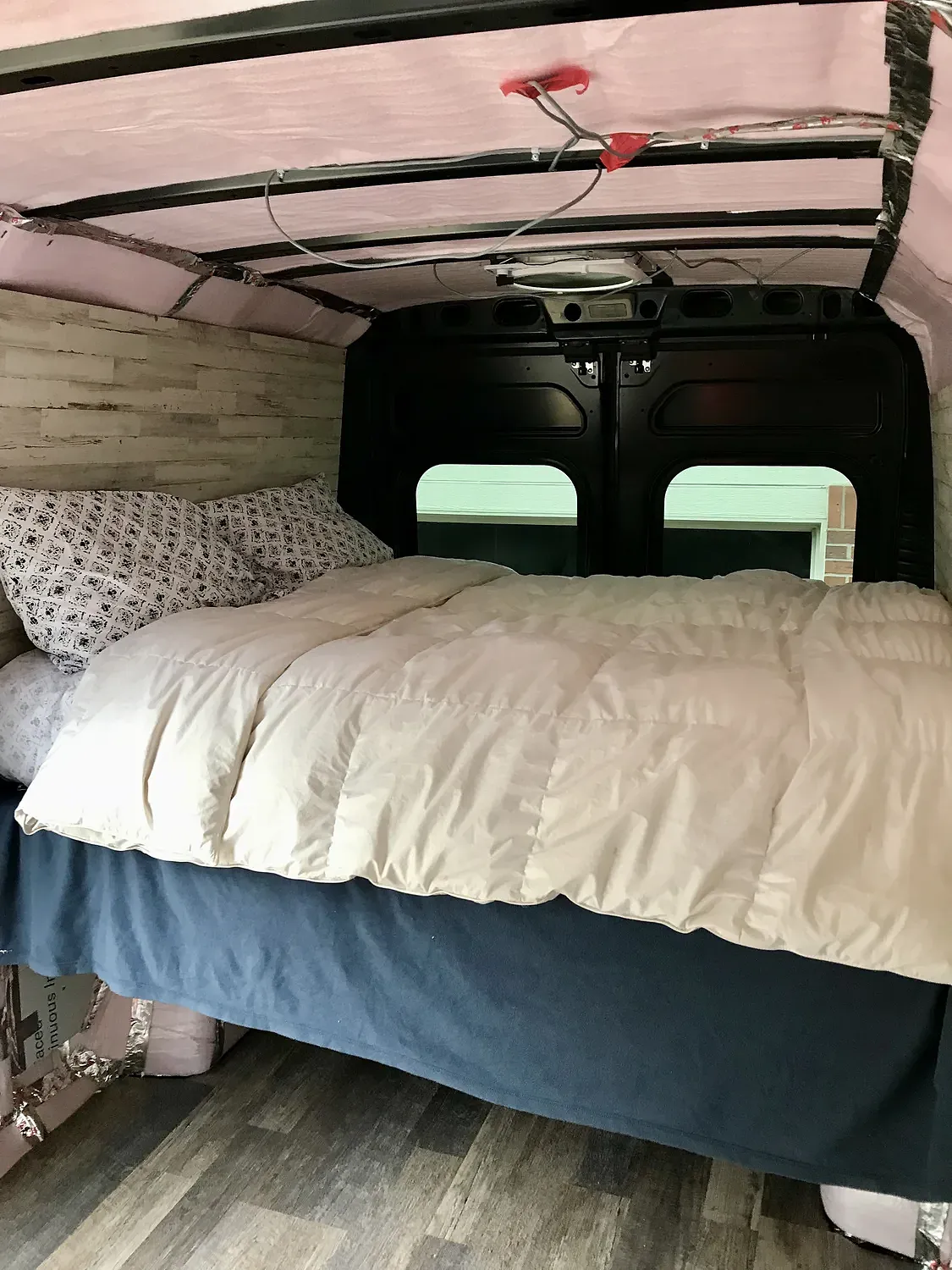
We’ve run two MaxxAir fans in our ProMaster since 2018. Four fans total, actually, because the originals wore out around year six and we replaced both with the same models. That re-buy is the most honest thing I can tell you about them, and everything below is what eight years taught us that a first-season review can’t.
Buy The 4500 First#
For most vans, the first fan should be the MaxxFan Plus 4500, not the Deluxe 7500. Both are rated 900 CFM. Spec But the 7500 carries a permanent rain dome over the opening, and that dome restricts the air path even on a dry night with the lid all the way open. In our van the 7500 feels like it moves about half what the 4500 does. A lot of nights you cannot really feel it at the vent. It is moving air, but it is not a breeze you would notice.
Moving air is the entire reason you are cutting a hole in your roof. In the heat, giving up half of it to cover a few hours of rain is a bad trade on a single-fan build.
The 4500 is not unprotected, either. It has a rain sensor that closes the lid on its own when water hits it. You lose the ability to run during an actual downpour, and you gain noticeably more air every other night of the year. Rain is a few hours. Heat is every night of the summer.
The exception: if you mostly park somewhere rainy or cool, like Oregon or Washington, buy the 7500 first. You don’t need maximum airflow there, and a fan that closes every time it rains is closed when you want it open. The 7500 stays wide open through a downpour. In a hot climate it’s the second fan, the one that keeps running when the 4500 has to close.
Our Setup, And Why#
The 4500 sits in the back, over the bed, where airflow matters most. The 7500 is up front. On a hot night the 4500 pushes air down over us and the 7500 runs outward on exhaust, and the two of them together make a strong breeze instead of the vague stir you get from one fan. Crack a T-vent window and the exhaust fan pulls hard enough that air comes rushing in through the window.
That pairing, not either fan alone, is what finally made Gulf-coast summer nights tolerable.
There Are Two Different Squeaks#
This is the part nobody separates, and getting it wrong means chasing the wrong fix for months.
Squeak one The mounting squeak Tap for the fix ↓
Squeak two The motor squeak Tap for the actual cause ↓
Most reviews treat the motor squeak as inevitable wear you learn to live with. It is not. In ours, it has always followed running the fan against a closed van.
That reframes the whole thing. A roof fan with no intake is not just moving less air, it is straining, and eventually it tells you so. The fix when it starts is real work but it does work: pull the motor, clean it, put it back. The fix so it never starts is free, and it is the same habit that makes the fan actually ventilate: open something else.
Cleaning a squeaky motor, the way I do it#
Both of our fans have squeaked at one point or another, and this is how I have cleared it every time.
- Turn the fan off. I leave the wiring connected the whole time.
- Take the motor off its bracket. It stays wired to the fan, so you work on it right there.
- Remove the four screws that hold the motor together and pull it apart.
- Clean out the metal shavings inside.
- Put it back together. This is the tricky part. The magnets inside push and pull against you, the two halves have to line up, and the shaft has to stay seated in its hole while you close it.
It is a brushed 12V DC motor. The magnets live in the motor body and the shaft carries the armature, which is why the halves fight you on the way back together. Rebuild write-ups online describe the same fight and hold the shaft down while lowering the body over it. Reported
If you are not handy, do not open it. Replace the motor instead. It is the only other way to make the squeak go away.
My best guess at why ours squeaked, and it is a guess: before I understood airflow, we ran the fans without the other one open, or with no windows open. A fan straining against a sealed van works the motor harder, and I think that extra friction is what wears it down. Since I started making sure there is a real path for the air, neither fan has had the problem.
Neither squeak is a defect, then. The mounting squeak comes from the install, and ours never had one. The motor squeak comes from how the fan is run, and that one was on us rather than on MaxxAir.
Noise Itself Is Not The Problem#
Worth separating from the squeak, because they get lumped together.
Steady fan noise is an asset. It covers the parking lot, the highway, the neighbors. Plenty of nights the fan running is the reason we sleep through something that would otherwise have woken us. What wrecks sleep is noise that changes, which is exactly why a squeak matters so much more than a decibel rating. Your ear tunes out a constant sound in a few minutes and never tunes out an intermittent one.
Both fans run ten speeds, reversible in or out, with a thermostat and a remote. Spec The speed range is useful for tuning the sound rather than escaping it. There is more on this in the ventilation mistakes post.
One thing we will not claim: neither fan is meaningfully quieter than the other. They are the same fan body with a different rain strategy.
Telling Them Apart Once They’re In The Roof#
With the lids shut, from inside, these two look almost identical. Same frame, same screen, same keypad, same manual crank. We run one of each and still have to look twice.
The giveaway is the rain sensor. Only the 4500 has one, because without a dome it has to detect water and close itself. Spec The 7500 has none at all. Spec So the fan with the extra button on the ceiling panel is the cheaper one, which is backwards from what most people assume.
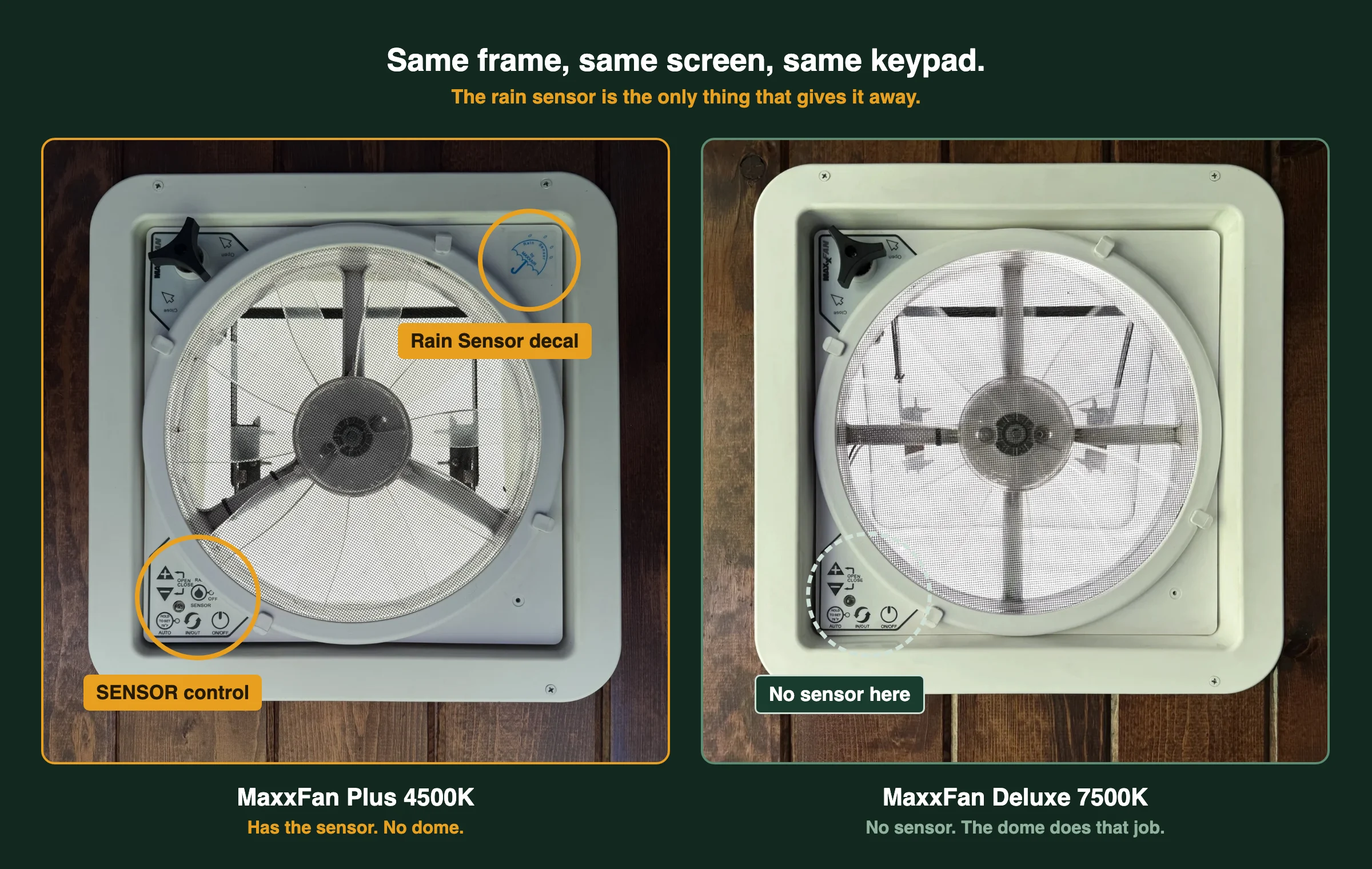
Useful if you are buying used, or you inherited a build and do not know what is up there. It matters in listings too: 00-04500K and 00-07500K are one character apart, and the manual-lift 00-04000K is one digit off the 4500.
What They Cost You In Watt-Hours#
Fans get treated as a rounding error in power budgets. On low they are. On high they are not.
We measured this rather than taking it from a spec sheet, because MaxxAir publishes no amp draw at all. On our BLUETTI’s DC output, one fan on speed 10 reads 32W and both fans wide open read 58W. Measured The reading did not move when we reversed the fans, and it did not move with the T-vent windows open or shut, so it is the motor and not the airflow path. On speed one it is roughly 0.2A, call it 2 to 3W. Spec The watt-hour figures above are those draws times eight hours, and the full breakdown sits with our other measurements on the real-world power data page.
Two things worth pulling out of that.
The published numbers are too high. The third-party per-speed tables everyone quotes say 3.7 to 4.4A at speed 10, which is 44 to 53W. Our BLUETTI’s DC readout says 32W, about 2.7A at 12V. Anyone sizing a battery from those tables is over-budgeting the fan by about 40%, which on two fans over a long night is 240 to 380Wh of capacity you did not need to buy.
Two fans is 58W, not 64W. The pair consistently drew a few watts under double a single fan. We do not have a confident explanation for it. The obvious one would be a fixed overhead in the station being counted twice when you measure separately, but ours reads 0W with nothing connected, so that is not it either. Measured We are publishing both figures as we read them rather than picking the one that divides evenly. The practical bit: if you build a power budget by summing devices you measured one at a time, expect the real total to come in a little under it.
And the number on the calculator is still 15W, deliberately. 32W is speed 10, per fan. Our power calculator budgets 15W because that is the same fan around the middle of its range, and the middle is where it actually sits on a night you sleep through. Both are right. Plan with the mid-speed figure and keep the wide-open one for the nights that earn it.
Look at the bottom bar. Both fans on high all night is 464Wh, well over half of what a mild 700 to 900Wh day costs us. That is the number worth planning around, because the nights you want both fans wide open are the same hot, overcast nights when solar underperforms. Run the power calculator with the fans included, not as an afterthought.
What Wore Out, And When#
Around year six both fans had degraded to where replacing beat fighting them: years of motor hours, constant road vibration, and every winter we spent parked near the ocean in San Diego. In spring 2026 both keypads needed replacing as well.
“Salt air” is the easy answer anywhere near the coast, and it isn’t wrong so much as it’s half the story. The mechanism is condensation. Parked by the ocean you pull damp air through the van all night and it condenses on and inside the fan itself, which is exactly where the keypad electronics live. What makes that bite instead of just being wet is that the damp is salt air, so what’s collecting on the electronics is corrosive. Running them hard makes it worse, because you’re moving more of it through the housing. Reported
San Diego is the mildest ventilation climate we spend time in, and it’s the one that cost us both keypads. If you winter on the coast, be deliberate about running a roof fan on high, and give it dry days to clear out.
Six years of full-time daily duty is a real service life for a roof appliance. Expecting more is wishful.
Dust is the other slow one. Desert travel means fine grit works into the blade roots and the motor area, and the design does not give you access to clean it properly. You wipe what you can reach, it improves for a while, and some residue is permanent.
The Brushless Question#
MaxxAir’s motors are brushed. Spec That is the usual argument for brushless: fewer surfaces wearing against each other, so they tend to stay quiet over the long run without needing to be opened up and cleaned.
When we bought in 2018, brushless roof fans were basically not an option. By the time ours wore out at year six they existed, and I looked at them seriously before buying MaxxAir again. Brushless motors have fewer surfaces wearing against each other, so they tend to stay quiet rather than developing the squeak.
I assumed they carried a premium. They don’t. When I last checked, the two worth looking at sat below the MaxxFan Deluxe 7500’s list price, not above it. Prices on all of these move constantly, so check today’s before you decide. Price is not the reason to stay, and if I had known that at year six I would have thought harder.
What none of them will tell you is what one actually pulls at speed 10 in a van. Manufacturer airflow figures for these run near double MaxxAir’s rating, which means they are not measured the same way, and there is no independent draw number to check them against. That, not price, is the gap. Both fans, and the numbers they do publish, are broken down here.
So why re-buy MaxxAir anyway? The roof was already cut for them, eight years had made their behavior completely predictable, and the 7500’s rain handling is the feature we actually live by. That is a decision about our specific van, not a claim that MaxxAir won a comparison.
If you are cutting a fresh hole in a new build and you sleep light, give brushless a real look. If you want to know what I did with my own money: the same two fans, twice.
The Verdict#
MaxxAir fans are worth buying, with clear eyes about what you are getting. The airflow is real, the weather sealing held for eight years across both units, and nothing ever leaked. The six-year clock is real. The squeaks are real too, but neither one is the fan’s fault, and both are fixable.
Buy the 4500 first. Add the 7500 when you want a fan that runs through rain. Tape the mounting during install, always give the fan an intake to pull from, and budget the watt-hours realistically.
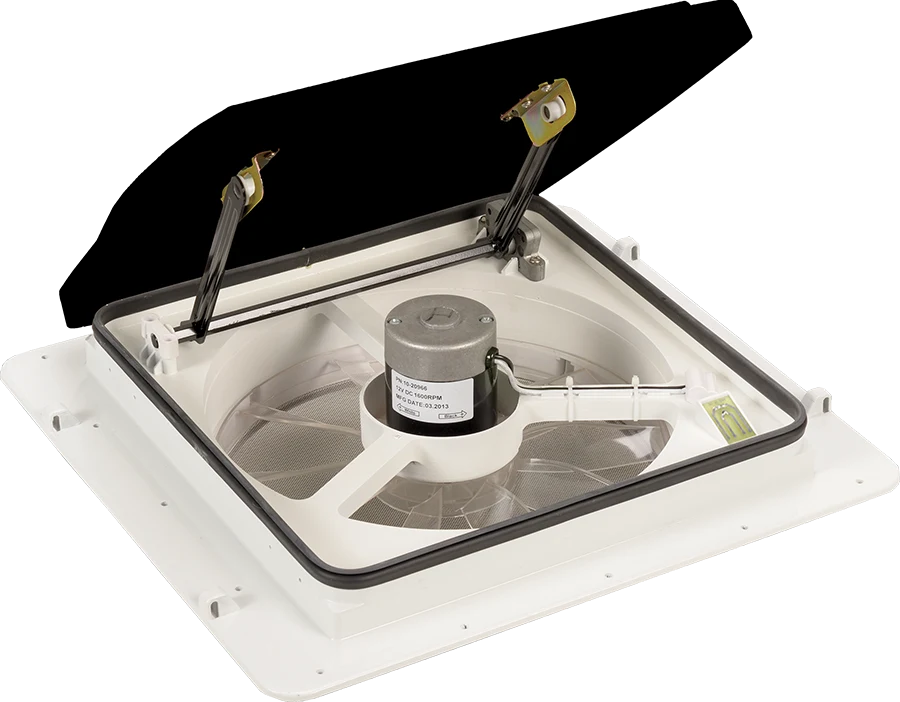
More real airflow than the pricier 7500 because it skips the rain dome. This is the one we sleep under, and the one to buy if you only buy one.
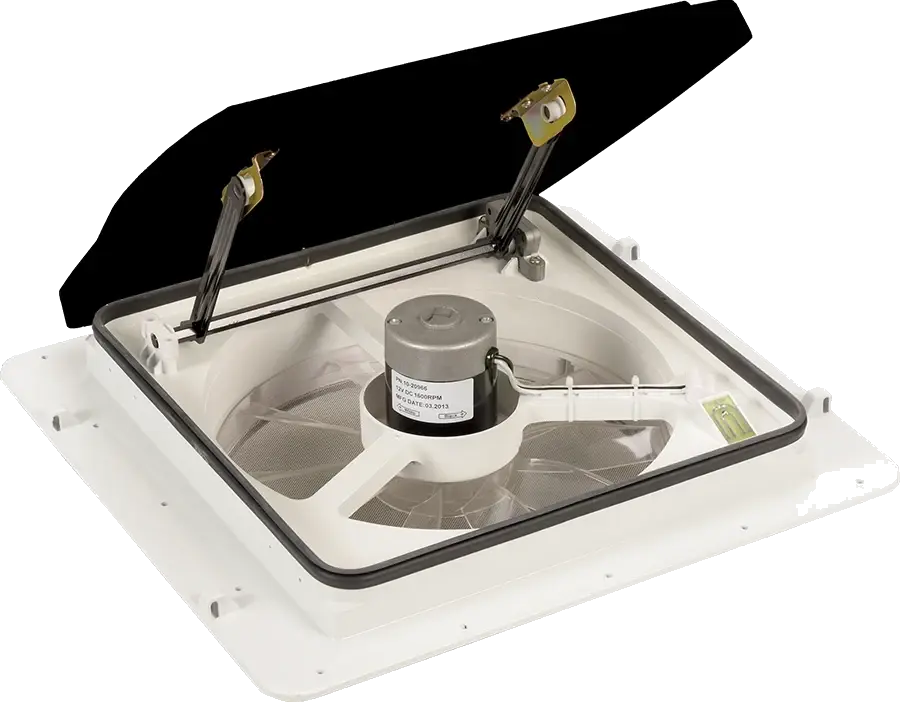 MaxxAir 4500
Check MaxxFan 4500 on Amazon →
MaxxAir 4500
Check MaxxFan 4500 on Amazon →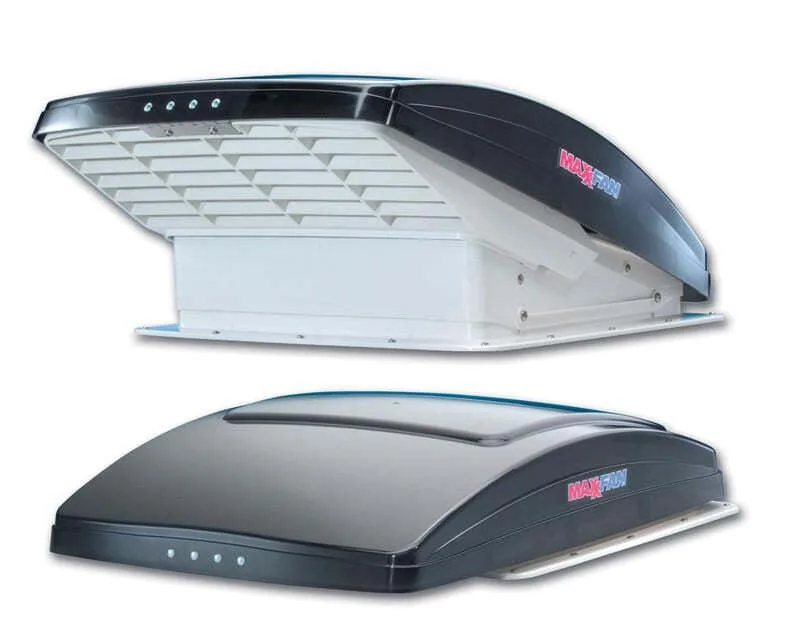
The rain dome costs it airflow and buys you a fan that keeps running through a storm. Worth it once you already have air moving.
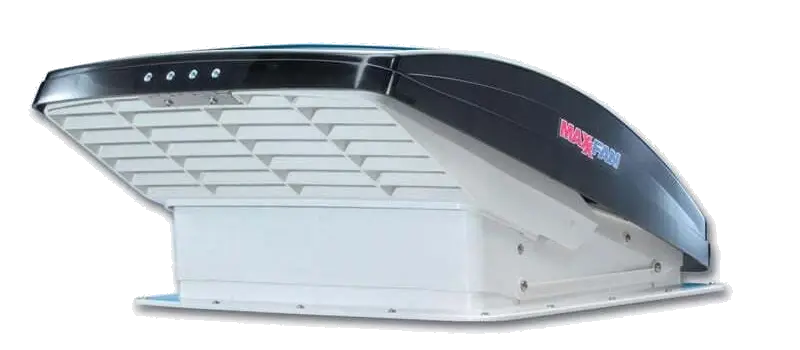 MaxxAir MaxxFan Deluxe 7500
Check MaxxFan 7500 on Amazon →
MaxxAir MaxxFan Deluxe 7500
Check MaxxFan 7500 on Amazon →