
We recommend BLUETTI gear on this site, so I want to be straight with you about the time ours failed. In April 2026 the input cord on our BLUETTI Elite 200 V2 melted while we were driving. It could have been a lot worse than it was, and how a company handles a failure tells you more than a spec sheet ever will. So here’s the whole thing, start to finish, nothing rounded off.
What Happened#
We were driving from California to Colorado to see family. The Elite 200 V2 was in the back charging off both the alternator and solar at once through our BLUETTI Charger 2, same as any driving day.
Somewhere along the way I started hearing a clicking, on and off, on and off. Not the normal sound of the system doing its thing. I pulled over to check it, and the input on the power station was melting. I yanked the cord out fast and shut everything down.
That clicking was the warning. If I’d had the music up or ignored it for another twenty minutes, I don’t know how that ends. Nobody was hurt and nothing caught fire, but I’m not going to pretend it wasn’t a close enough call to rattle me.
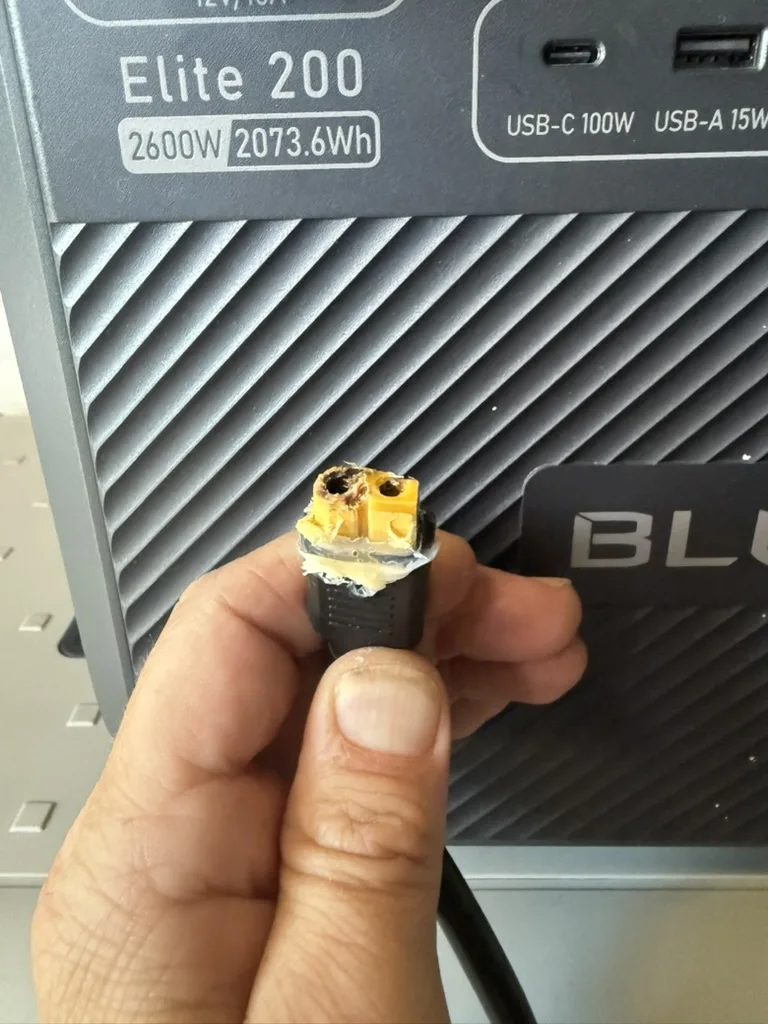
What Melted#
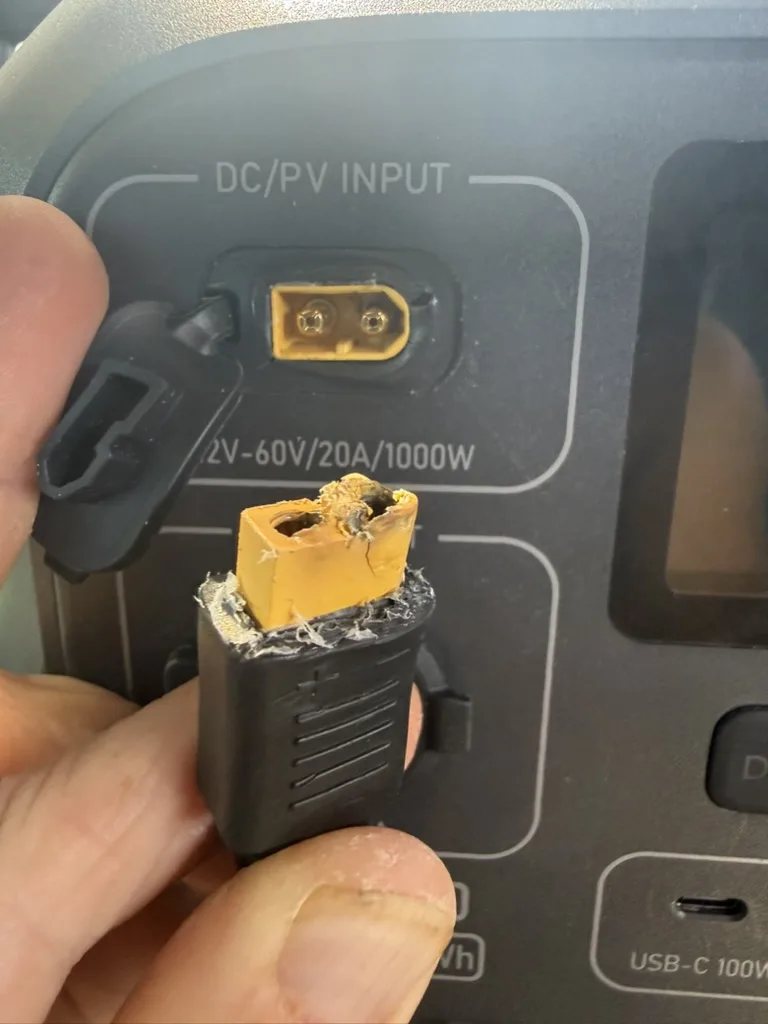
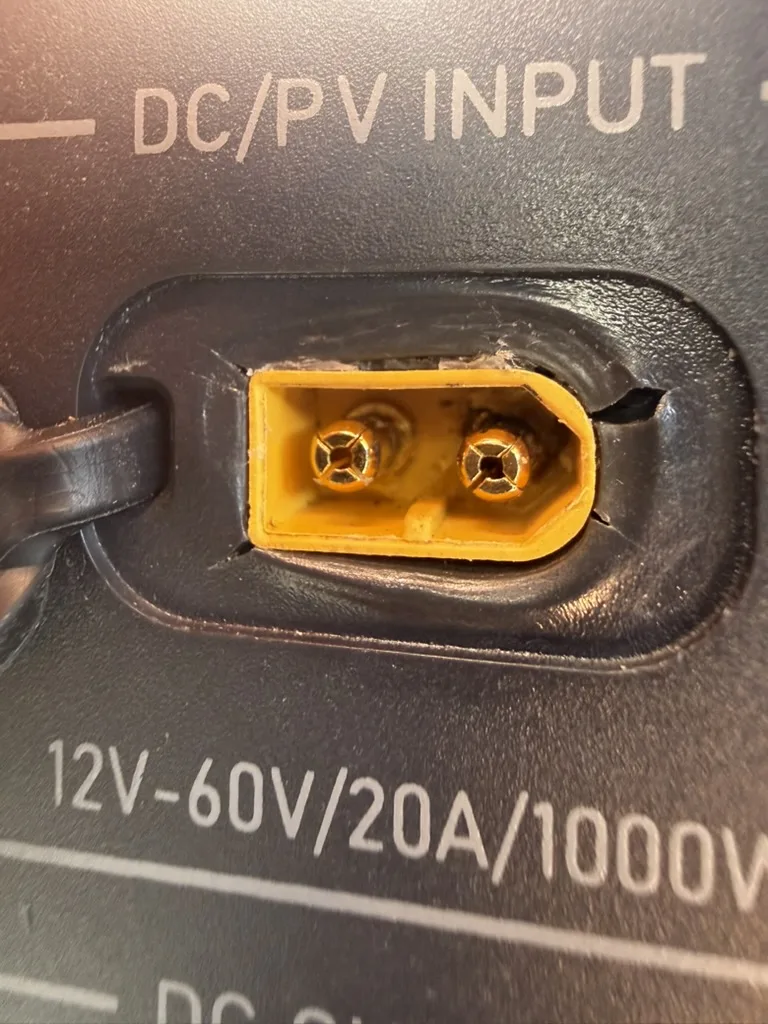
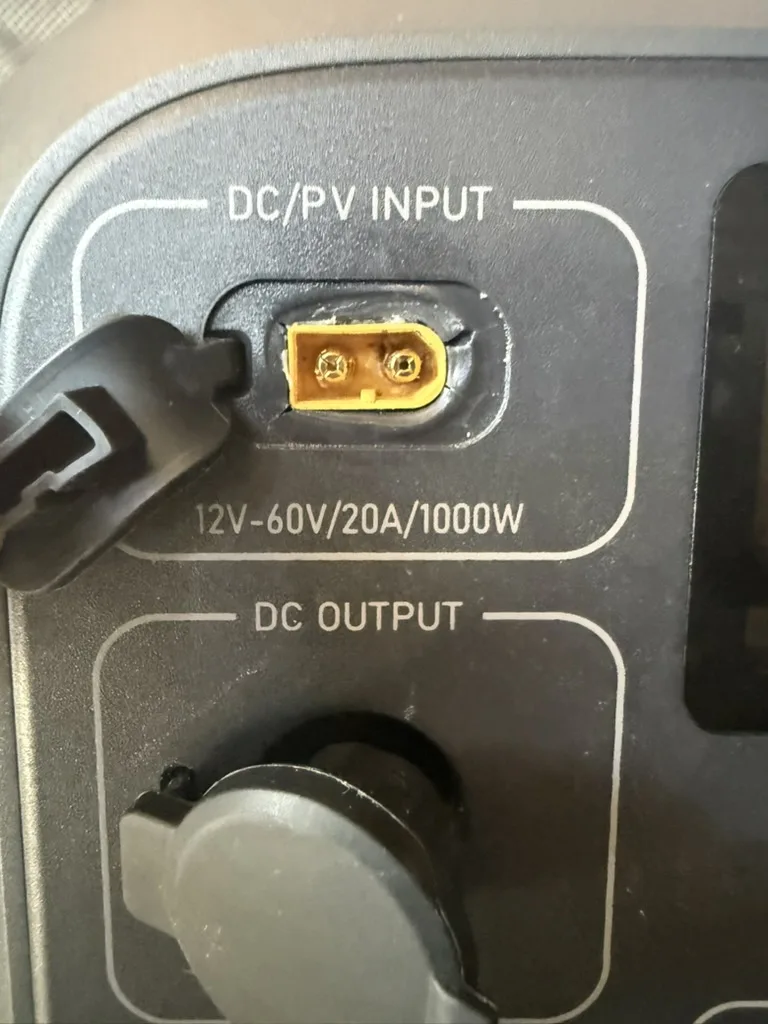
It was the cord that runs from the Charger 2 into the power station’s DC/PV input, the port rated 12V–60V / 20A / 1000W. The yellow connector on the end of that cord cooked. The plastic housing deformed, the contacts charred, and the input port on the Elite 200 V2 itself got scorched around the opening.
So it wasn’t the Charger 2 unit that failed, and it wasn’t a wall cord. It was the high-current DC cord and the port it plugs into.
Why I Think It Happened#
I’m not an electrical engineer, but here’s my read after living with it. The DC/PV input isn’t very deep. The connector doesn’t seat as far into it as I’d like, and it can wiggle. On top of that, the weight of the cord hanging off the back can almost pull the connector partway out on its own.
A high-current connection that’s not fully seated is exactly the recipe for trouble. A loose contact means resistance, resistance under load means heat, and it can arc. And we were charging from the alternator and solar at the same time, so there was serious current moving through that one connector. Push that through a contact that’s backed out a hair and you get what these photos show. That, to me, is a real design weakness. A deeper, more positive-locking input would make this much harder to happen by accident.
What I do now: I make sure the cord’s weight is never pulling on the connector, and I keep it supported so it stays fully seated. Since I started paying attention to that, no repeat.
The Part Nobody Talks About: Being Stranded With a Dead Unit#
Here’s what made this scary instead of just annoying. We were on the road, hundreds of miles from home, with a power station that was suddenly out of commission and no way to walk it into a store. You can’t charge it. You can’t return it from a campground.
What saved us was that we still had our old Goal Zero Yeti 1400. It’s well past its prime and sort of works now. It’ll run the low-watt stuff, but we couldn’t cook on it. That was enough to limp us into Colorado while we sorted out the warranty.
That taught me something I didn’t fully appreciate before: a backup is not extra battery capacity, it’s a second unit. If your plan for “what if it dies” is bolting more batteries onto one power station, a failure like this takes all of it down at once. A small second unit, even a tired old one, keeps your fridge cold and your lights on while you deal with it. I wrote a whole separate post on that idea, why we carry a backup unit instead of just more batteries, but the short version is: this is why we now travel with a backup instead of just more capacity.
How the Warranty Claim Went#
Short version: they made it right, with one hiccup that was mostly my own doing.
- Filing the claim was smooth and easy. No fighting, no runaround. I’ll be honest though, it felt like I was dealing with AI for most of it rather than a person.
- Packaging was on me. We’d bought the unit in California and were long past keeping the box on the road, so I had to go buy a heavy-duty box to ship the burnt unit back safely. (I kept photos of how I packed it.)
- Turnaround was about 7 to 9 days. I shipped the damaged unit back, waited for them to receive it, and they sent out the replacement.
- My own mix-up: I’d sent the burnt Charger 2 cord back in with the unit. The replacement came with the standard cord but not the Charger 2 cord, so I had to reach back out to get that one sent separately. That was mostly my fault for shipping it in with everything else, and they handled it fine.
They replaced both the cord and the entire Elite 200 V2 under warranty. No cost to me beyond the box and my time.
My Verdict#
A hardware failure is a real mark against any product, and I’m not going to wave off a connector that melted while driving. The shallow input is a design weakness I’d like to see fixed. But the way I judge a brand is what happens when something goes wrong, and BLUETTI replaced everything, quickly and without a fight. That’s the outcome you want from a warranty, and it’s more than some companies deliver.
So I still run BLUETTI, with one change to how I do it: I keep the cord supported so its weight never tugs the input, and I always travel with a backup unit. If those two things are true, I’m comfortable with the gear.