
✅ Back on EcoFlow's US store
EcoFlow’s product page for the RIVER 2 Pro returned a 404 on 2026-08-08, and this page said so. EcoFlow republished it on 2026-08-21. As of 2026-10-06 the standalone unit is in stock there at $369. Amazon carries it too.
The newer RIVER 3 is built differently: a 286Wh RIVER 3 Plus that clips onto an extra battery, sold as the 572Wh RIVER 3 Max or the 858Wh RIVER 3 Max Plus. Neither bundle is listed on EcoFlow’s US store as of 2026-10-06.
That keeps the RIVER 2 Pro relevant: 768Wh that refills in 70 minutes, in a single box with nothing to add on. EcoFlow has already pulled this listing once, so if it fits your use case, check stock before you plan around it. The closest equivalent from another brand is the BLUETTI AC70.
I’ve never had a RIVER 2 Pro in the van. I run a Bluetti Elite 200 V2: different brand, and nearly three times the capacity, so a different conversation entirely. Everything below is a Spec and Reported read, judged against the recovery-first method. No Measured claims appear on this page, because I haven’t earned any.
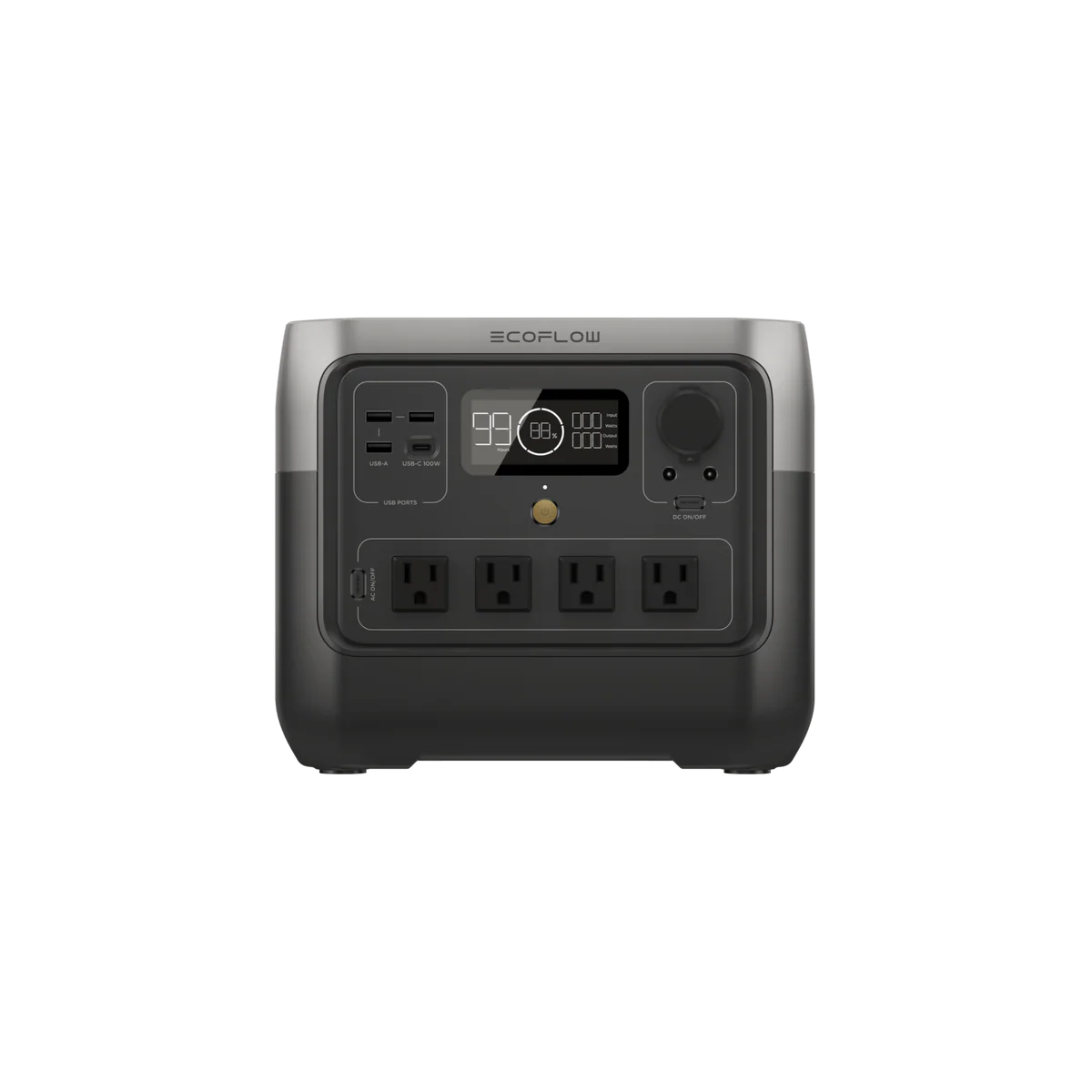 EcoFlow River 2 Pro
Check Current River 2 Pro PricingShop at EcoFlow
EcoFlow River 2 Pro
Check Current River 2 Pro PricingShop at EcoFlowQuick Verdict
Don’t make it your only unit for full-time van life. 768Wh is below the floor this site recommends as a primary, so run the power calculator before you talk yourself into it.
If you can’t find one: the BLUETTI AC70 is the closest thing still in production: also 768Wh, also a fast charger, different brand.
Is the River 2 Pro the right power station for your build?#
Tap the situation that sounds like you.
🏖️ Weekender / occasional camping: not full-time. Right tier
Compact-tier units like the River 2 Pro are sized for weekend trips and occasional camping where you can recharge between adventures. Laptop work, lights, fans for short stretches, charging banks: all fine. The River 2 Pro is in the right size class for that use. If your van is a weekend rig that lives plugged in at home most of the time, you don't need a flagship.
🔄 Portable secondary alongside a flagship. Strong fit
If you already run a 2kWh-plus primary unit and want something portable (to bring into a coffee shop, take to a campsite picnic table, or hand to a friend in a tent), the River 2 Pro is a credible portable secondary. We've hauled our 45-lb Yeti into coffee shops more times than we'd care to remember; a unit half that weight makes the same trip way easier.
📊 First-time buyer: still validating real loads. Sensible start
If you're buying your first power station and you don't yet know your real daily draw, starting at the compact tier and learning your usage pattern is a defensible move. You'll find out fast whether you're hitting empty every day (upgrade) or whether you have margin to spare (you saved money). Run the power calculator first if you want a starting point, but real-world testing beats spec-sheet planning.
🚐 Full-time van life: this is your only unit. Push bigger
Don't. Full-time van life with a fridge, fans, and any cloudy stretches will run a compact unit empty regularly. Mid-tier 1000-class is the floor we'd recommend for full-time use, and 2kWh-class is what we'd build today. See overall best picks for what we'd buy if this were our primary unit.
Where the River 2 Pro wins and loses#
One rule decides every ranking on this site: time-to-recover beats raw capacity. The River 2 Pro is the clearest test of that rule anywhere on the site: it’s the fastest thing here to refill and the smallest thing here to run out.
Why compact is below the full-time floor +
Put real numbers on it. Our fridge alone pulls 10–12 Wh/hr in mild weather and 20–25 in a humid Gulf-coast summer Measured, over eight years on our own unit. At the summer figure that's 480–600Wh a day, so the fridge by itself eats most of a 768Wh pack before you've charged a phone or run a fan.
That's not a flaw in the unit; it's what 768Wh means. The RIVER 2 Pro answers it by refilling in 70 minutes, which works beautifully when a daily outlet exists and fails completely when one doesn't. Know which of those describes your week.
A compact unit like the River 2 Pro doesn't have the buffer to survive that kind of week. You'd be at the wall every day, and on bad-outlet days you'd be making real comfort sacrifices. That's why mid-tier 1000-class is our floor recommendation for full-time use: the buffer matters more than the price savings.
Where compact shines: secondary, weekend, validation +
The River 2 Pro is a credible buy for use cases that aren't "full-time primary":
- Portable secondary: Bring power into a coffee shop, picnic table, or tent without hauling a 40-lb flagship.
- Weekend rigs: The van that lives at home and goes out on weekends doesn't need flagship capacity.
- Validation buy: First-time buyer who'll learn fast whether they need more capacity or have margin to spare.
For these uses, compact is the right size class, and the River 2 Pro is a credible pick within it.
River 2 Pro vs going straight to mid-tier: the cost question +
If you're a first-time buyer leaning toward the River 2 Pro but you'll be using it as your full-time primary, do the math on going straight to mid-tier instead. The price gap between compact and 1000-class is real but not huge, and you avoid the "I should have bought bigger" regret most full-timers report. Our regret stack from 8 years of van life includes "bigger solar," "bigger fridge," and the implicit "bigger power station faster than we did."
The three questions I'd want answered before buying +
1. How long will EcoFlow keep supporting it? This is the sharpest question on the page. The RIVER 2 Pro is back on sale, but it is a previous-generation model and its listing has already disappeared once. Firmware, app compatibility, and parts all depend on a platform EcoFlow has moved past.
2. Does 768Wh survive contact with your actual loads? A fridge alone can eat a large share of this in a hot week. Run the calculator with your real numbers before deciding, because at this size the margin for a bad estimate is thin.
3. Where will you buy it? EcoFlow's own store has it again, which keeps the seller question simple. On Amazon, third-party stock is where prices drift and warranties get murky. Confirm the seller is EcoFlow or an authorised one before you buy.
For durability, weight multi-month owner reports over launch coverage. This unit has been out long enough that real ones exist.
The numbers, and how they compare#
Every figure below is a manufacturer claim Spec, checked on 2026-08-07. Nothing here is measured by us.
Below the 1,000Wh floor this site recommends as a full-time primary. EcoFlow's RIVER 3 Plus is 286Wh on its own and reaches 572Wh or 858Wh only with an extra battery. The BLUETTI AC70 matches it exactly at 768Wh and is still in production.
Fastest full recharge of anything covered on this site, helped considerably by having less to refill. A single laundromat cycle takes it from empty to full, which is exactly the behavior the recovery-first rule rewards.
The real constraint, more than capacity. 800W continuous rules out an induction burner, a kettle, and most hair dryers outright, where mid-tier units run 1,800W. Check your highest-wattage appliance against this number before anything else.
LiFePO4, which is the right chemistry even at this size. EcoFlow quotes usable life in years rather than a cycle count here, so it isn't directly comparable to the 3,000–3,500-cycle figures the mid-tier units publish.
Frequently asked#
Why don't you own the River 2 Pro? +
We're full-time van lifers; the River 2 Pro size class is below the capacity floor we'd want as a primary unit. We've never had a use case for a small portable secondary either, since our daily power needs are met by our Bluetti Elite 200 V2.
Can I run a fridge full-time on the River 2 Pro? +
Technically possible, practically rough. A compact unit running a 24/7 fridge with no other loads will drain noticeably faster than any larger tier, and bad-weather solar weeks will leave you scrambling. If full-time fridge is the use case, mid-tier 1000-class is the practical floor.
River 2 Pro vs DELTA 2: which EcoFlow? +
If full-time primary: DELTA 2. The mid-tier capacity is the floor we'd recommend. If portable secondary or weekend-only: River 2 Pro is the right size class. Run the power calculator with your real loads to confirm which tier fits your use case.
Where can I find first-person River 2 Pro reviews? +
YouTube weekender and occasional-camper channels have plenty of River 2 Pro coverage. Full-time van life channels less so; most full-timers are running larger units. Weight long-term reports heavier than launch coverage.
Back in stock at EcoFlow
768Wh in 70 minutes. Just don't make it your only unit
EcoFlow River 2 Pro
Check EcoFlow River 2 ProShop at EcoFlow
See the full-time tier we run