
⚠️ Superseded: read this first
EcoFlow has moved on from the DELTA 2. It’s gone from their US collection page, and the DELTA 3 Classic replaced it: identical 1,024Wh, but 60 minutes to full instead of 80, a 3,600W surge instead of 2,200W, and it starts at $499.
Checked 2026-08-07. The DELTA 2 is still sold, and it’s still a decent power station. It is no longer the one to buy at full price.
The DELTA 2 is only interesting now as a clearance buy. Here’s the arithmetic that decides it.
I’ve never had a DELTA 2 in the van. I run a Bluetti Elite 200 V2 daily, so my hands-on hours are with a different brand entirely. Everything below is a Spec and Reported read, judged against the recovery-first method. No Measured claims appear on this page, because I haven’t earned any.
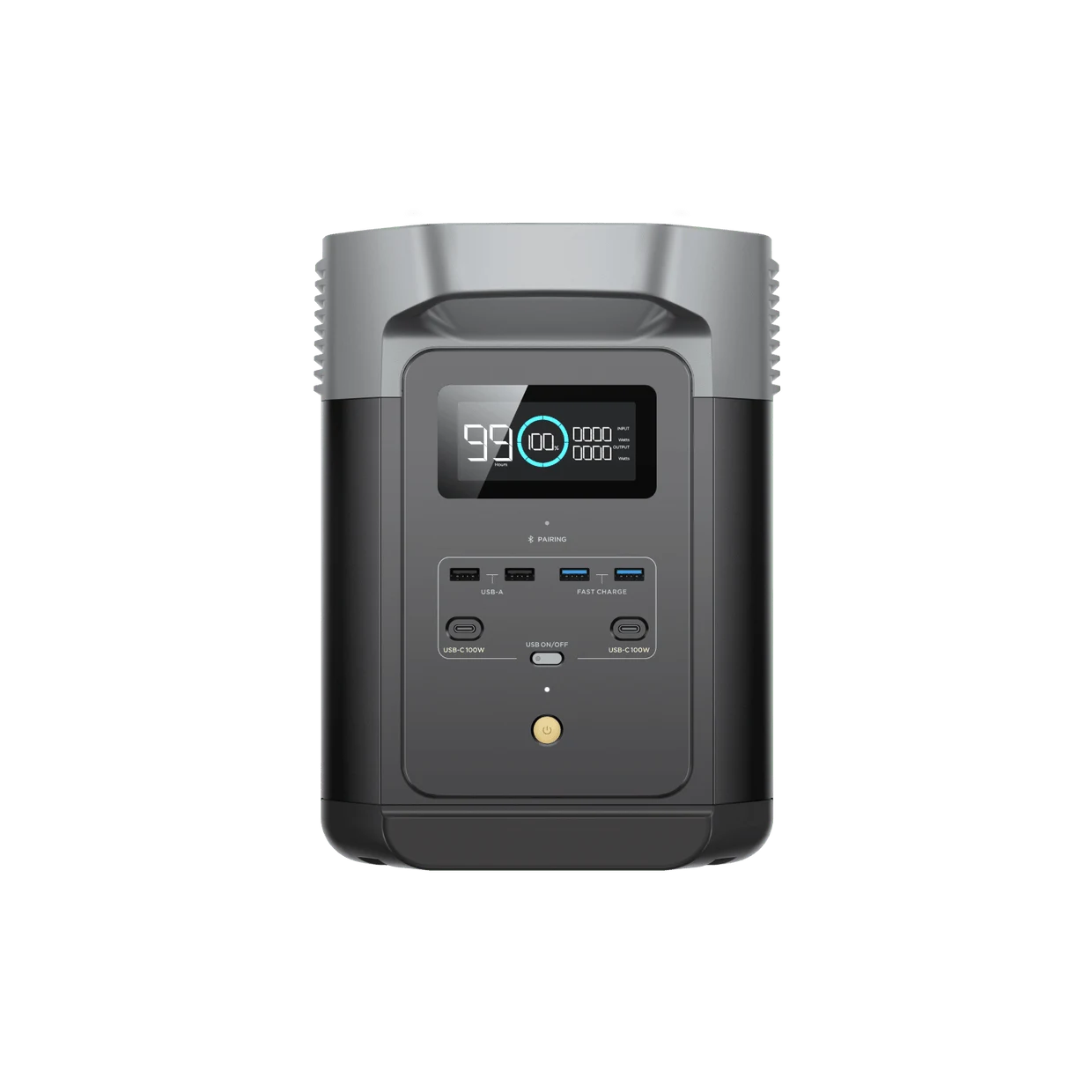 EcoFlow DELTA 2
Check DELTA 2 Clearance Pricing
EcoFlow DELTA 2
Check DELTA 2 Clearance PricingQuick Verdict
Don’t buy it anywhere near full price. You’d be paying current-generation money for 20 extra minutes on every recharge and 1,400W less surge headroom.
Also check whether the DELTA 2 expansion batteries are still stocked before you count on expanding. Availability of the add-on packs has become a live question this year.
Is the DELTA 2 the right power station for your build?#
Tap the situation that sounds like you.
📱 EcoFlow ecosystem: already trust the brand. Brand fit
EcoFlow's app reputation is one of the strongest in the category. If you've already bought into their ecosystem (other EcoFlow products, the EcoFlow app), the DELTA 2 will feel familiar. App-driven monitoring is a meaningful differentiator if you open monitoring apps, and noise if you don't. We run Bluetti for our own brand bet; EcoFlow is a legit alternative.
⚡ Mid-tier capacity: daily van loads, not flagship. Category fit
The DELTA 2 sits in the same capacity tier as the Bluetti AC180, Anker SOLIX C1000, and Jackery Explorer 1000 Plus. Sized for daily van loads: laptop work, lights, fans, fridge support, occasional small cooking. Below flagship 2kWh-plus tier; above sub-$500 weekend-class units. The cross-brand decision at this tier is mostly ecosystem.
🔌 Fast recharge matters: short shore-power windows. Strong fit
EcoFlow publishes a fast AC recharge profile on the DELTA 2, the kind that makes opportunistic shore-power top-offs practical. On our Elite 200 V2 the equivalent fast-recharge profile is the single biggest day-to-day quality-of-life upgrade vs the old Yeti's 25-hour charge time. That category of improvement transfers across mid-tier LiFePO4 units regardless of brand.
🏆 Want a brand we've personally validated. Different ecosystem
Real talk: we run Bluetti, not EcoFlow. We can't tell you how the DELTA 2 holds up across years of full-time van use. Our personally-validated picks are Bluetti Elite 200 V2 (current daily), Goal Zero Yeti 1400 (7 years prior), and Bluetti Charger 1. If first-person validation is your deciding factor, those are the units to read about.
Where the DELTA 2 wins and loses#
One rule decides every ranking on this site: time-to-recover beats raw capacity. The DELTA 2 used to score well on it. Its replacement scores better, which is the whole story of this page.
DELTA 2 vs DELTA 3 Classic: the only comparison that matters now +
Both are 1,024Wh LiFePO4 units with 1,800W continuous output. Everything that separates them:
- Full recharge: 80 minutes vs 60 Spec. On the rule this site ranks by, that's a straight loss.
- To 80%: 50 minutes vs 45. Closer, and 80% is the number most people charge to.
- Surge: 2,200W X-Boost vs 3,600W. The biggest gap on the list, and it decides whether hard-starting loads run at all.
- Price: DELTA 3 Classic starts at $499.
There's no spec on which the DELTA 2 wins. That's what "superseded" means, and it's why the only sensible reason to buy one is a discount deep enough to make 20 slower minutes worth it.
Why we picked Bluetti over EcoFlow (and what that means here) +
When our Yeti 1400 wore out we cross-shopped Bluetti and EcoFlow before buying. We picked the Bluetti Elite 200 V2 based on the LiFePO4 cycle ratings, the Black Friday pricing at the time, and the specific spec mix we wanted. EcoFlow was a defensible alternative. We just made a different call.
That doesn't make the DELTA 2 worse. It means the unit we have hours on is from the other brand. EcoFlow's app reputation is one of the strongest in the category and their long-term reliability story is solid based on what full-time van lifers report. If you'd already settled on EcoFlow, the DELTA 2 is a credible mid-tier pick.
DELTA 2 vs Bluetti AC180 vs Anker C1000: the cross-shop +
At this tier, ecosystem and brand preference do most of the deciding. All three are LiFePO4. All three publish credible fast-recharge profiles. All three are sized for moderate daily van loads. The decision factors:
- App ecosystem matters most: EcoFlow DELTA 2, app reputation is a category leader.
- Bluetti family is your bet: AC180, same brand we trust.
- Anker household products you already own: Anker C1000, ecosystem extends.
None of these is a wrong answer. We bet on Bluetti. That's a personal preference, not a knock against EcoFlow.
The three questions I'd want answered before buying outgoing stock +
1. How long will EcoFlow support it? This is the real risk with a superseded unit and it has nothing to do with the specs. Firmware updates, app support, and replacement parts all get quietly deprioritized once a product leaves the lineup. EcoFlow's stated 5-year warranty is the thing to hold them to.
2. Are the expansion batteries still available? The DELTA 2's expandability is part of its pitch, and add-on pack availability has become a live question this year. Verify stock before you buy the base unit assuming you can grow it later.
3. Is the "discount" measured against the right number? A retailer marking the DELTA 2 down from its old MSRP is not the comparison that matters. The only number worth comparing against is the DELTA 3 Classic at $499.
For long-term durability, weight 12-month owner reports over launch coverage. The DELTA 2 has been out long enough that real multi-year reports exist, which is one advantage of shopping an outgoing model.
The numbers, and how they compare#
Every figure below is a manufacturer claim Spec, pulled from EcoFlow’s own product pages on 2026-08-07. Nothing here is measured by us.
50 minutes to 80%. Was quick for its generation; now mid-pack. The DELTA 3 Classic does 60 minutes, the Anker C1000 under an hour, the BLUETTI AC180 1.3–1.8 hours.
Expandable to 3kWh with add-on batteries, subject to those packs still being stocked. Base capacity is the smallest of the current mid-tier set: AC180 1,152Wh, C1000 1,056Wh, Jackery 1000 Plus 1,264Wh.
The clearest gap against its own replacement: the DELTA 3 Classic surges to 3,600W on the same 1,800W continuous rating. If anything in your build starts hard, that difference is the one to care about.
3,000+ cycles to 80%, with a 5-year warranty EcoFlow still honors on outgoing stock. Roughly eight years at one cycle a day. Chemistry isn't where this unit lost its place in the lineup.
Frequently asked#
Why don't you own the DELTA 2? +
We cross-shopped Bluetti and EcoFlow when our Yeti wore out and bought the Bluetti Elite 200 V2. The Elite covers our daily loads and we don't run two power stations, so EcoFlow never made it into the van. Nothing against the unit; we just bet on a different ecosystem.
DELTA 2 or BLUETTI AC180: which should I buy? +
At full price, neither: buy the DELTA 3 Classic. Between these two specifically: the AC180 has more capacity (1,152Wh vs 1,024Wh) at $499, while the DELTA 2 recharges faster to full (80 min vs 1.3–1.8 hours). The AC180 is a current model; the DELTA 2 is not, which means firmware and parts support have a shorter runway.
The only scenario where the DELTA 2 clearly wins is a deep clearance price. Then it's the cheapest way into a 1kWh LiFePO4 unit with a fast charger, and that's a real option worth knowing about.
Is 1000-class enough for full-time van life? +
Depends on loads. Laptop work, lights, fans, fridge support, light cooking: yes, as long as you can recharge regularly. Daily induction cooking, electric kettle, hairdryer, or any heavy heating element: no, push to 2kWh-plus tier. Run the power calculator with your real loads first.
Where can I find first-person DELTA 2 reviews from full-time van lifers? +
The DELTA 2 has been on the market for a while. There are 12-month and 18-month YouTube reviews from full-time van lifers available. Weight long-term reports heavier than launch coverage. r/vandwellers has multi-month DELTA 2 threads. Both are better signal than launch reviews for a unit you'll live with.
Superseded: worth buying at a discount, not at full price
Check the clearance price against $499. If it doesn't win by a lot, buy the DELTA 3 Classic.
EcoFlow DELTA 2
Check DELTA 2 clearance →
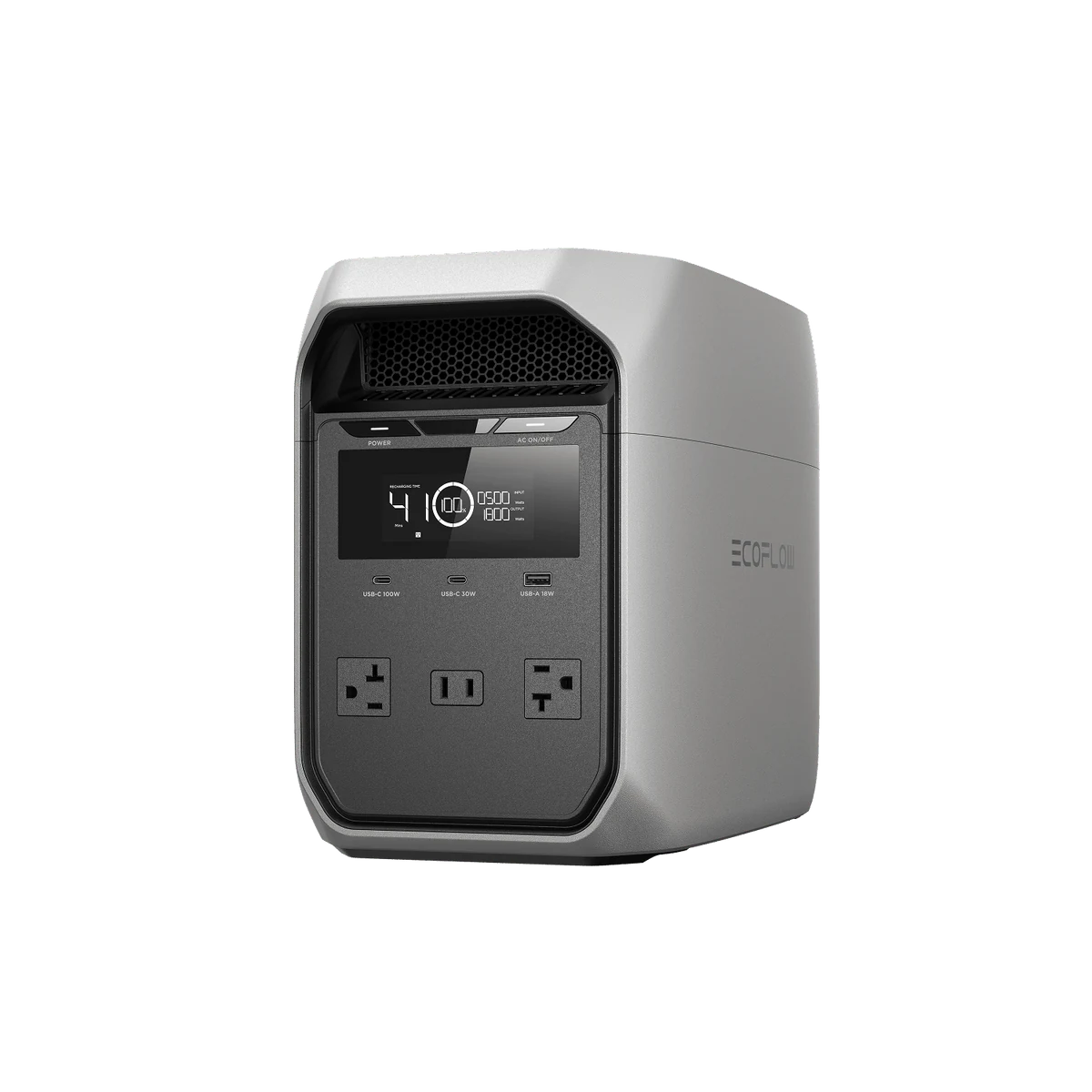 EcoFlow DELTA 3 Classic
See the DELTA 3 ClassicShop at EcoFlow
EcoFlow DELTA 3 Classic
See the DELTA 3 ClassicShop at EcoFlowRelated#
- Outgoing Models Still Worth Buying: when the superseded unit is the smarter spend
- Real-World Power Data: measured runtime, not marketing specs
- Bluetti Elite 200 V2 Review: what we run daily
- Bluetti AC180 Review: Bluetti family alternative
- Anker SOLIX C1000 Review: Anker ecosystem alternative
- Best Power Stations Overall
- Van Power Calculator