
Last reviewed: August 2026
Nobody is incentivized to tell you the old model is the better buy. The manufacturer wants to move current stock. Review sites chase launches, because that’s where the traffic is. So the outgoing unit sitting at a real discount tends to go unmentioned, right up until it sells out.
That gap is worth money. Sometimes a few hundred dollars for a unit that does the same job. But it is a case-by-case call, and the wrong version of this decision leaves you with an orphaned platform.
The test, in one line
The discount has to be bigger than the spec gap, and the discount is measured against what the replacement costs today, not against the old model’s original MSRP.
A retailer marking a discontinued unit down from its launch price is telling you nothing. The only number that matters is what you’d pay for the current-generation unit that does the same job.
Where each one lands right now#
Specs checked 2026-08-07 against manufacturer listings; each price shows the date it was last read. All capacity, recharge, and output figures are manufacturer claims Spec unless badged otherwise.
$1,029 (EcoFlow direct, checked 2026-10-05 · Amazon varies), against $879 (EcoFlow direct, checked 2026-10-08 · $320 off $1,199 list · Amazon varies) for the DELTA 3 Max that replaced it. Identical 2,048Wh. Full recharge in 1.1 hours, which beats the BLUETTI AC200L's 90–100 minutes at the same capacity. Expandable to 6,144Wh.
In August it was $150 cheaper for the same watt-hours, and that cleared the test easily. By October the DELTA 3 Max was the cheaper of the two, and an older unit that costs more than its replacement fails the test outright. The rule still applies: if the DELTA 2 Max drops back below the DELTA 3 Max, it's a good buy again. Check both listings on the day.
The DELTA 3 Classic replaced it at $499 with the same 1,024Wh, 60 minutes to full instead of 80, and a 3,600W surge instead of 2,200W. There is no spec on which the DELTA 2 wins.
That's a real gap, so the discount has to be real too. My line is somewhere under $400. At that price you're getting a competent 1kWh LiFePO4 unit with a fast charger for less than anything current, and most buyers never think to look. Anywhere near $499 and you're paying current-generation money for a slower unit.
This one isn't old-versus-new. The newer RIVER is built differently. The RIVER 3 Plus is 286Wh and reaches 572Wh or 858Wh by clipping on an extra battery. The RIVER 2 Pro is 768Wh in one box.
EcoFlow's product page for it returned a 404 on 2026-08-08 and came back on 2026-08-21. As of 2026-10-06 it's in stock there at $369. It has disappeared once, so if 768Wh in 70 minutes is what you want, don't count on it staying. The BLUETTI AC70 is the other 768Wh option, at $359.
The example that shows where this stops working. I ran one full-time for seven years Measured, so this isn't a spec-sheet opinion, and I wouldn't buy one new today at any price.
It's NMC, not LiFePO4: fewer cycles, worse heat behavior, and it locked up on me every Colorado winter. The 25-hour wall charge is the whole reason this site ranks by recovery speed, and it's worth seeing how far the category has moved since 2018 before buying anything from that era. Used at $300–400 with verifiable history it's a fine backup unit. That's the ceiling.
The three risks nobody prices in#
1. Expansion batteries disappear before the base unit does +
This is the one that bites. Expandability is a headline feature on most 1kWh-and-up units, and it's worthless the moment the add-on packs stop being made. The packs are lower-volume than the base units, so they tend to go first.
If any part of your reasoning is "I can add capacity later," verify the pack is in stock before you buy the base unit. Not that it exists, but that you can order one today.
2. Firmware and app support get quietly deprioritized +
Nobody announces the end of support for a power station. It just stops appearing in release notes. If the unit's monitoring lives in a phone app, that app will keep being updated for the current lineup and eventually stop accounting for yours.
This matters less than it sounds if you treat the app as a convenience. It matters a lot if app-driven monitoring was part of why you picked the brand. The stated warranty term is the commitment you can actually hold them to. EcoFlow's is five years on the units above.
3. "Discontinued" and "sold out" are not the same thing +
Worth saying plainly, because I got this wrong myself earlier this year. A product page that 404s, or a unit that vanishes from a collection page, usually means a URL change or an inventory gap, not the end of the product.
Twice this year a manufacturer URL returned a perfectly healthy 200 while serving a different product entirely. A status check passes; the link is still wrong. The only reliable method is opening the page and reading what's on it, which is what every figure here is based on.
Where to go next#
- Buying current-generation instead: Best fast-charging under $1,000
- Premium tier: Overall best: 2kWh+ picks
- Size it before you shop: Van Power Calculator
- Jargon check: Fast-charging power station glossary
- First power station? What I wish I’d known
- How these calls get made: How we test and source van power
Updated as stock and pricing move
At our last check, no outgoing unit here cleared the test
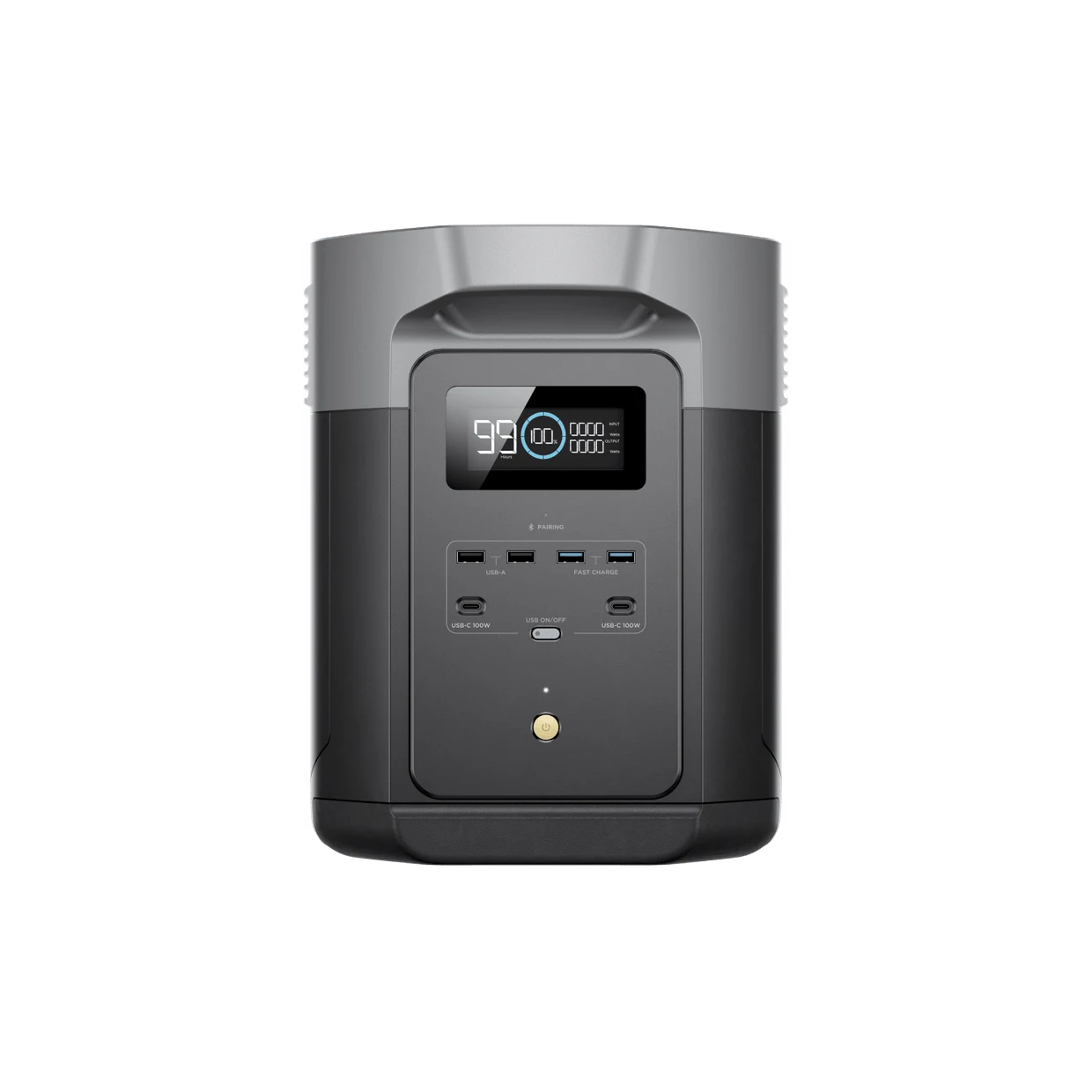 EcoFlow DELTA 2 Max
Check DELTA 2 Max pricing →
See current-gen picks instead
EcoFlow DELTA 2 Max
Check DELTA 2 Max pricing →
See current-gen picks instead